





In this blogpost:
O que um banho de imersão em água gelada faz com o cortisol e a sua resposta ao estresse
Entenda como a imersão em água gelada afeta o cortisol e a resposta ao estresse, incluindo o que acontece durante a exposição, a adaptação ao longo do tempo e a recuperação posterior.
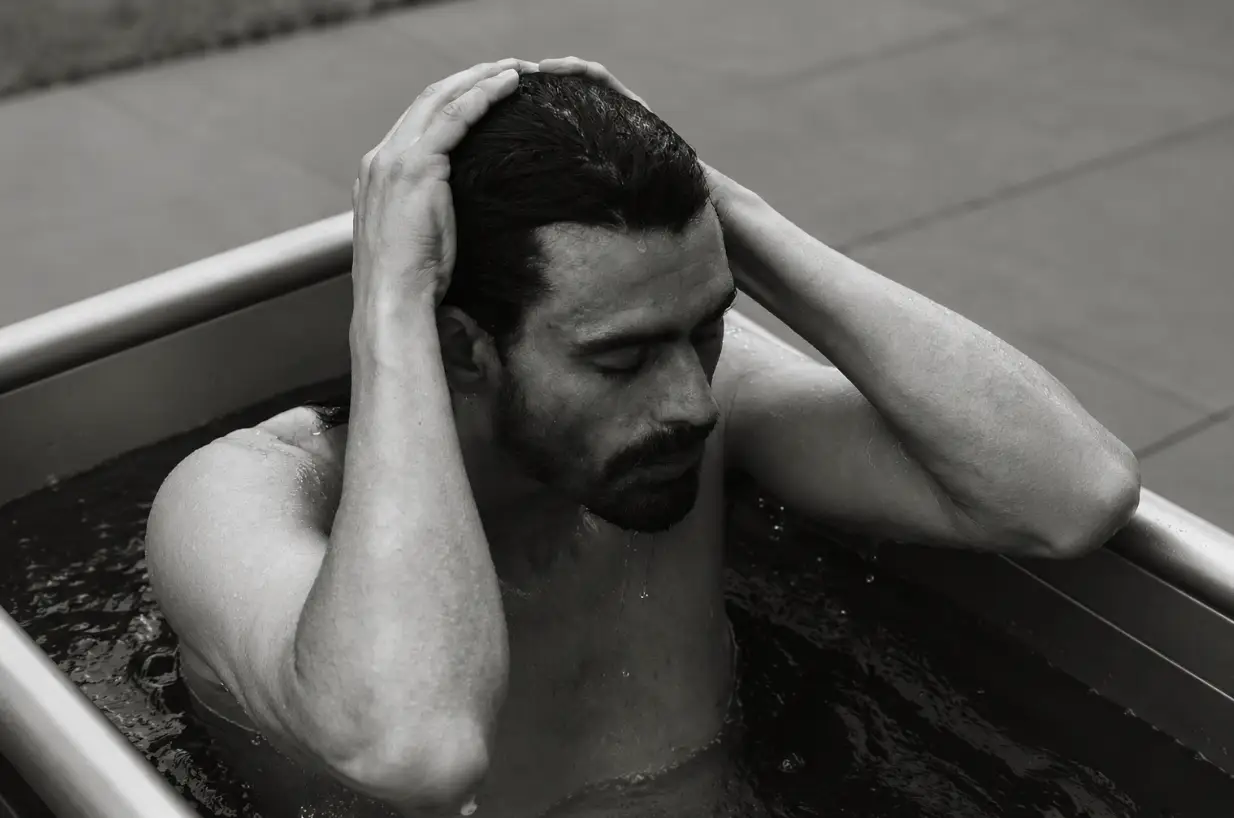
A imersão em água gelada é frequentemente descrita como uma forma de reduzir o estresse.
Mas a resposta fisiológica imediata conta uma história mais complexa.
Ao entrar na água gelada, seu corpo reconhece um estressor físico. Sua respiração muda, os vasos sanguíneos se contraem, o sistema nervoso fica mais alerta e os hormônios relacionados ao estresse reagem.
O cortisol faz parte dessa resposta.
Compreender a diferença entre uma resposta de estresse agudo e o estresse de longo prazo é fundamental para entender a exposição ao frio.
O que é o cortisol?
O cortisol é um hormônio produzido pelas glândulas suprarrenais.
Ele desempenha um papel no metabolismo, na pressão arterial, na função imunológica, na disponibilidade de energia e na resposta do corpo ao estresse.
Você precisa de cortisol.
Os seus níveis mudam naturalmente ao longo do dia, seguindo tipicamente um ritmo circadiano.
Portanto, o cortisol em si não é algo que precise de eliminar.
A questão importante é como o seu corpo responde a um determinado fator de stress e com que rapidez regressa ao seu estado normal.
O frio cria uma resposta de stress aguda
Entrar em água fria cria um desafio imediato.
Os recetores de frio na sua pele enviam sinais ao seu sistema nervoso. A atividade simpática aumenta, a sua respiração pode tornar-se mais rápida e o seu sistema cardiovascular reage.
O cortisol também pode aumentar durante a exposição aguda ao frio.
Isso não significa que o banho de imersão em água fria seja inerentemente prejudicial.
Significa que o seu corpo está a responder adequadamente a um fator de stress físico repentino.
O stress agudo é diferente do stress crónico
Essa distinção é importante.
Uma resposta ao estresse curta e controlada não é a mesma coisa que estresse psicológico ou fisiológico prolongado.
Seu corpo foi projetado para responder a desafios e, em seguida, recuperar-se.
A exposição ao frio cria um desafio temporário.
Assim que você sai da água, se seca e começa a se aquecer, a resposta aguda diminui gradualmente.
Isso é parte do que torna a exposição ao frio interessante como uma forma de estresse controlado.
O frio reduz o cortisol depois?
Você pode se sentir mais calmo após um mergulho no gelo.
Mas seria simplista demais dizer que a exposição ao frio sempre reduz o cortisol.
A resposta hormonal depende da temperatura, duração, momento, sua exposição anterior e fisiologia individual.
Diferentes estudos também medem o cortisol em momentos distintos durante e após a exposição.
A resposta imediata e a resposta tardia não são necessariamente as mesmas.
Portanto, o que você sente após o mergulho não pode ser interpretado automaticamente como uma medida direta do comportamento do seu cortisol.
A adaptação altera a resposta
A exposição repetida pode mudar a forma como o seu corpo reage ao mesmo estímulo de frio.
O choque inicial pode tornar-se mais fácil de gerir, a respiração pode tornar-se mais controlada e algumas respostas ao stress podem tornar-se menos pronunciadas com a aclimatação.
Este é um dos exemplos mais claros de como o seu corpo se adapta a um desafio ambiental repetido.
Isso não significa que o frio deixe de ser um fator de stress.
A sua resposta torna-se simplesmente mais familiar.
Por que o controle é importante
Se você altera a temperatura drasticamente a cada vez, torna-se difícil entender a que o seu corpo está se adaptando.
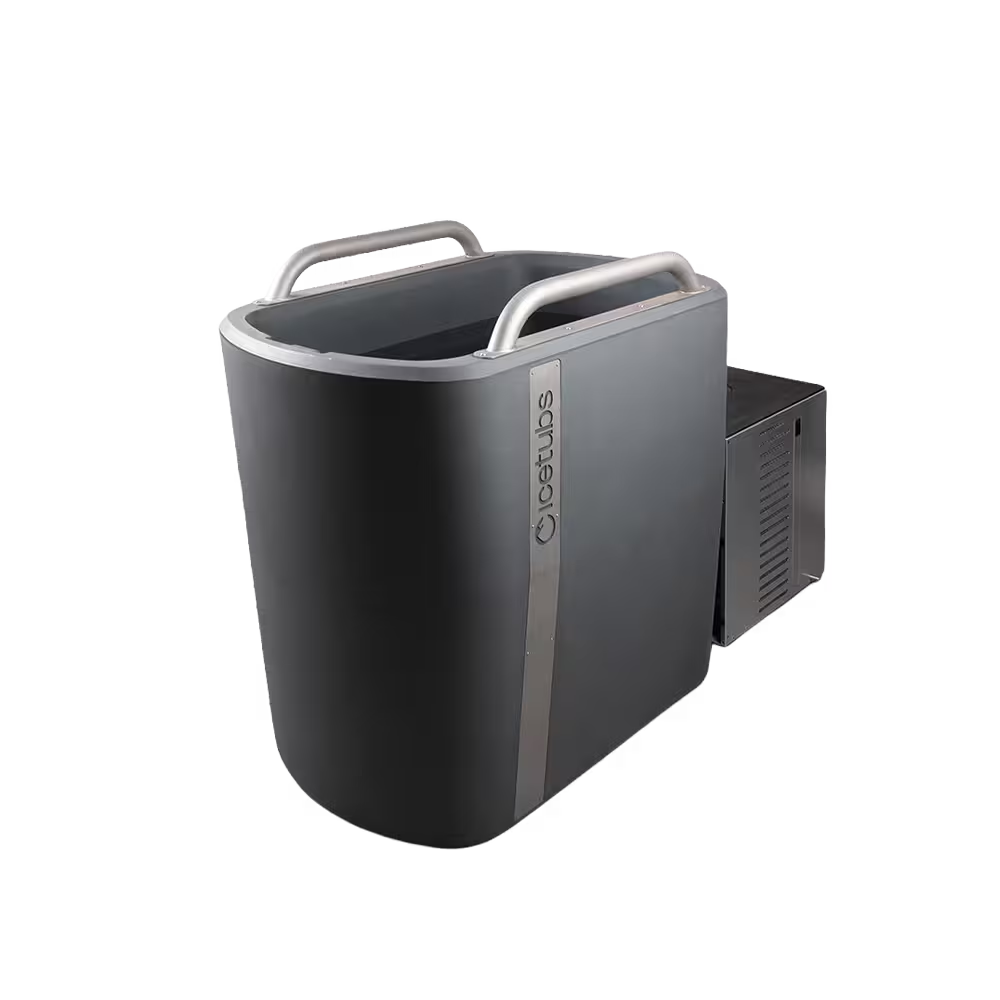
A Icetubs permite que você mantenha uma temperatura da água controlada, facilitando a criação de uma exposição consistente e o aprendizado gradual do nível ideal para você.
Isso é mais útil do que tratar cada sessão como um teste de resistência.
O frio não é uma ferramenta para eliminar o estresse
A exposição ao frio não deve ser comercializada como uma forma de eliminar hormônios do estresse.
A realidade é que o frio cria uma resposta de estresse de curta duração que o seu corpo precisa regular.
Essa é a parte interessante.
Você está dando ao seu corpo um desafio gerenciável e aprendendo como reage a ele.
O objetivo não é remover todas as respostas ao estresse da sua vida.
É preciso entender a diferença entre o estresse útil e controlado e o estresse que se torna excessivo.
Para entender como o cortisol se encaixa na resposta fisiológica mais ampla ao frio, continue com A Ciência da Exposição ao Frio: Como Ela Afeta o Seu Corpo