





In this blogpost:
Imersão no gelo para mulheres: benefícios, consciência corporal e quando ajustar
Saiba como a imersão em água gelada pode auxiliar na recuperação, no humor, no estresse e na consciência corporal feminina, com observações práticas de segurança sobre o período menstrual e a rotina diária.
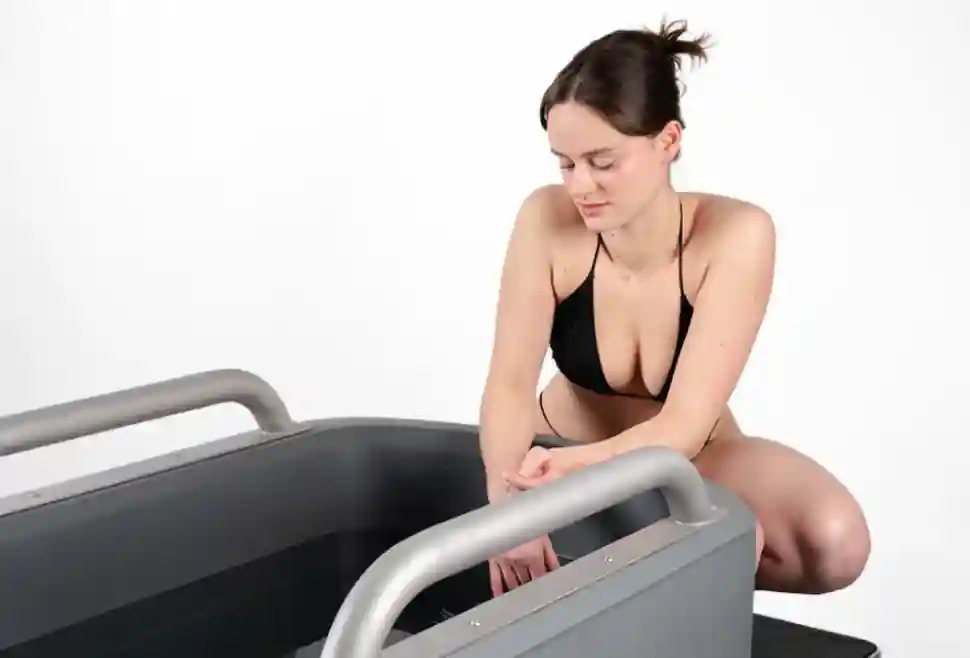
A imersão em água gelada pode se tornar mais do que uma ferramenta de recuperação.
Para muitas mulheres, torna-se uma forma de se reconectar com o corpo. Uma breve pausa. Um reset claro. Um momento em que a respiração, a temperatura e a atenção se encontram.
Mas uma boa rotina não deve ignorar as mudanças naturais do corpo.
Energia, hormônios, estresse, sono, carga de treino e sintomas menstruais podem afetar a sensação da água gelada. Em alguns dias, o banho pode parecer revigorante. Em outros, pode parecer demais.
A prática funciona melhor quando se mantém flexível.
Comece com o seu próprio ritmo
Não existe uma rotina única de imersão em água gelada que sirva para todas as mulheres.
Suas necessidades podem mudar ao longo da semana, do seu ciclo e das diferentes fases da vida. Uma sessão que parece energizante após o treino pode ser desconfortável quando você está cansada, estressada ou lidando com cólicas.
Isso não significa que a prática esteja errada.
Isso significa que a sua rotina deve saber ouvir o seu corpo.
A imersão em água gelada deve servir de apoio ao seu corpo, e não exigir o mesmo desempenho dele todos os dias.
A recuperação pode ser um benefício claro
A água gelada é frequentemente utilizada após o exercício, pois pode ajudar a aliviar dores, a sensação de peso e a recuperação pós-treino.
Se você corre, levanta peso, pratica Pilates, pedala ou treina regularmente, a imersão em água gelada pode fazer parte do seu ritmo de resfriamento. Ela proporciona ao corpo uma transição clara do esforço para a recuperação.
Mas o momento certo é importante.
Após treinos focados em força, você pode optar por esperar em vez de mergulhar imediatamente todas as vezes, especialmente se o seu objetivo principal for o ganho de massa muscular. Após sessões de resistência ou treinos de alto volume, a água gelada pode ser mais proveitosa.
A melhor rotina de recuperação depende do seu objetivo de treino.
O período menstrual pode alterar a experiência
Algumas mulheres consideram a imersão em água gelada útil durante o período menstrual. Outras podem sentir-se mais sensíveis ao frio, especialmente se tiverem cólicas, fluxo intenso, enxaquecas ou fadiga.
As orientações da Icetubs para o período menstrual sugerem começar com imersões mais curtas, manter-se hidratada, aquecer-se depois e fazer uma pausa caso o frio aumente o desconforto.
Essa é uma forma prática de encarar a situação.
A questão não é “as mulheres podem fazer imersão no gelo durante o período menstrual?”. A pergunta mais adequada é: isso parece algo positivo para você hoje?
Água Fria e Alívio do Estresse
A imersão no gelo exige foco mental.
Os primeiros segundos podem ser intensos. A respiração muda. O corpo reage. Então, aos poucos, você treina o retorno à calma.
Para o estresse, esse ritual pode trazer uma sensação de equilíbrio. Ele oferece algo claro a se fazer: respirar, manter-se presente e deixar a onda passar.
Isso não deve substituir o apoio à saúde mental quando você precisar. Mas pode se tornar parte de uma rotina de autocuidado mais ampla, que inclua sono, movimento, nutrição, descanso e conexão.
Mantenha a Rotina Leve Quando Necessário
Uma rotina forte nem sempre é uma rotina rígida.
Em alguns dias, você pode optar por uma sessão mais curta. Em outros, uma água um pouco mais quente. Em outros, descanso. Essa flexibilidade pode tornar a prática mais sustentável.
Fique atento aos sinais de que seu corpo não está pronto: tontura, fadiga incomum, aumento de cãibras, dormência persistente ou sensação de sobrecarga emocional.
Sair da banheira mais cedo ainda faz parte da prática.
Construa confiança aos poucos
Se você é iniciante, comece com um frio moderado e pouco tempo de exposição. Entre devagar. Mantenha a respiração constante. Aqueça-se suavemente depois.
Com o tempo, você pode ajustar a duração, a temperatura e a frequência.
A imersão no gelo pode favorecer a recuperação, o humor, a disciplina e a consciência corporal, mas apenas quando respeita o corpo que deve beneficiar.
Para uma visão geral mais ampla por objetivo, continue com Imersão no gelo para todos: quem se beneficia e como.