



In this blogpost:
Wanneer neem je een koud bad in relatie tot je trainingsschema?
Ontdek het beste moment voor een ijsbad rondom je training, inclusief voor workouts, na inspanning, op wedstrijddagen, rustdagen en tijdens zware trainingsblokken.
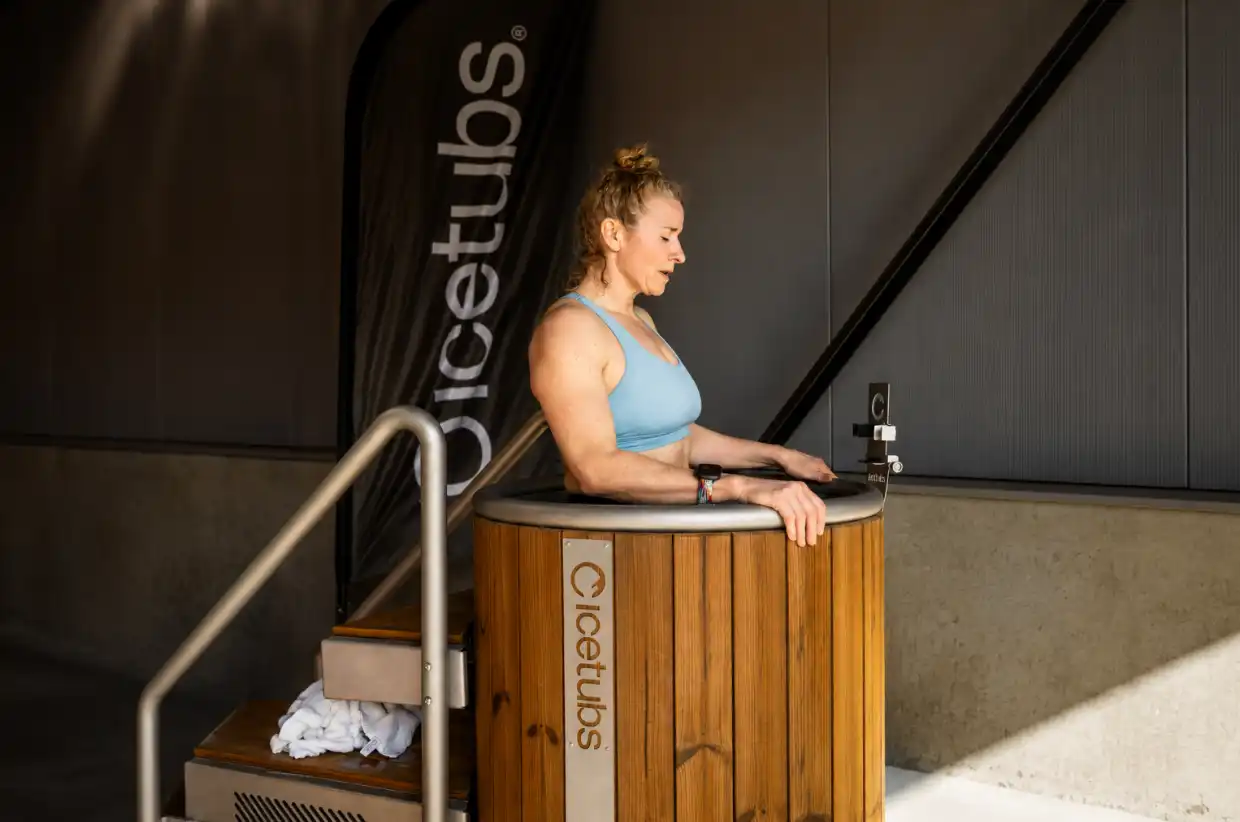
De timing kan een groot verschil maken voor hoe koudeblootstelling in je trainingsschema past.
Een ijsbad voor een workout dient een ander doel dan een ijsbad na een wedstrijd. Direct na krachttraining een ijsbad nemen vraagt bovendien om andere overwegingen dan wanneer je het tussen duursessies door gebruikt.
Er is niet één perfect moment.
De juiste timing hangt af van wat je met je training wilt bereiken.
Voor de training
Een ijsbad is over het algemeen geen vervanging voor een warming-up.
Voor een zware training is het je doel om je spieren, gewrichten, cardiovasculaire systeem en zenuwstelsel voor te bereiden op de inspanning die komen gaat.
Koudeblootstelling verlaagt de weefseltemperatuur en vormt een fysiologische uitdaging op zich.
Daarom is het lastig om een ijsbad te zien als een conventioneel hulpmiddel ter voorbereiding op een workout.
Als je gaat sprinten, zwaar gaat tillen, springen of explosieve bewegingen gaat uitvoeren, blijft een goede warming-up essentieel.
Direct na de training
Koudeblootstelling wordt na de training het meest toegepast als onderdeel van het herstel bij atleten.
Na een zware sessie kun je last hebben van spierpijn, vermoeidheid en de behoefte om te herstellen voor je volgende inspanning.
Koudeblootstelling kan helpen om spierpijn minder intens te ervaren en zorgt voor een duidelijke overgang van training naar herstel.
Maar het type training is hierbij van belang.
Als je net een krachttraining hebt afgerond en je hoofddoel spiergroei is, kun je koudeblootstelling beter niet standaard na elke workout inplannen.
Tussen zware sessies door
Dit is waar koude bijzonder nuttig kan zijn.
Stel je voor dat je twee keer per dag traint of op opeenvolgende dagen moet presteren.
Je denkt niet alleen aan het aanpassen aan de training van vandaag.
Je moet ook klaar zijn voor morgen.
In die situatie kan het beheersen van spierpijn en vermoeidheid een hogere prioriteit krijgen.
Blootstelling aan kou kan daarom zinvoller zijn wanneer de tijd tussen zware inspanningen kort is.
Rondom wedstrijden
Wedstrijden veranderen de zaak opnieuw.
Wanneer prestaties belangrijker zijn dan trainingsaanpassing van een individuele sessie, wordt herstel een belangrijke overweging.
Een koud bad na een race, wedstrijd of toernooi kan onderdeel worden van je routine na het evenement.
Het doel is niet om spiergroei uit die sessie te maximaliseren.
Het is om je te helpen bij de overgang naar je volgende prestatie.
Op rustdagen
Een rustdag betekent niet per se dat je niets moet doen.
Je kunt deze dag gebruiken voor wandelen, mobiliteitsoefeningen, stretchen of andere activiteiten met een lage intensiteit.
Koudeblootstelling kan ook op een rustdag, als je dat prettig vindt en het in je routine past.
Maar je bent niet verplicht om in koud water te duiken alleen omdat het een rustdag is.
Je herstel is al in volle gang.
Slaap, voeding en een lagere trainingsbelasting doen het meeste werk.
Timing rondom krachttraining
Als hypertrofie je prioriteit is, kun je koudeblootstelling beter scheiden van je krachttraining.
Je hoeft koude niet volledig uit je schema te schrappen.
Je kunt het later in je schema inplannen of bewaren voor specifieke situaties waarin herstel belangrijker is.
Zo krijgt je trainingsprikkel de tijd om zijn werk te doen voordat je een nieuwe fysieke belasting toevoegt.
Timing rondom duurtraining
Duursporters hebben vaak andere prioriteiten.
Lange duurlopen, fietstrainingen, wedstrijden en herhaalde trainingen met een hoog volume kunnen voor aanzienlijke vermoeidheid zorgen.
Als je snel weer moet trainen, kan het beheersen van spierpijn en het bevorderen van je ervaren herstel waardevol zijn.
Blootstelling aan kou kan daarom een praktisch hulpmiddel zijn tijdens bijzonder zware periodes.
Houd je routine flexibel
De beste timing is zelden elke dag hetzelfde.
Je trainingsbelasting verandert namelijk.
Je wedstrijdplanning verandert.
Je herstelbehoefte verandert.
Kijk naar wat morgen van je vraagt, in plaats van vast te houden aan een rigide schema.
Icetubs maakt het makkelijker om koudeblootstelling in te passen in die veranderingen, omdat je de watertemperatuur zelf regelt en het ijsbad gebruikt wanneer het echt bijdraagt aan je trainingsschema.
Voor een compleet overzicht van timing, herstel, temperatuur en verschillende sportieve doelen, bekijk Koudwaterbad voor sportherstel: hoe gebruik je het effectief