




In this blogpost:
How Long Does It Take to Feel Cold Plunge Benefits?
How quickly do cold plunge benefits appear? Explore immediate effects, longer-term outcomes, consistency, and why results vary between people and protocols.

Cold plunging creates an immediate sensation.
You know the water is cold.
Your breathing changes.
Your body becomes alert.
You may step out feeling energised.
But not every potential benefit works on the same timeline.
Some effects happen immediately.
Others require repeated exposure.
And some popular claims simply do not have enough evidence to establish a reliable timeline.
Immediate Effects Come First
The easiest effects to notice are often the immediate ones.
Cold exposure creates a strong sensory and physiological response.
You may feel more alert.
Your attention may become sharper.
You may experience a strong sense of accomplishment after completing the session.
These effects can happen within minutes.
But an immediate feeling is not necessarily evidence of a long-term health benefit.
Recovery Takes Longer to Judge
Muscle soreness is different.
Cold-water immersion has evidence for reducing post-exercise soreness, but the relevant outcomes are generally assessed over hours and days rather than immediately, a distinction covered further in Cold Plunges for DOMS: Can They Ease Muscle Soreness?.
The 2022 systematic review by Natanael Batista and colleagues examined 44 studies and found cold-water immersion useful for managing muscle soreness, with effects varying according to timing and protocol.
That gives you a better idea of why recovery claims cannot always be measured after one session.
Long-Term Outcomes Are Harder
Long-term effects require repeated exposure and well-designed studies.
This is where cold-plunge marketing can become overly confident.
You may see claims promising results after seven days, 30 days, or a certain number of sessions.
Unless research directly supports that timeline, treat it cautiously.
Individual response also varies.
Consistency Matters
If you want to understand how cold exposure affects you, consistency is more useful than constantly changing your protocol.
Keep your temperature and duration reasonably consistent.
Pay attention to how you feel.
Then make gradual adjustments.
That gives you a clearer picture than changing everything from one session to the next.
Your Goal Changes the Timeline
If you want a short-term alertness effect, you may notice something immediately.
If you are using cold exposure for post-exercise soreness, you may care more about how you feel later that day or the next day.
If you are interested in broader wellbeing, you may need a longer period before you can judge whether the routine feels meaningful.
One timeline cannot cover every goal.
What Research Says About Wellbeing
The 2025 systematic review “Effects of cold-water immersion on health and wellbeing” by Tara Cain and colleagues included 11 studies and found evidence of effects in areas such as stress and sleep, but also highlighted limitations in the available evidence.
That is a useful reminder.
Research can show potential without providing a universal countdown to results.
Make Your Routine Repeatable
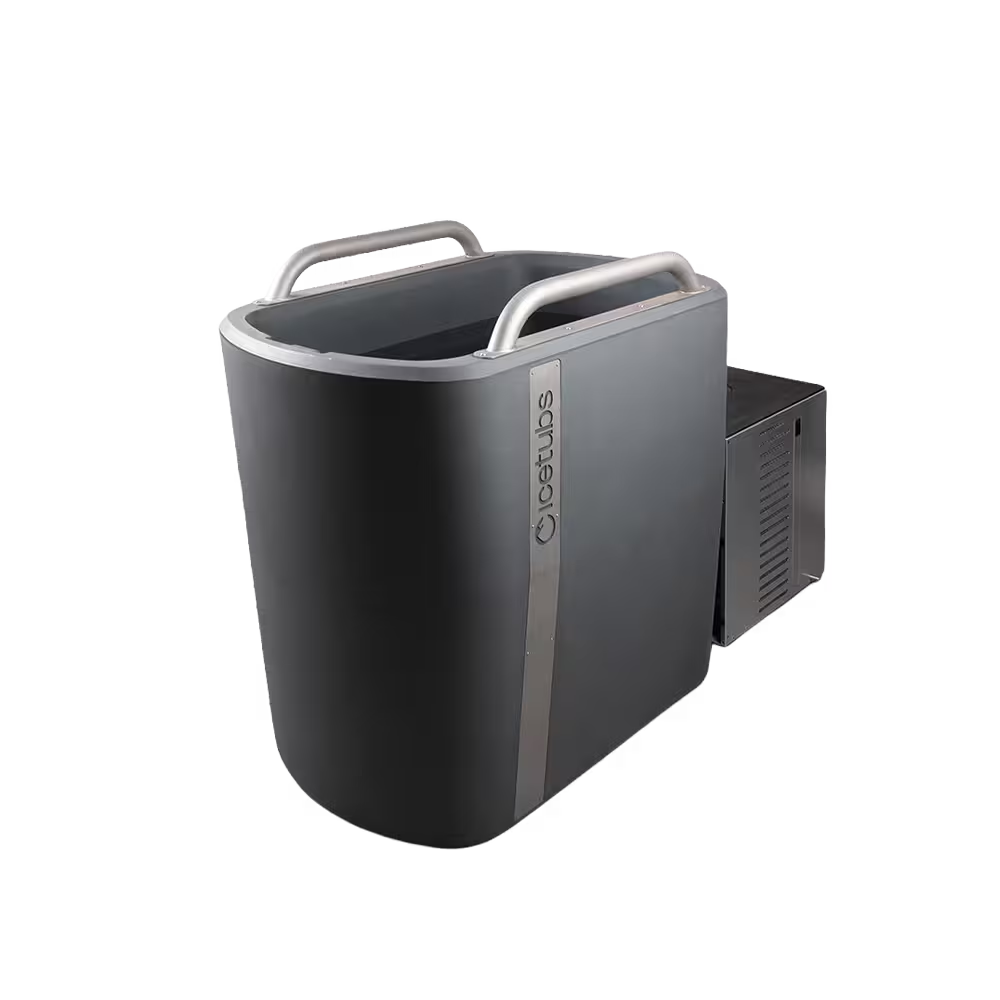
The Icetubs Engine gives you control over water temperature, making it easier to repeat a similar exposure from one session to the next.
That consistency is useful if you want to understand your own response.
You are not constantly guessing how cold the water is.
Do Not Chase a Deadline
If you do not feel a dramatic change after a certain number of sessions, that does not necessarily mean the practice is failing.
Likewise, feeling great after one session does not prove a long-term effect.
Look at the overall pattern.
Think in Terms of Experience
Cold exposure is not a medication with a universal onset time.
It is a physical practice.
Your response depends on your protocol, goals, health, training, and individual physiology.
Give the routine enough time to understand it without forcing a result.
For the wider evidence behind cold-plunge benefits and the claims surrounding them, continue with Cold Plunge Myths and Facts: What the Science Really Says