




In this blogpost:
Kan blootstelling aan kou bijdragen aan gezond ouder worden en een lang leven?
Ontdek het verband tussen blootstelling aan kou en een lang leven, inclusief de invloed op de stofwisseling, cellulaire stress, thermoregulatie, aanpassingsvermogen en wat nog niet bewezen is.

Een lang leven is een van de meest ambitieuze claims rondom blootstelling aan kou.
Misschien heb je wel eens gehoord dat koud afdouchen of ijsbaden het verouderingsproces kunnen vertragen, de celgezondheid verbeteren of je zelfs helpen om langer te leven.
Er zijn interessante biologische redenen waarom onderzoekers dit verband bestuderen.
Maar er is ook een belangrijk onderscheid tussen fysiologische effecten die gezond ouder worden kunnen ondersteunen en het bewijs dat blootstelling aan kou de menselijke levensduur daadwerkelijk verlengt.
Voor die tweede claim is veel sterker bewijs nodig.
Waarom is kou interessant voor een lang leven?
Blootstelling aan kou vormt een meetbare fysieke uitdaging.
Wanneer je in koud water stapt, werkt je lichaam direct om de kerntemperatuur op peil te houden.
Bloedvaten vernauwen zich. Het zenuwstelsel wordt actiever. De stofwisseling verandert en warmteproducerende mechanismen worden geactiveerd.
Deze reacties oefenen gecontroleerde stress uit op het lichaam.
Dat maakt blootstelling aan kou interessant vanuit het perspectief van aanpassing en gezond ouder worden.
Kou activeert thermogenese
Een van de duidelijkste fysiologische reacties op kou is een verhoogde warmteproductie.
Je lichaam kan warmte genereren door te rillen en door niet-rillende thermogenese, waaronder de activiteit van bruin vetweefsel.
Herhaalde blootstelling kan ook veranderen hoe efficiënt je lichaam op kou reageert.
Deze metabole aanpassingen zijn wetenschappelijk interessant omdat het metabolisme nauw verbonden is met vele aspecten van de gezondheid.
Maar een interessante metabole reactie betekent niet automatisch een langere levensduur.
Hoe zit het met hormese?
Blootstelling aan kou wordt soms besproken aan de hand van het concept hormese.
Het idee is dat een beheersbare stressfactor adaptieve reacties in het lichaam kan stimuleren.
Sport is hiervoor een goed vergelijkingspunt.
Training belast je spieren, maar een juiste trainingsprikkel kan leiden tot aanpassing. Te veel trainen zonder voldoende herstel kan echter averechts werken.
Kou werkt op een vergelijkbare manier.
De potentiële waarde zit in de gecontroleerde dosering.
Koude-adaptatie is beter onderzocht
Een van de duidelijkere effecten van herhaalde blootstelling aan kou is adaptatie.
De eerste koudeschok wordt na verloop van tijd makkelijker te verdragen. Je ademhaling kan minder heftig reageren en je thermoregulatie kan veranderen door herhaalde blootstelling.
Dit laat zien dat je lichaam in staat is zich aan te passen aan de omgeving.
Maar adaptatie moet niet worden verward met een lang leven.
Dat je beter tegen kou kunt, betekent niet dat je langer zult leven.
Hoe zit het met ontstekingen?
Ontstekingen zijn een andere reden waarom blootstelling aan kou de aandacht trekt in discussies over een lang leven.
Langdurige, overmatige ontstekingen worden in verband gebracht met veel ouderdomsgerelateerde gezondheidsproblemen.
Blootstelling aan kou kan ontstekings- en immuunsignalen beïnvloeden, wat heeft geleid tot de vraag of deze effecten bredere gevolgen voor de gezondheid kunnen hebben.
Maar de relatie is ingewikkeld.
Kou elimineert niet zomaar ontstekingen, en kortstondige veranderingen in ontstekingsmarkers vertalen zich niet automatisch in bescherming tegen ouderdomsziekten.
Het wetenschappelijk bewijs bij mensen is nog in ontwikkeling
Een recent overzicht, Cold exposure and longevity: a review of the current evidence, onderzocht mogelijke verbanden tussen blootstelling aan kou, stofwisseling, ontstekingen, oxidatieve stress en gezond ouder worden. Het overzicht vond interessante biologische verbanden, maar het bewijs dat blootstelling aan kou de menselijke levensduur daadwerkelijk kan verlengen, blijft beperkt.
Deze effecten bieden aannemelijke redenen om de relatie met gezond ouder worden te onderzoeken.
Maar om te bewijzen dat regelmatig koudwaterbaden de menselijke levensduur verlengt, is langetermijnonderzoek nodig dat aantoont dat het leidt tot een significante afname van ouderdomsziekten of sterfte.
Dat bewijs is er op dit moment nog niet.
Daarom kan een langere levensduur beter worden omschreven als een interessant wetenschappelijk onderzoeksgebied dan als een bewezen voordeel van koudwaterbaden.
Waar een ijsbad in past
Als je koudeblootstelling wilt verkennen als onderdeel van een langdurige wellnessroutine, is consistentie belangrijker dan extreme sessies.
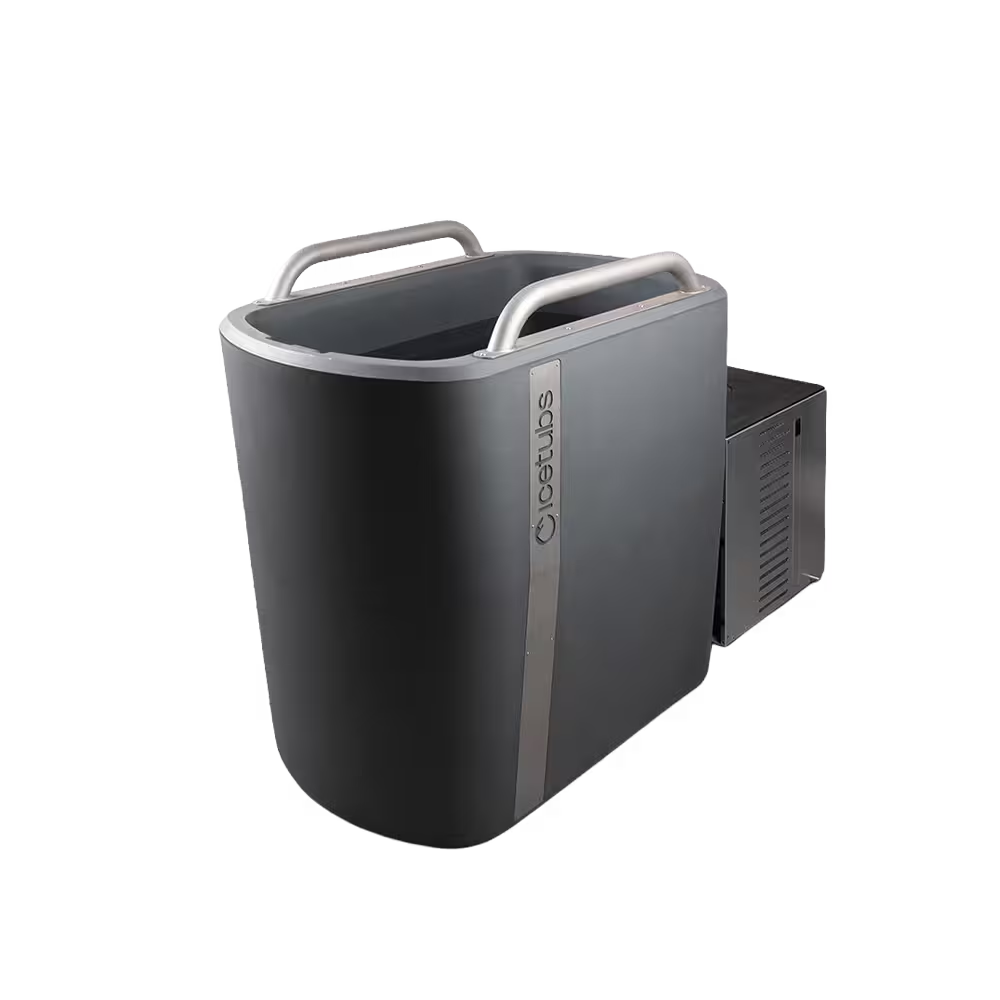
Icetubs biedt je een gecontroleerde omgeving waarin je de watertemperatuur kunt regelen, waardoor het makkelijker wordt om koudeblootstelling vol te houden.
Dat maakt koudwaterbaden nog geen behandeling voor een langer leven.
Het maakt de beoefening ervan simpelweg praktischer om in je levensstijl te integreren.
Kijk verder dan het ijsbad
Gezond ouder worden wordt door vele factoren beïnvloed.
Slaap, lichaamsbeweging, voeding, stressbeheersing, sociale contacten en regelmatige medische zorg spelen allemaal een belangrijke rol.
Blootstelling aan kou kan een aanvullende gewoonte zijn binnen dat grotere geheel.
De wetenschap suggereert dat kou zorgt voor zinvolle fysiologische stress en aanpassing.
Wat nog onbeantwoord blijft, is of die reacties op de korte en middellange termijn uiteindelijk leiden tot een langer menselijk leven.
Voorlopig is de meest wetenschappelijk onderbouwde aanpak om te genieten van blootstelling aan kou vanwege de routine, de uitdaging en de fysiologische aanpassingen die het kan bieden, zonder te verwachten dat het iets belooft wat de wetenschap nog niet heeft vastgesteld.
Voor een volledige verdieping in wat er in je lichaam gebeurt tijdens blootstelling aan kou, ga terug naar De wetenschap achter blootstelling aan kou: hoe het je lichaam beïnvloedt