



In this blogpost:
Cold Plunge Myths Beginners Should Stop Believing
New to cold plunging? Separate common myths from reality, including temperature, duration, daily use, testosterone, recovery, and how to approach cold exposure
Starting cold plunging can be confusing.
There are endless opinions about the perfect temperature, ideal duration, best time of day, and number of sessions per week.
Some advice is useful.
Some is simply repeated because it sounds convincing.
Here are a few myths worth leaving behind.
Myth: Colder Always Means Better
This is probably the easiest misconception to spot.
A lower temperature creates a stronger cold stimulus.
That does not automatically make it more effective.
Research increasingly points towards the importance of the entire protocol rather than temperature alone.
Your goal, duration, and training context all matter.
Myth: You Need to Stay In for a Long Time
Long sessions can sound impressive.
They are not automatically more beneficial.
Cold exposure is about the stimulus you create, not proving how long you can tolerate discomfort.
A manageable session is more useful than one that leaves you exhausted.
Myth: You Need to Plunge Every Day
You do not.
Frequency should fit your goal and your wider routine.
If you train frequently, you also need to consider how cold exposure interacts with recovery and adaptation.
Missing a day does not undo your progress.
Myth: Cold Plunging Boosts Testosterone
There is not strong evidence that regular cold plunging produces a meaningful testosterone increase.
Cold exposure affects the body in many ways, but that does not make it a reliable testosterone hack.
Treat the claim accordingly.
Myth: Cold Plunges Are Only for Athletes
Athletes helped popularise them, but cold exposure is not restricted to sport.
You can use a plunge for general wellness, routine, alertness, or simply because you enjoy it.
Your goal does not need to involve competition.
Myth: Less Muscle Soreness Means Better Training
Cold-water immersion can reduce perceived muscle soreness.
That does not necessarily mean your training adaptations are better.
Recovery and adaptation are related but different processes. If muscle growth is your priority, timing your cold exposure around resistance training deserves consideration, a topic covered further in Cold Plunge Safety Tips Every Beginner Should Know.
Myth: You Should Always Push Through
This is one myth worth taking seriously.
Cold exposure should challenge you without turning into reckless behaviour.
You should not ignore symptoms that indicate you need to stop.
Mental toughness is not the same as ignoring your body's signals.
Myth: You Need Bags of Ice
Not with a dedicated cooling system.
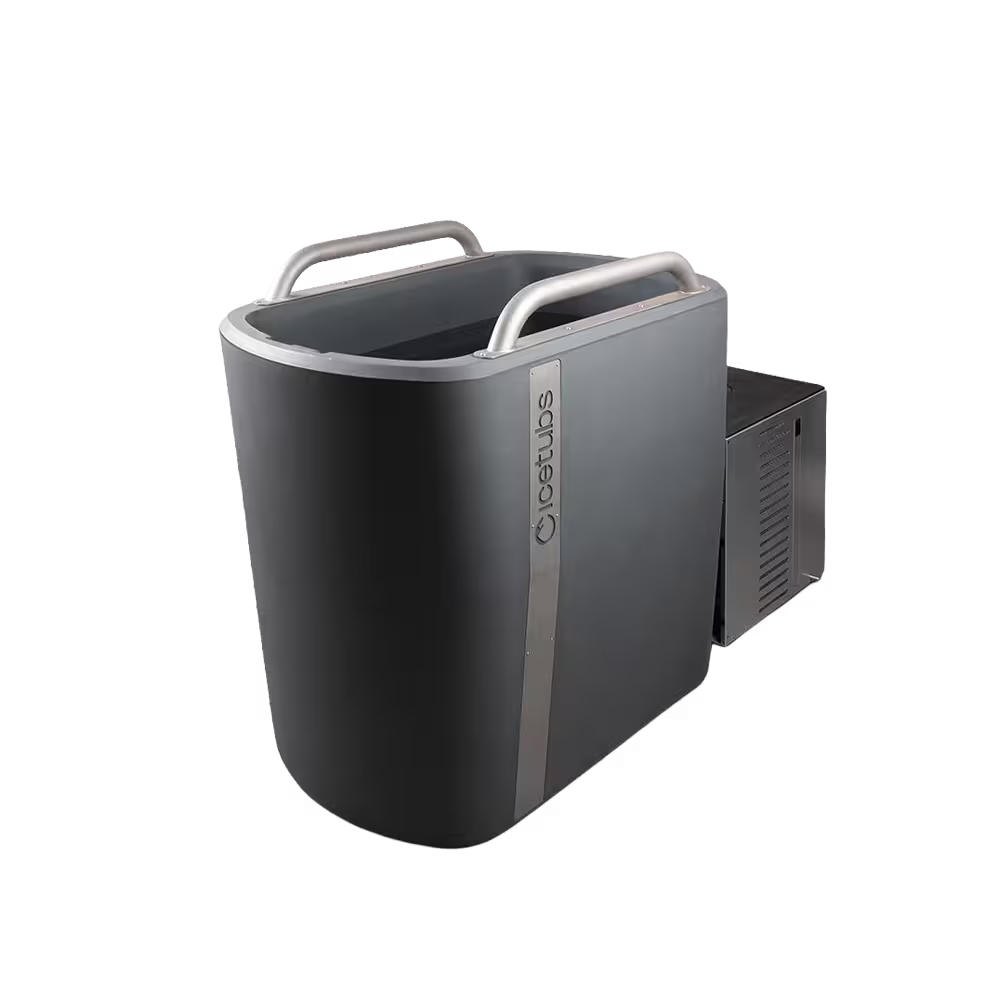
The Icetubs Engine uses active cooling, filtration, and ozone-supported water care to maintain your chosen water temperature, so you do not need to continually source and add ice for every session.
That also makes it easier to keep your exposure consistent.
Myth: Everyone Gets the Same Results
You do not.
Cold exposure affects people differently.
Your temperature tolerance, training status, goals, environment, and routine all matter.
There is no single protocol that guarantees the same outcome for everyone.
Start With What Actually Matters
Forget the competition.
You do not need the lowest temperature, longest session, or highest weekly frequency.
You need a routine that matches your goal and remains manageable.
That is a much better place to start.
For the broader evidence behind these beginner myths and the science behind cold exposure, continue with Cold Plunge Myths and Facts: What the Science Really Says