



In this blogpost:
Veelgemaakte fouten bij het bouwen van een ijsbad die je moet vermijden
Voorkom veelgemaakte fouten bij je eigen ijsbad met praktische tips over bakken, ijsgebruik, afvoer, reiniging, isolatie, veiligheid, comfort en het plannen van je routine.
Een zelfgemaakt ijsbad kan eenvoudig, betaalbaar en nuttig zijn.
Het is een goede manier om koudetraining te ervaren zonder grote investering. Je leert welke temperatuur voor jou prettig is, hoe je lichaam reageert en of deze gewoonte in je dagelijkse routine past.
Maar een doe-het-zelfopstelling kan ook snel misgaan.
Niet omdat koudetraining ingewikkeld is, maar omdat kleine details ertoe doen. Een zwakke bak, een slechte afvoer, vervuild water, een gladde vloer of een onveilige elektrische installatie kunnen een simpel idee veranderen in een bron van frustratie.
Dit zijn de fouten die je moet vermijden voordat je aan de slag gaat.
De verkeerde bak kiezen
De bak moet meer kunnen dan alleen water vasthouden.
Hij moet stabiel zijn als hij vol is, comfortabel genoeg om in te zitten, makkelijk toegankelijk en praktisch om leeg te laten lopen. Een dunne opbergbak ziet er misschien prima uit als hij leeg is, maar water is zwaar. Eenmaal gevuld kan de bak doorbuigen, barsten of verschuiven.
Kies niet alleen op basis van de prijs.
Kies op basis van stevigheid, vorm, veiligheid en herbruikbaarheid.
Als het bad onhandig aanvoelt voordat je er koud water in doet, zal het alleen maar erger voelen zodra je lichaam op de kou reageert.
De temperatuur gokken
Koud water kan misleidend zijn.
Je denkt misschien dat het water "koud genoeg" of "niet te koud" is, maar gokken is geen goede gewoonte. Te veel ijs kan de sessie lastiger beheersbaar maken, zeker voor beginners.
Gebruik een thermometer.
Voeg geleidelijk ijs toe. Roer het water. Controleer de temperatuur voordat je erin stapt. Je moet weten waar je lichaam aan wordt blootgesteld.
Het doel is gecontroleerde blootstelling, geen verrassing.
De afvoer negeren
De afvoer is een van de meest voorkomende spijtpunten bij doe-het-zelvers.
Een bad is zo gevuld. Het legen ervan kan echter een uitdaging zijn.
Bepaal vóór de eerste sessie waar het water naartoe moet stromen. Zorg ervoor dat dit geen gladde vloeren, modder, stilstaand water of schade aan funderingen en elektrische punten veroorzaakt.
Als het legen van het bad een gedoe is, zul je het uitstellen.
Zodra je het uitstelt, wordt schoonmaken alleen maar lastiger.
Water laten vervuilen
Ook koud water heeft onderhoud nodig.
Zweet, huidvetten, stof, bladeren, insecten en resten kunnen zich ophopen. Zonder filtratie of circulatie moet het water wellicht vaker worden ververst dan je denkt.
Dek het bad af wanneer je het niet gebruikt. Spoel jezelf af voordat je erin stapt. Ververs het water regelmatig. Maak de binnenwanden schoon voordat vuil zich vastzet.
Als het water troebel oogt of onaangenaam ruikt, ververs het dan.
Een koud bad moet schoon genoeg aanvoelen om er met plezier weer in te stappen.
Onveilig in- en uitstappen
Natte oppervlakken veranderen alles.
Je voelt je misschien stabiel voordat je erin stapt, maar na een tijdje in koud water ben je vaak wat minder gecoördineerd. Daarom is veilig uitstappen zo belangrijk.
Gebruik een antislipmat. Houd een handdoek bij de hand. Zorg dat het bad stabiel staat. Plaats het bad niet op een plek waar je op gladde tegels, modder of een oneffen ondergrond moet stappen.
De veiligste ijsbadervaring is er een waarbij je gemakkelijk weer uitstapt.
Laks omgaan met elektriciteit
Dit is een ernstige fout.
Omgebouwde diepvriezers, koelers, pompen, timers en verlengsnoeren brengen allemaal elektrische risico's met zich mee. Water en elektriciteit mogen nooit geïmproviseerd worden.
Houd stekkers en snoeren uit de buurt van natte plekken. Gebruik de juiste beveiliging. Vermijd beschadigde apparatuur. Schakel bij twijfel een erkende elektricien in.
Geld besparen is het elektrische risico niet waard.
Te vroeg te uitgebreid bouwen
Sommige mensen beginnen met de meest ingewikkelde opstelling voordat ze weten of koudwaterbaden überhaupt iets voor hen is.
Ze kopen apparatuur, voegen een koeler toe, bouwen een vriezer om, brengen isolatie aan en maken er een project van dat meer moeite kost dan de gewoonte zelf.
Begin eerst simpel.
Leer je routine kennen. Begrijp je tolerantie. Merk op hoe vaak je daadwerkelijk in het koude water stapt. Beslis daarna pas of je wilt upgraden.
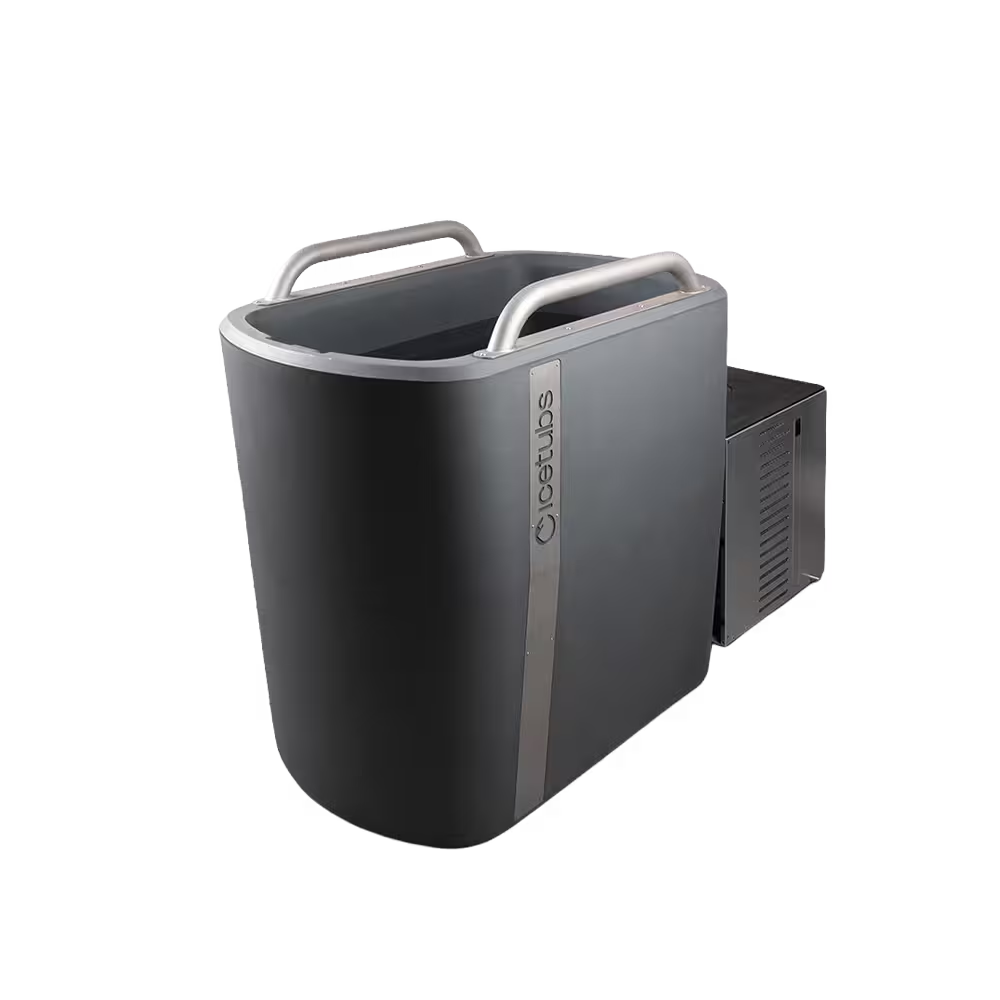
Als het doe-het-zelven meer energie kost dan de oefening zelf, biedt Icetubs een eenvoudigere weg naar regelmatig koudwaterbaden, zonder dat elke sessie draait om opbouw en onderhoud.
Bouw voor herhaalbaarheid
De beste doe-het-zelf koudwaterbad-opstelling is niet de meest ingewikkelde.
Het is de opstelling die je veilig kunt gebruiken, makkelijk kunt schoonmaken, goed kunt laten leeglopen en waar je zonder al te veel gedoe naar terugkeert.
Vermijd zwakke bakken. Meet de temperatuur. Plan de afvoer. Houd het water schoon. Wees voorzichtig met elektriciteit. Bouw niet te uitgebreid voordat je je eigen gewoonte begrijpt.
Gebruik voor het volledige stappenplan voor je doe-het-zelfopstelling Zelf een ijsbad bouwen: de complete gids als je belangrijkste naslagwerk.