



In this blogpost:
Temperatuur en duur van een ijsbad voor een beter herstel
Ontdek hoe je de temperatuur en duur van een ijsbad voor herstel bepaalt, rekening houdend met consistentie, trainingsdoelen, ervaringsniveau en het vermijden van extremen.
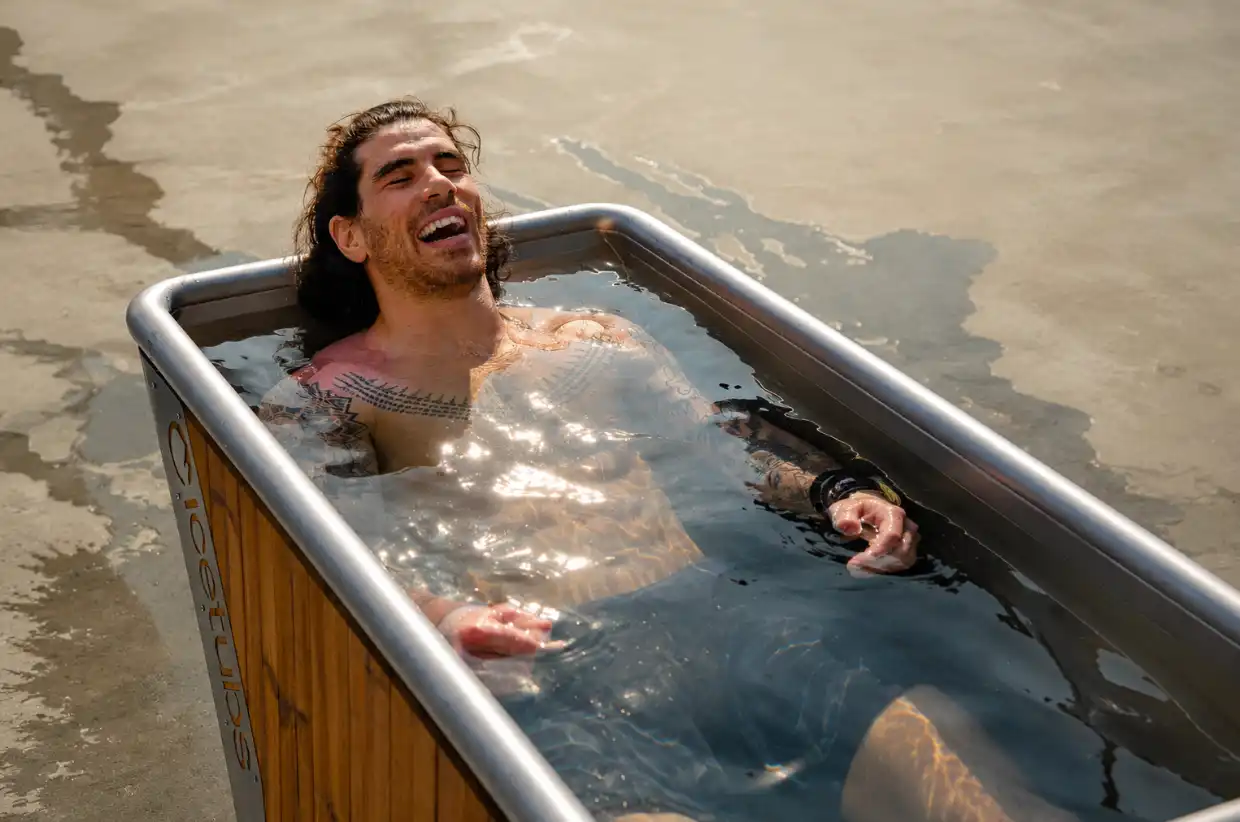
Temperatuur en duur zijn waarschijnlijk de twee variabelen waar je het meest aan denkt bij het plannen van een ijsbad.
Hoe koud moet het water zijn?
Hoe lang moet je erin blijven?
Er is geen universele combinatie die voor elke sporter werkt.
Je trainingsdoelen, ervaringsniveau, lichaamssamenstelling, tolerantie en algehele herstelbehoeften spelen allemaal een rol.
Kouder betekent niet automatisch beter
Het is makkelijk om aan te nemen dat een lagere temperatuur zorgt voor een beter hersteleffect.
Maar blootstelling aan kou werkt niet als een volumeknop waarbij het resultaat altijd verbetert als je deze lager zet.
Heel koud water zorgt voor een grotere fysiologische uitdaging.
Dat is wellicht onnodig als een meer gematigde blootstelling je al de ervaring geeft die je zoekt.
Het doel is niet om te bewijzen hoeveel kou je kunt verdragen.
Het gaat erom een herstelroutine te creëren die je consistent kunt volhouden.
Hoe temperatuur de ervaring verandert
Hoe kouder het water, hoe sneller je lichaam moet reageren.
Misschien merk je een sterkere eerste hap naar adem, een snellere ademhaling en een intenser gevoel op de huid.
Naarmate je meer gewend raakt aan blootstelling aan kou, zul je merken dat bepaalde temperaturen makkelijker te hanteren zijn.
Dat betekent niet dat je de temperatuur steeds verder moet verlagen.
Een niveau vinden dat je rustig kunt betreden en consistent kunt volhouden is nuttiger dan constant een nieuw persoonlijk record najagen.
Hoe zit het met de duur?
Langere sessies zijn ook niet automatisch beter.
De fysiologische reactie begint al snel nadat je in koud water bent gestapt.
Aanzienlijk langer blijven zitten alleen omdat je denkt dat het moet, kan onnodige stress veroorzaken.
Als je nieuw bent met blootstelling aan kou, geven kortere sessies je de kans om je ademhaling en algehele reactie te leren kennen.
Naarmate je meer ervaring opdoet, kun je een routine ontwikkelen die past bij je eigen tolerantie.
Je trainingsdoel is belangrijk
Een duursporter die moet herstellen tussen zware evenementen door, heeft wellicht andere prioriteiten dan iemand die traint voor spiergroei.
Als je snel weer moet presteren, kan het verminderen van spierpijn bijzonder nuttig zijn.
Als je je richt op hypertrofie, kun je beter selectiever zijn in wanneer je kou gebruikt na krachttraining.
Dezelfde temperatuur en duur moeten niet automatisch op elk type training worden toegepast.
Consistentie is makkelijker met temperatuurregeling
Een van de praktische voordelen van een speciaal ijsbad is dat je precies weet welke temperatuur je gebruikt.
Met Icetubs kun je de watertemperatuur instellen en een constante omgeving behouden, in plaats van te vertrouwen op zakken ijs die elke keer weer een ander resultaat geven.
Dat maakt het makkelijker om een herhaalbare routine op te bouwen.
Je kunt ontdekken welke temperatuur voor jou prettig voelt en hoe je lichaam reageert, zonder dat je constant de omstandigheden hoeft aan te passen.
Maak van herstel geen extra training
Er is een neiging om herstel onnodig competitief te maken.
Lagere temperatuur.
Langere duur.
Meer sessies.
Dat betekent niet automatisch dat je sneller herstelt.
Je lichaam heeft al genoeg te verwerken door de inspanning van je training.
Het doel van koudeblootstelling is om je routine te ondersteunen, niet om een extra uitdaging te creëren die je alleen maar uitput.
Let op je eigen reactie
Je eigen ervaring levert waardevolle informatie op.
Let eens op hoe je je voelt wanneer je het water in gaat.
Kun je je ademhaling onder controle houden?
Voel je je comfortabel genoeg om rustig te blijven?
Hoe voel je je daarna?
En, niet onbelangrijk, wat is de invloed van de sessie op je volgende training?
Die observaties zijn nuttiger dan het klakkeloos overnemen van iemands exacte temperatuur en duur.
Stem het af op je week
Een goede routine voor koudeblootstelling moet passen in je trainingsschema.
Misschien gebruik je het na een bijzonder zware duurtraining, maar sla je het over na een standaard krachttraining.
Misschien geef je er de voorkeur aan na een wedstrijd, maar niet tijdens een trainingsblok dat gericht is op maximale spieradaptatie.
Er is ruimte voor flexibiliteit.
De juiste dosis is persoonlijk
Er bestaat geen magische temperatuur of duur die een beter herstel voor atleten garandeert.
De beste aanpak is gecontroleerd, consistent en afgestemd op jouw doelen.
Begin met een blootstelling die je aankunt, let goed op hoe je lichaam reageert en ga er niet vanuit dat intenser automatisch effectiever betekent.
Voor het volledige kader over het gebruik van koudeblootstelling in combinatie met training, herstel, spierpijn en prestaties, ga verder met Ijsbad voor atletisch herstel: zo gebruik je het effectief