



In this blogpost:
Wie moet ijsbaden vermijden of eerst een arts raadplegen?
Ontdek wie koudwaterbaden moet vermijden of eerst een arts moet raadplegen, waaronder mensen met hartklachten, een hoge bloeddruk, zwangere vrouwen of mensen met doorbloedingsproblemen.

Koudwaterbaden kan uitgroeien tot een rustig en vast ritueel.
Maar het is niet voor iedereen de juiste methode.
De kou roept een sterke reactie op. Je ademhaling verandert. Bloedvaten vernauwen zich. Het hart moet harder werken. Voor veel gezonde volwassenen is dit goed te doen als de beoefening geleidelijk en gecontroleerd wordt opgebouwd. Voor anderen kan dezelfde reactie onnodige risico's met zich meebrengen.
Daarom begint veiligheid al voordat je het water in gaat.
Het begint bij weten of blootstelling aan kou geschikt is voor jouw gezondheid, je conditie en je huidige gesteldheid.
Mensen met hartklachten
Koud water heeft een snelle invloed op het cardiovasculaire systeem.
De eerste momenten in het water kunnen de hartslag en bloeddruk verhogen. Het lichaam komt in een staat van verhoogde alertheid en het hart moet daarop reageren.
Mensen met een hartaandoening, hartritmestoornissen, pijn op de borst, eerdere hartproblemen of andere hartgerelateerde zorgen moeten eerst een arts raadplegen voordat ze beginnen met koudwaterbaden.
Dit betekent niet dat iedereen met een hartverleden koudeblootstelling voor altijd moet vermijden. Het betekent dat de beslissing persoonlijk en medisch moet zijn, en moet worden begeleid door iemand die uw gezondheid begrijpt.
Mensen met een hoge bloeddruk
Koud water kan bloedvaten vernauwen. Dit kan de druk op het cardiovasculaire systeem verhogen, vooral bij plotselinge blootstelling.
Iedereen met een ongecontroleerde hoge bloeddruk moet voorzichtig zijn. Als de bloeddruk wordt behandeld of gecontroleerd, is het nog steeds verstandig om een arts te raadplegen voordat u begint.
Een koudwaterbad lijkt van buitenaf misschien eenvoudig. Maar in het lichaam kan het binnen enkele seconden een sterke reactie teweegbrengen.
Mensen met doorbloedingsstoornissen
Blootstelling aan kou kan lastig zijn voor mensen met doorbloedingsproblemen.
Aandoeningen die de bloedsomloop beïnvloeden, kunnen ervoor zorgen dat handen, voeten, vingers of tenen sterker reageren op kou. Gevoelloosheid, pijn, verkleuringen of aanhoudend ongemak mogen niet worden genegeerd.
Het syndroom van Raynaud is een voorbeeld waarbij kou symptomen in de ledematen kan uitlokken. Als u een aandoening aan de bloedsomloop heeft, mag u alleen met medisch advies overwegen om in koud water te dompelen.
Het doel is niet om waarschuwingssignalen te negeren. Het doel is om ze te begrijpen.
Zwangere personen
Tijdens de zwangerschap veranderen de bloedsomloop, de temperatuurregulatie, de ademhaling en de cardiovasculaire belasting.
Omdat koudwaterbaden al deze systemen kunnen beïnvloeden, moeten zwangere personen met een arts of verloskundige overleggen voordat ze beginnen of doorgaan met koudwaterimmersie.
Dit is een gebied waar algemeen advies niet volstaat. Elke zwangerschap is anders. Kies bij enige twijfel voor een mildere wellnessmethode totdat u medisch advies heeft ingewonnen.
Personen met aandoeningen die door kou worden uitgelokt
Sommige lichamen reageren sterk op kou.
Koude-urticaria kan bijvoorbeeld huidreacties veroorzaken na blootstelling aan kou. Andere gezondheidsproblemen, waaronder bepaalde kwesties met de bloeddruk, het hartritme of de temperatuurregulatie, kunnen koudwaterbaden eveneens ongeschikt maken.
Als kou in het verleden heeft geleid tot ernstige huidreacties, flauwvallen, ademhalingsmoeilijkheden of ongebruikelijke symptomen, neem deze signalen dan uiterst serieus.
Je lichaam geeft mogelijk al aan dat voorzichtigheid geboden is bij deze praktijk.
Wanneer je je niet goed voelt of uitgeput bent
Zelfs gezonde mensen kunnen op bepaalde dagen beter niet in een koud bad stappen.
Vermijd blootstelling aan kou als je koorts hebt, duizelig bent, uitgedroogd bent, ongewoon vermoeid bent of herstellende bent van een ziekte. Vermijd koud baden ook na het drinken van alcohol of wanneer je je fysiek instabiel voelt.
Kou is een stressfactor. Het kan nuttig zijn als het lichaam er klaar voor is, maar het kan te veel zijn wanneer het lichaam al onder druk staat.
Gecontroleerd betekent niet risicovrij
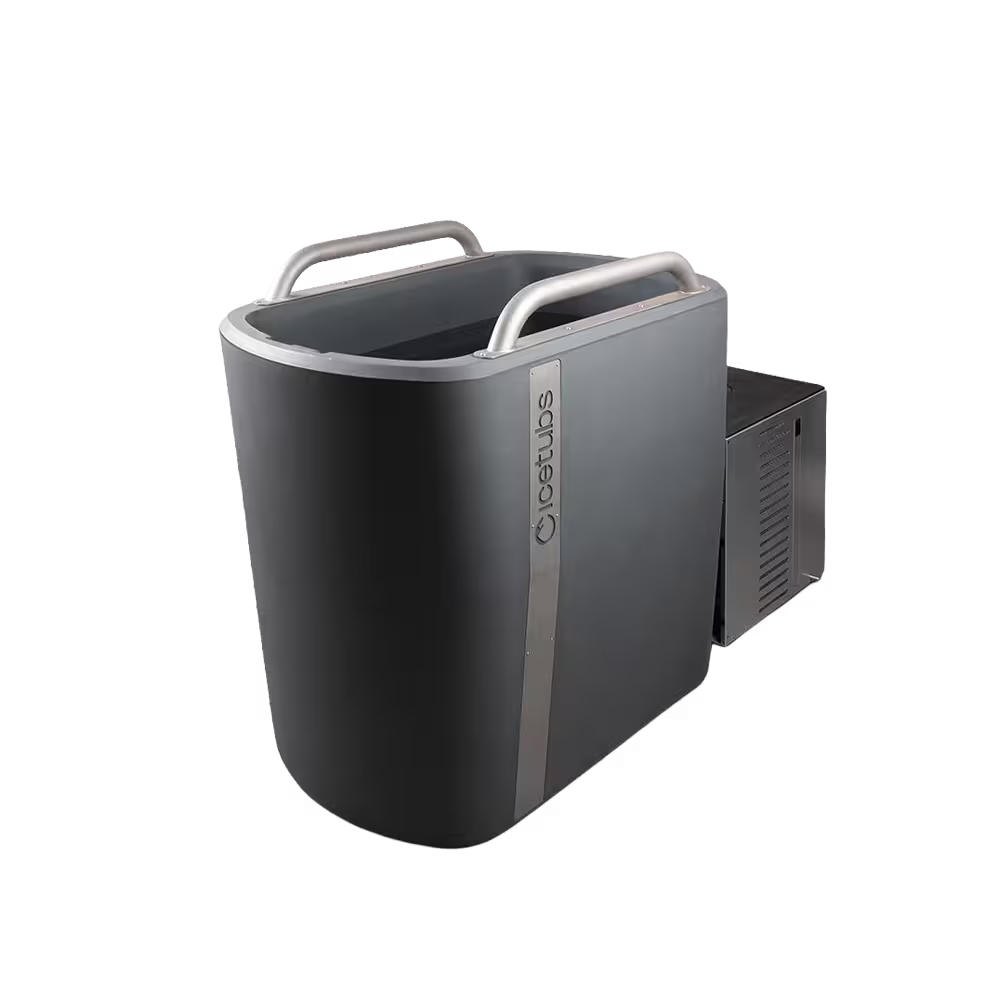
Een gecontroleerde opstelling kan koud baden makkelijker beheersbaar maken. Icetubs-systemen stellen gebruikers bijvoorbeeld in staat om een vaste temperatuur te kiezen en te behouden, in plaats van te vertrouwen op onvoorspelbare koeling met ijs.
Maar controle neemt de noodzaak voor eigen beoordelingsvermogen niet weg.
Als je gezondheidshistorie koudetraining riskant maakt, is medisch advies de veiligste eerste stap.
Veiligheid boven routine
Een ijsbad mag nooit voelen als iets dat je koste wat het kost moet doen.
Heb je een hartaandoening, hoge bloeddruk, doorbloedingsproblemen, ben je zwanger, heb je last van koude-allergieën of ben je wel eens flauwgevallen? Raadpleeg dan eerst een arts voordat je begint.
De veiligste ijsbadroutine begint al voordat je het water in gaat.
Het begint bij weten of deze praktijk geschikt is voor jou.
Voor het volledige veiligheidskader, ga verder met Veiligheid bij ijsbaden: Complete gids over risico's en best practices.