



In this blogpost:
Cold shock-respons: Waarom de eerste seconden cruciaal zijn
Begrijp de koude-shockreactie, inclusief happen naar adem, versnelde ademhaling en hartbelasting, en ontdek veiligere manieren om gecontroleerd en kalm het koude water in te gaan.

Een koude-shock is de eerste reactie van het lichaam op plotseling contact met koud water.
Dit kan heel snel gebeuren.
Je adem stokt. Je borstkas trekt samen. Je hartslag gaat omhoog. Je wordt alert. Een paar seconden lang kan het voelen alsof je lichaam wil vluchten, nog voordat je goed en wel in het water bent.
Deze reactie is normaal, maar mag niet worden genegeerd.
Begrijpen wat een koude-shock inhoudt, is een van de belangrijkste onderdelen van veilig koudwaterbaden.
Hoe een koude-shock voelt
Een koude-shock begint vaak bij de ademhaling.
Je kunt naar adem happen zodra het water je lichaam raakt. Je ademhaling kan snel en oppervlakkig worden. Je schouders kunnen omhoog trekken. Je spieren kunnen zich aanspannen.
Daarom zijn de eerste momenten van een koud bad zo belangrijk.
Als je te snel het water in gaat, kan de reactie overweldigend aanvoelen. Als je gecontroleerd te werk gaat, geef je je lichaam een betere kans om zich aan te passen.
Het doel is niet om de reactie volledig weg te nemen. Het doel is om deze te beheersen.
Waarom de ademhaling belangrijk is
Ademhaling staat centraal bij een koudeschok.
Een plotselinge duik in koud water kan een hapreflex uitlokken, waardoor je ademhaling snel of moeizaam kan aanvoelen, zeker in de eerste momenten van onderdompeling.
Daarom moeten beginners hun hoofd boven water houden en langzaam het water in gaan. Je ademhaling moet je anker zijn, niet iets dat je verliest.
Haal een paar keer rustig adem voordat je het water in gaat. Focus je eenmaal in het water op lange uitademingen. Laat de eerste golf van kou voorbijgaan voordat je besluit of je langer blijft zitten.
Ook je hart reageert
Een koudeschok heeft niet alleen invloed op je ademhaling.
Ook je hart en bloedvaten reageren. Je hartslag kan omhoog gaan en je bloeddruk kan stijgen. Je lichaam schakelt snel over naar een staat van verhoogde alertheid.
Voor gezonde gebruikers is dit vaak beheersbaar door geleidelijke blootstelling. Voor mensen met hartaandoeningen, doorbloedingsproblemen of een onbeheersbare bloeddruk kan deze reactie echter risicovol zijn.
Daarom is je persoonlijke gezondheidsgeschiedenis van belang.
Hoe je de schok vermindert
Je hebt de kou niet volledig in de hand, maar wel de manier waarop je het water ingaat.
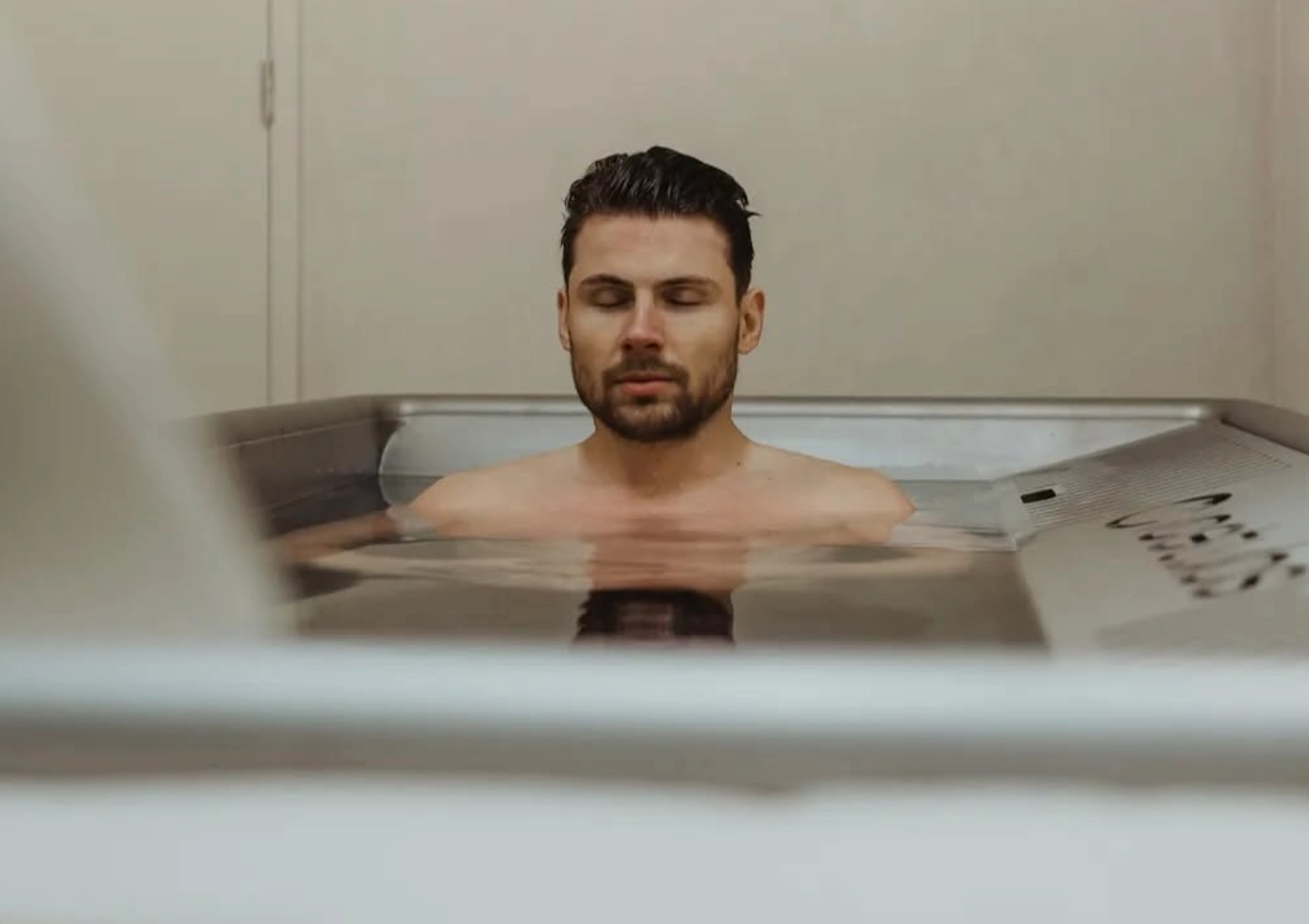
Bereid je voor voordat je het water instapt. Sta stil. Adem rustig. Ontspan je schouders. Ga geleidelijk het water in in plaats van erin te springen.
Houd je gezicht ontspannen zodra je in het water bent. Dompel je hoofd in het begin niet onder. Geef je lichaam de tijd om de eerste reactie te verwerken.
De eerste 30 seconden zijn vaak het belangrijkst.
Vermijd plotselinge temperatuurdalingen
De koudeschok kan heftiger aanvoelen wanneer de watertemperatuur onvoorspelbaar is.
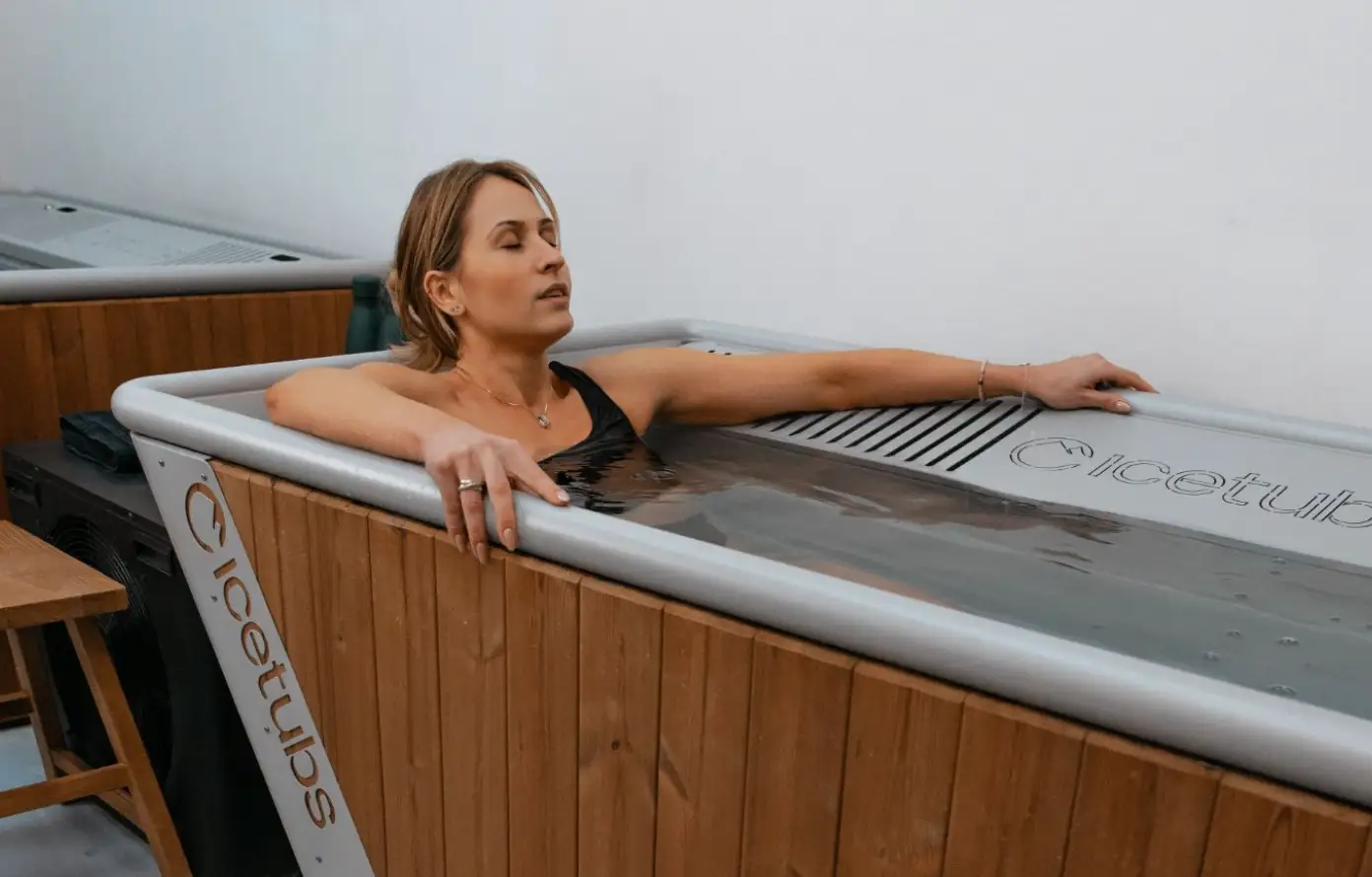
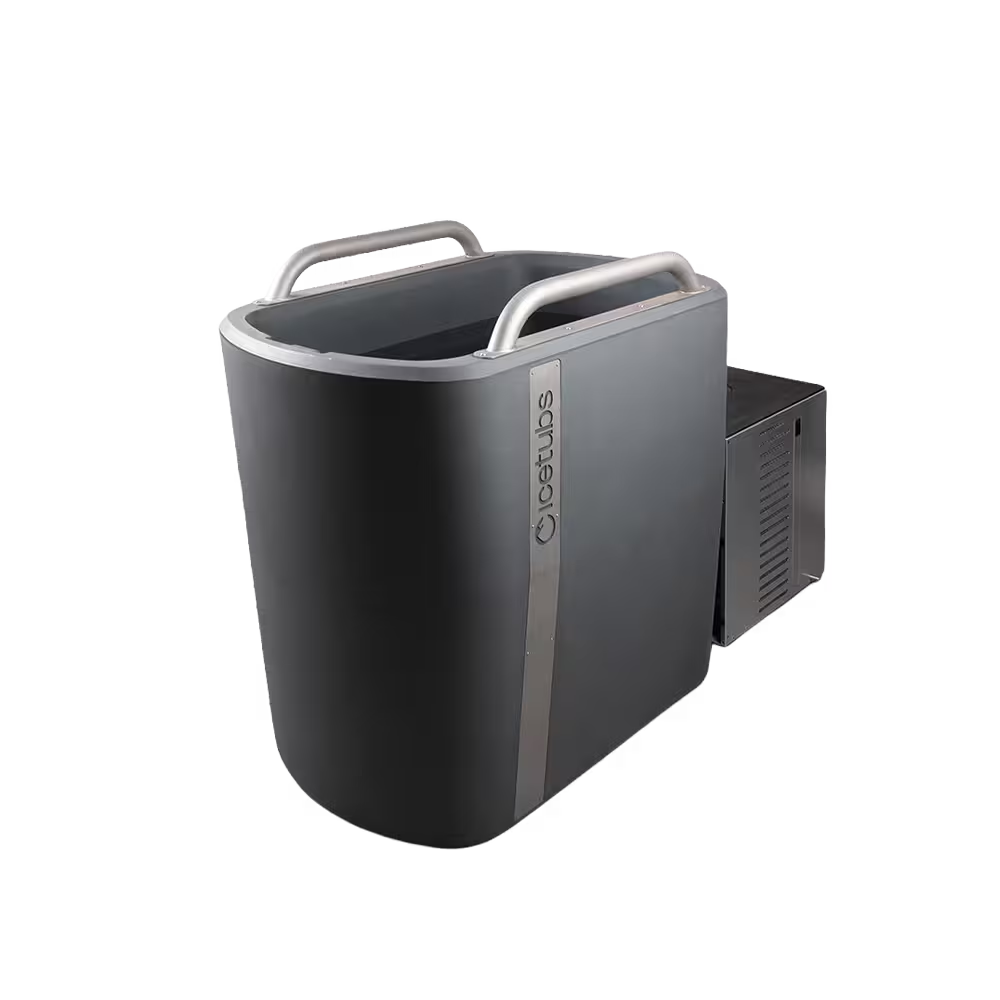
Dit is een van de redenen waarom gecontroleerde koudetherapie nuttig kan zijn. Met Icetubs kunnen gebruikers de watertemperatuur instellen via de app of het display, in plaats van alleen te vertrouwen op ijs en giswerk.
Een bekende temperatuur maakt het makkelijker om langzaam vooruitgang te boeken, sessies te herhalen en te begrijpen hoe je lichaam reageert.
Doe geen intensieve ademhalingsoefeningen in het water
Ademhalingsoefeningen en koudwaterbaden kunnen goed samengaan, maar wees voorzichtig.
Krachtige ademhalingstechnieken moeten niet in het water worden uitgevoerd. Ze kunnen bij sommige mensen een licht gevoel in het hoofd veroorzaken, en dat risico wordt groter in de buurt van koud water.
Als je ademhalingsoefeningen doet, doe dit dan vooraf op een veilige plek. Keer daarna terug naar een normale ademhaling voordat je het water ingaat.
Houd het in het water simpel.
Herken wanneer de schok te groot is
Een sterke reactie betekent niet altijd direct gevaar, maar bij sommige signalen moet je stoppen.
Verlaat het water als je je ademhaling niet onder controle krijgt, duizelig wordt, pijn op de borst voelt, verward raakt of je onveilig voelt.
De timer is minder belangrijk dan je lichaam.
Laat de eerste momenten je gids zijn
De koudeschok is iets waar je niet tegen moet vechten.
Het is iets dat je moet begrijpen.
Ga langzaam het water in. Adem rustig. Houd de sessie kort. Laat je lichaam wennen voordat je verder gaat.
Hoe meer je de eerste reactie respecteert, hoe veiliger en rustiger de beoefening wordt.
Voor een volledige veiligheidsroutine, ga verder met Veiligheid bij ijsbaden: De complete gids voor risico's en best practices.