



In this blogpost:
Can Cold Plunging Build Confidence and Mental Toughness?
Discover how cold plunging can challenge your comfort zone, build confidence, and help you practise staying composed when things feel difficult.
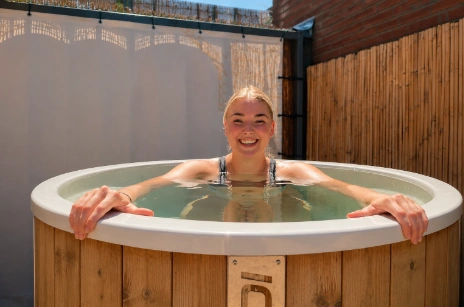
Confidence is not always about feeling comfortable.
Sometimes it comes from knowing you can handle something uncomfortable.
That is one reason cold plunging carries a psychological appeal.
You know the water will be cold. You know your body will react. You enter anyway — and then you discover the experience is manageable.
The First Step, and the Feedback That Follows
Before entering a cold plunge, your brain already knows what is coming. You may hesitate. Think about how cold the water will feel. Want to postpone the session. That moment is part of the experience — making the decision to enter is a small opportunity to practise acting despite discomfort.
There is no hiding from cold water. Your body reacts instantly.
Your breathing changes.
Your attention narrows.
Your mind may look for an exit.
You then have to decide how you respond: slow your breathing, relax your shoulders, stay present, or step out if the exposure becomes too much.
That immediate feedback makes cold exposure different from many abstract forms of self-discipline.
Does It Build Mental Toughness?
It can help you practise certain behaviours associated with resilience. But mental toughness is not simply the ability to tolerate pain — knowing when to stop is also part of self-awareness.
A good cold routine should not reward reckless behaviour. The goal is becoming more comfortable with manageable discomfort, not ignoring your body's warning signals.
This discipline is often paired with Wim Hof Method + Cold Plunge: How to Combine Them for how the two fit together.
Confidence Comes From Repetition, Not Extremes
One difficult session may feel impressive. Repeated experiences are more useful. The first time may feel overwhelming — a few weeks later, the same temperature feels familiar. You have evidence that you can enter, regulate your response, and finish, and that gradually changes how you think about your own ability to handle discomfort.
There is a difference between challenging yourself and constantly escalating the challenge.
You do not need to lower the temperature every week.
Extend your sessions.
Compete with someone else's routine.
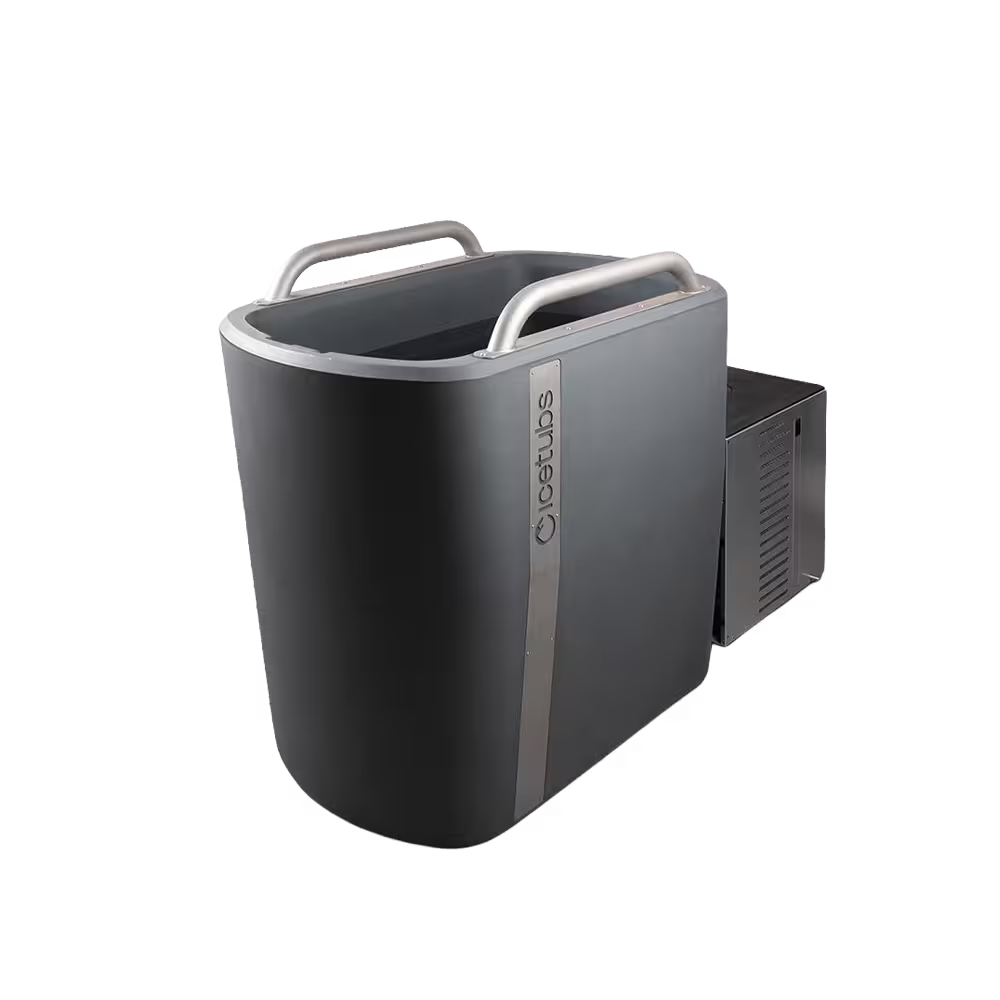
Confidence comes from doing something consistently well — not from making it unnecessarily difficult. A consistent setup helps here too: Icetubs gives you control over water temperature through the system and app, so you return to a familiar setting rather than a different ice bath every time.
Taking the Lesson Beyond the Tub
The cold itself is not the point. The useful part is the process: something feels difficult, you pause, regulate your response, make a decision, move forward.
That same pattern applies elsewhere — a difficult conversation, a demanding workday, a decision you have been avoiding. Cold exposure does not automatically make you confident in those situations. But it gives you a small, repeatable place to practise showing up.
Being mentally strong does not mean forcing yourself through everything. Sometimes resilience means knowing when to rest, when to ask for help, when to change your approach.
You do not need anyone else to know how cold your water is.
You do not need to prove you can tolerate more than yesterday.
The most meaningful progress is quieter: you enter with less hesitation, breathe more calmly, and leave feeling capable.
That is enough.
For the full picture of how cold exposure can support mental wellbeing, stress management, focus, mood, and resilience, explore Cold Plunge for Mental Wellbeing: How Cold Therapy May Help