





In this blogpost:
What a Cold Plunge Does to Cortisol and Your Stress Response
Understand how cold plunging affects cortisol and the stress response, including what happens during exposure, adaptation over time, and recovery afterwards.
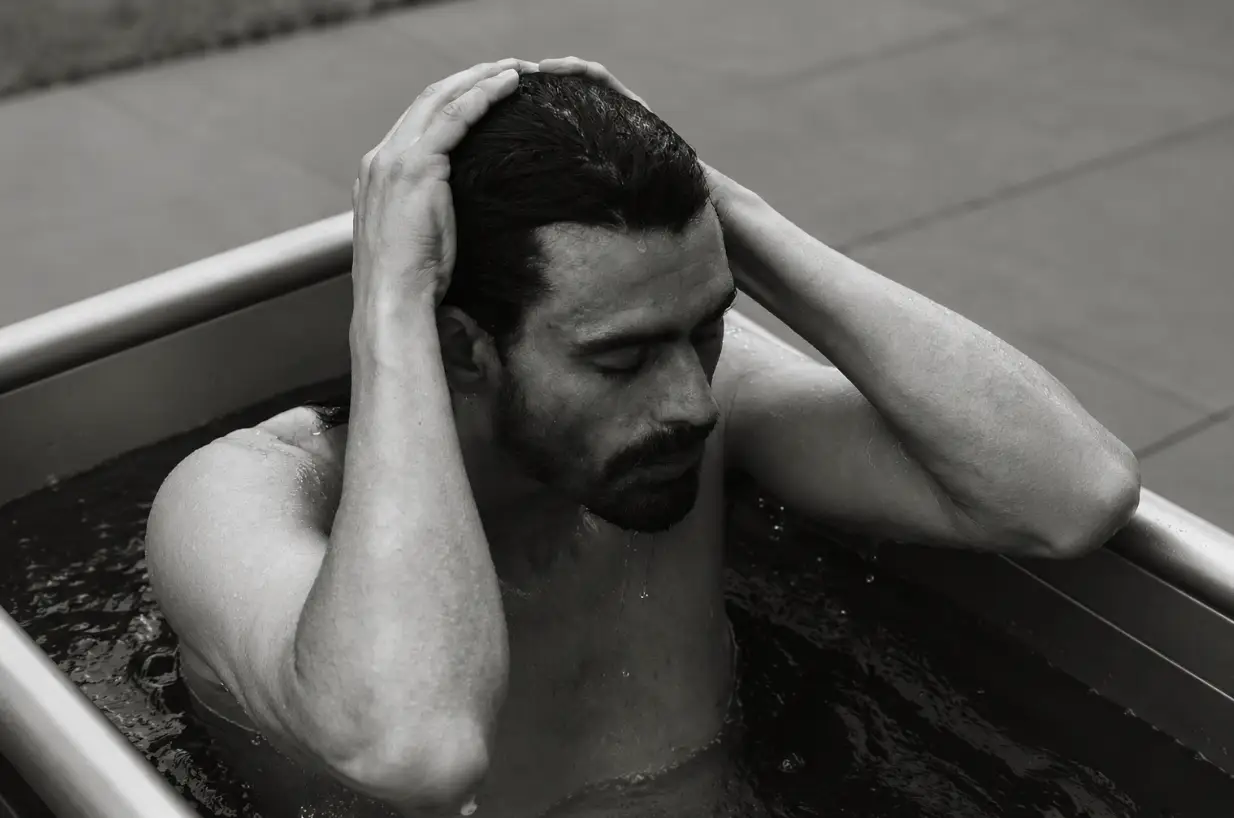
Cold plunging is often described as a way to reduce stress.
But the immediate physiological response tells a more complicated story.
When you enter cold water, your body recognises a physical stressor. Your breathing changes, blood vessels constrict, the nervous system becomes more alert, and stress-related hormones respond.
Cortisol is part of that response.
Understanding the difference between an acute stress response and long-term stress is key to understanding cold exposure.
What Is Cortisol?
Cortisol is a hormone produced by your adrenal glands.
It plays a role in metabolism, blood pressure, immune function, energy availability, and the body's response to stress.
You need cortisol.
Your levels naturally change throughout the day, typically following a circadian rhythm.
So cortisol itself is not something you need to eliminate.
The important question is how your body responds to a particular stressor and how quickly it returns towards its normal state.
Cold Creates an Acute Stress Response
Entering cold water creates an immediate challenge.
Cold receptors in your skin send signals to your nervous system. Sympathetic activity increases, your breathing may become faster, and your cardiovascular system responds.
Cortisol can also increase during acute cold exposure.
That does not mean the cold plunge is inherently harmful.
It means your body is responding appropriately to a sudden physical stressor.
Acute Stress Is Different From Chronic Stress
This distinction is important.
A short, controlled stress response is not the same thing as prolonged psychological or physiological stress.
Your body is designed to respond to challenges and then recover.
Cold exposure creates a temporary challenge.
Once you leave the water, dry off, and begin warming, the acute response gradually settles.
This is part of what makes cold exposure interesting as a form of controlled stress.
Does Cold Lower Cortisol Afterwards?
You may feel calmer after a cold plunge.
But it would be too simplistic to say that cold exposure always lowers cortisol.
The hormonal response depends on the temperature, duration, timing, your previous exposure, and individual physiology.
Different studies also measure cortisol at different points during and after exposure.
The immediate response and the later response are not necessarily the same.
What you feel after the plunge therefore cannot automatically be interpreted as a direct measure of what your cortisol is doing.
Adaptation Changes the Response
Repeated exposure can change how your body reacts to the same cold stimulus.
The initial shock can become easier to manage, breathing can become more controlled, and some stress responses may become less pronounced with acclimation.
That is one of the clearest examples of your body adapting to a repeated environmental challenge.
It does not mean the cold stops being a stressor.
Your response simply becomes more familiar.
Why Control Matters
If you change the temperature dramatically every time, it becomes difficult to understand what your body is adapting to.
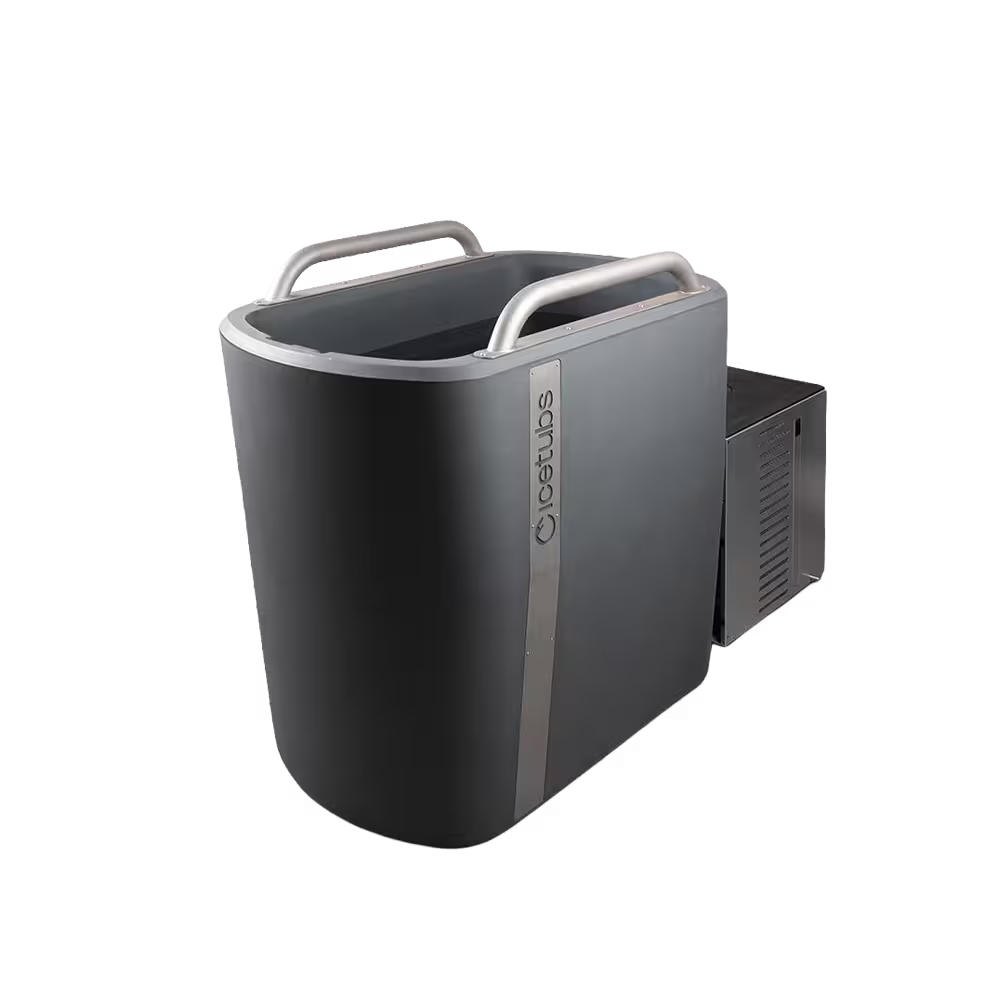
Icetubs allows you to maintain a controlled water temperature, making it easier to create a consistent exposure and gradually learn what level works for you.
That is more useful than treating every session as a test of endurance.
Cold Is Not a Stress-Elimination Tool
Cold exposure should not be marketed as a way to eliminate stress hormones.
The more accurate picture is that cold creates a short-lived stress response that your body then has to regulate.
That is the interesting part.
You are giving your body a manageable challenge and learning how you respond to it.
The goal is not to remove every stress response from your life.
It is to understand the difference between useful, controlled stress and stress that becomes excessive.
To see how cortisol fits into the wider physiological response to cold, continue with The Science of Cold Exposure: How It Affects Your Body