





In this blogpost:
Fabriquer son bain froid à partir d'un congélateur coffre : ce qu'il faut savoir avant de se lancer
Apprenez à concevoir votre bain froid DIY à partir d'un congélateur coffre en privilégiant la sécurité : planification, étanchéité, drainage, contrôle de la température, précautions électriques et entretien.
Un bain froid réalisé avec un congélateur coffre peut sembler être le projet DIY idéal.
Il est isolé.
Il retient l'eau.
Il peut atteindre des températures très basses.
Il peut coûter moins cher qu'un système de bain froid dédié.
C'est pourquoi beaucoup de gens envisagent cette option.
Cependant, un congélateur coffre n'a pas été conçu à l'origine pour servir de bain froid. Il est destiné à congeler des aliments, et non à contenir de l'eau dans laquelle une personne entre et sort régulièrement.
Ce projet nécessite donc une grande prudence.
C'est peut-être réalisable, mais ce n'est pas le bain froid DIY le plus simple à construire.
Comprendre le véritable compromis
L'argument principal est le coût.
Transformer un congélateur coffre peut sembler plus abordable que d'acheter un bain froid conçu à cet effet. Il peut également mieux conserver le froid qu'un bac en plastique ou une baignoire classique.
Mais ce coût initial plus bas s'accompagne de responsabilités supplémentaires.
Vous devez penser à l'étanchéité, au drainage, au contrôle de la température, au nettoyage, à la sécurité d'accès et aux risques électriques. Vous pourriez également avoir besoin de pièces supplémentaires et de l'aide d'un professionnel.
Le bricolage ne supprime pas la complexité.
Il la transfère sur vous.
Choisissez le congélateur avec soin
Tous les congélateurs coffres ne conviennent pas.
La taille doit être adaptée à votre morphologie sans vous forcer à adopter une position inconfortable. Les parois doivent être stables. Le couvercle doit s'ouvrir facilement et ne jamais présenter de risque de coincement. Le congélateur doit être installé sur une surface plane et solide.
Avant de penser à l'eau, posez-vous une question simple : pouvez-vous entrer et sortir en toute sécurité ?
S'il est difficile d'entrer dans le congélateur lorsqu'il est vide, ce sera encore plus ardu une fois qu'il sera mouillé, froid et rempli d'eau.
L'étanchéité avant tout
Un congélateur coffre n'est pas prêt à être transformé en bain froid sans préparation.
Les joints, les coins, la zone de vidange et les surfaces intérieures peuvent nécessiter une étanchéification. Si l'étanchéité est mal faite, le congélateur risque de fuir, de se détériorer ou de poser des problèmes de sécurité.
C'est là que de nombreux projets faits maison deviennent plus complexes que prévu.
Prenez votre temps. Renseignez-vous sur les matériaux. Vérifiez si le mastic est adapté à un contact prolongé avec l'eau. Laissez le tout sécher correctement avant de remplir le congélateur.
Un travail d'étanchéité bâclé peut coûter cher.
Ne plaisantez pas avec l'électricité
C'est le point le plus critique en matière de sécurité.
Un congélateur coffre fonctionne à l'électricité. Un bain froid utilise de l'eau. L'association des deux impose une priorité absolue à la sécurité électrique.
N'utilisez jamais de câbles endommagés. Ne laissez pas les prises à proximité de sols humides. N'utilisez pas de branchements improvisés. N'entrez pas dans l'eau si vous avez le moindre doute concernant l'installation électrique.
La protection par disjoncteur différentiel (GFCI) est essentielle dans les zones humides pour réduire les risques d'électrocution. Pour la transformation d'un congélateur, il est vivement conseillé de consulter un électricien qualifié avant toute utilisation.
Un bain froid ne doit jamais représenter un risque électrique.
Contrôler la température
Un congélateur coffre peut refroidir l'eau de manière extrême.
Cela peut sembler pratique, mais c'est aussi une source de danger. Si la température de l'eau chute plus bas que prévu, la séance peut devenir difficile à maîtriser.
Utilisez un thermomètre avant chaque bain. Ne vous fiez pas uniquement à vos sensations. Si vous débutez, commencez par une température modérée et limitez la durée de la séance.
L'exposition au froid doit être mesurée, jamais improvisée.
Prévoir la vidange et le nettoyage
L'entretien de l'eau est un autre aspect majeur de la construction.
Vous devez prévoir un moyen de vider le congélateur, de nettoyer l'intérieur et de garder l'eau propre. Sans une circulation ou une filtration adéquate, l'eau devra être changée fréquemment.
Avant le premier remplissage, déterminez précisément comment l'entretien sera effectué.
Si la vidange est difficile, vous aurez tendance à repousser le nettoyage. Dès que l'entretien devient une corvée, l'intérêt de l'installation diminue.
Déterminez si cela en vaut la peine
Un bain froid à partir d'un congélateur coffre peut convenir aux bricoleurs avertis qui apprécient ce type de projet et en comprennent les risques.
Cependant, ce n'est pas la solution la plus accessible pour les débutants.
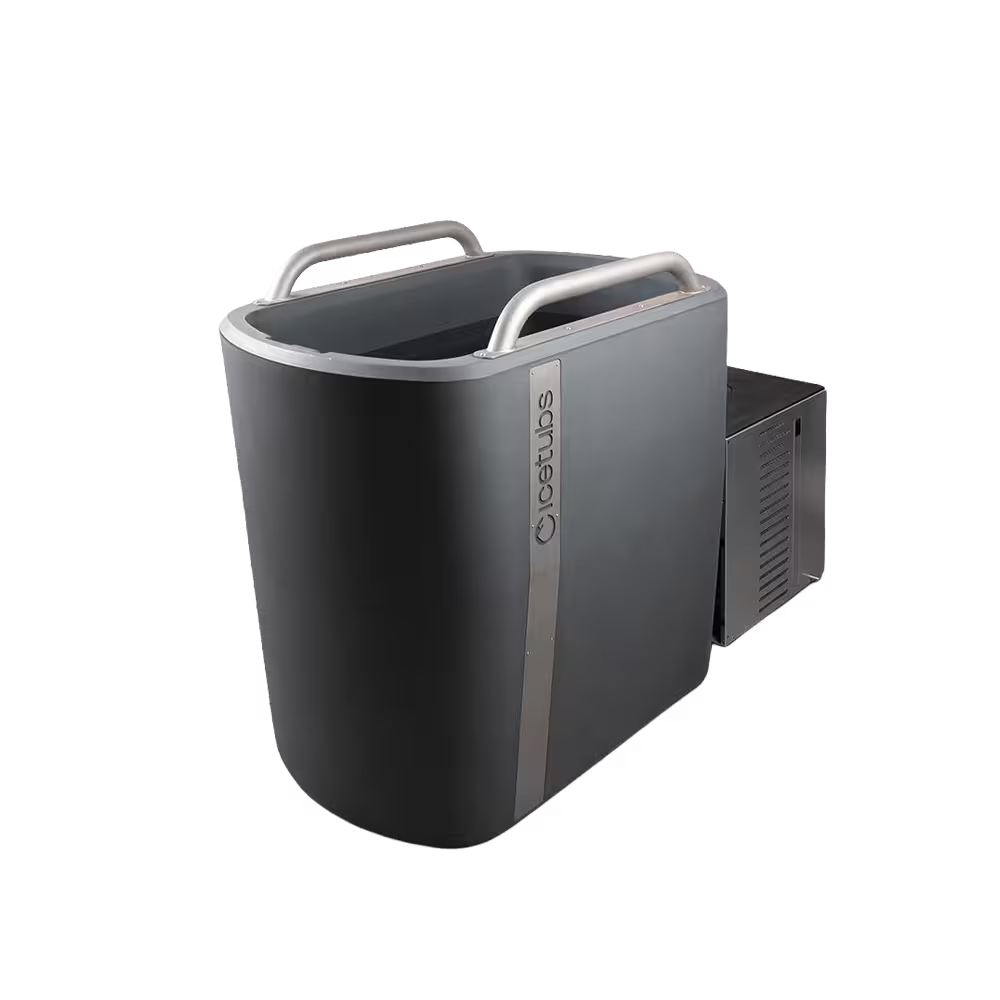
Si vous souhaitez simplement essayer les bains froids, une baignoire ou un bac de pâturage peut être plus simple. Si vous recherchez une routine prête à l'emploi sans avoir à gérer l'étanchéité, le câblage, l'approvisionnement en glace et les réglages de température approximatifs, un système Icetubs dédié sera plus pratique sur le long terme.
Pour plus d'options de construction DIY et de conseils de planification, lisez Comment construire son propre bain froid : guide complet.