





In this blogpost:
Le bain froid pendant la ménopause : comment aborder la pratique en douceur
Découvrez la pratique du bain froid pendant la ménopause, notamment ses effets sur les bouffées de chaleur, l'humeur, le sommeil, le stress, les précautions à prendre et comment instaurer un rituel en douceur.
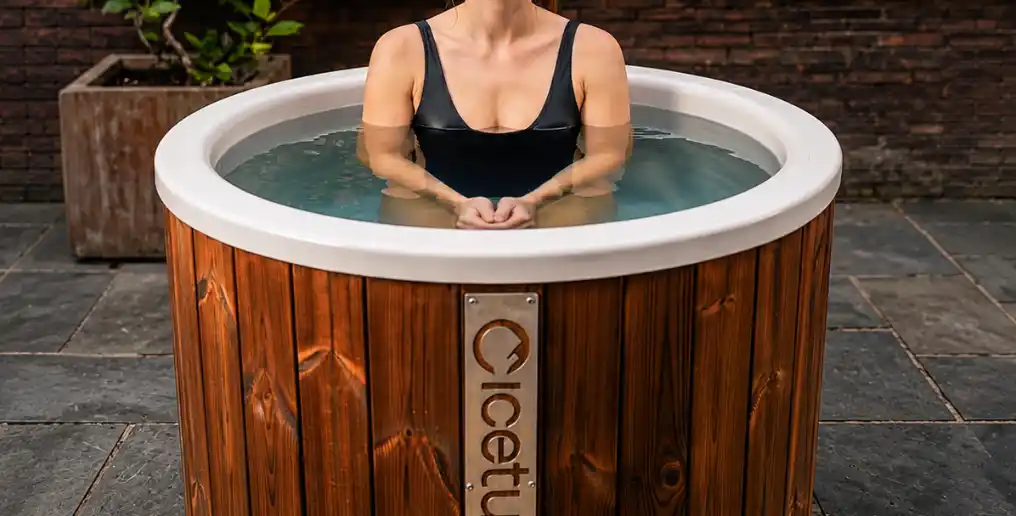
La ménopause peut modifier les sensations corporelles au quotidien.
Vous pouvez ressentir des bouffées de chaleur, des sueurs nocturnes, des troubles du sommeil, des sautes d'humeur, un brouillard mental, des douleurs articulaires ou une tolérance au stress différente. Certains jours semblent stables, d'autres plus imprévisibles.
Le bain froid peut s'avérer séduisant durant cette période, car il offre un contraste saisissant.
Une sensation nette.
Un reset rafraîchissant.
Un moment pour respirer.
Mais la ménopause est aussi une période où il faut pratiquer avec précaution.
Le froid peut être vivifiant, mais il reste un facteur de stress
L'eau froide peut apaiser lorsque votre corps se sent déjà chaud, agité ou inconfortable.
Pour certaines femmes, l'immersion peut procurer un sentiment de soulagement, surtout lorsqu'elle est associée à une respiration lente et à un réchauffement calme par la suite. Les recherches sur la baignade en eau froide et la ménopause sont encore en cours, mais certaines femmes rapportent une amélioration de leur humeur, de leurs bouffées de chaleur et de leur anxiété.
Cependant, l'exposition au froid n'est pas toujours douce.
Elle peut accroître la vigilance, modifier la respiration et solliciter le système cardiovasculaire. Cela signifie que la pratique doit être mesurée et non précipitée.
Commencez par une routine courte et gérable
La ménopause n'est pas le moment de tester votre endurance.
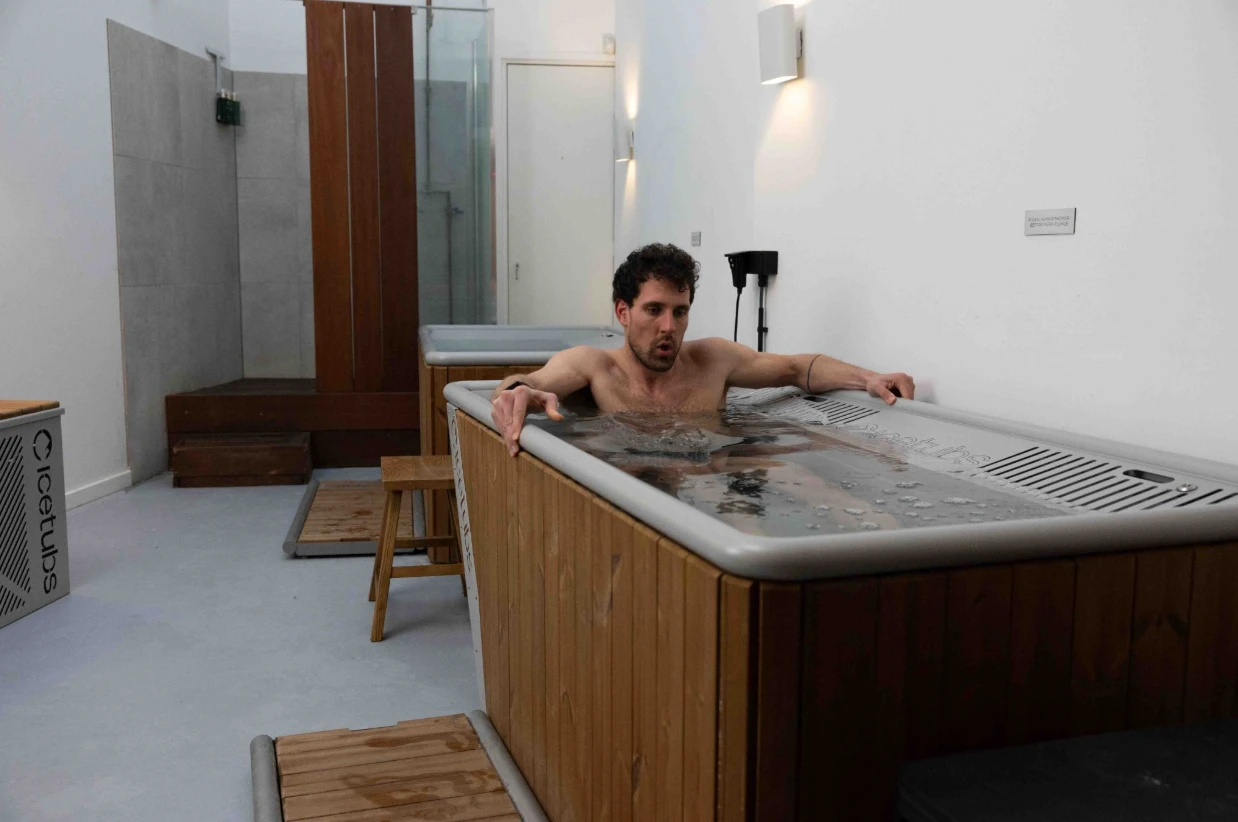
Une courte immersion peut suffire. Entrez lentement dans l'eau, gardez la tête hors de l'eau et concentrez-vous sur une longue expiration. Si le froid semble trop vif, réduisez la durée ou choisissez une température plus clémente.
Vous pouvez également utiliser l'immersion en eau froide comme une parenthèse occasionnelle plutôt que comme une règle quotidienne.
L'objectif n'est pas d'ajouter une pression supplémentaire à votre vie. L'objectif est de créer un rituel qui vous apporte du soutien.
Pensez aux bouffées de chaleur et aux sueurs nocturnes
Si vous souffrez de bouffées de chaleur ou de sueurs nocturnes, le moment choisi a son importance.
Un bain froid en début de journée ou en début de soirée peut être rafraîchissant. Cependant, s'immerger trop près de l'heure du coucher peut s'avérer trop stimulant pour certaines personnes, surtout si cela vous maintient en état d'alerte par la suite.
Soyez à l'écoute de votre sommeil.
Si l'eau froide vous aide à vous apaiser, restez sur une pratique douce. Si elle vous donne un regain d'énergie, avancez votre séance ou réduisez l'intensité.
Préservez votre énergie
La ménopause peut affecter la récupération.
Le manque de sommeil, le stress et les changements hormonaux peuvent rendre le corps plus sensible. Un bain froid peut être agréable une semaine et trop intense la suivante.
C'est tout à fait normal.
Adaptez votre routine. Raccourcissez la séance. Réchauffez-vous plus progressivement. Prenez des jours de repos. Choisissez un environnement plus calme.
Cette pratique doit correspondre à votre niveau d'énergie, et non l'épuiser.
Misez sur la maîtrise plutôt que sur l'improvisation
Une température constante permet de mieux intégrer cette pratique à votre routine.
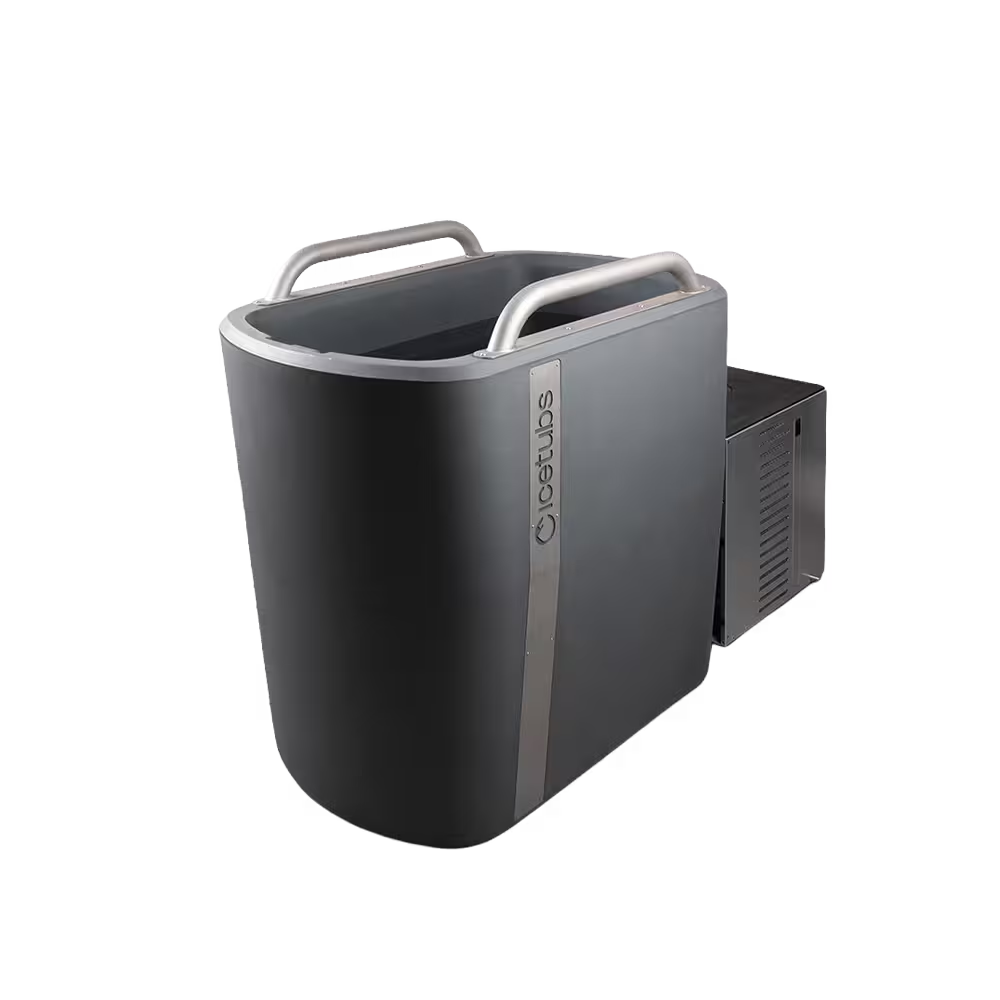
Avec Icetubs, vous pouvez régler la température de l'eau via l'application ou les commandes de l'écran, ce qui facilite le choix d'un point de départ doux et un ajustement progressif en fonction de la réaction de votre corps.
Cela peut s'avérer utile pendant la ménopause, période où le confort et la prévisibilité peuvent primer sur l'intensité.
Connaître la température vous aide à identifier ce qui vous convient le mieux.
Savoir quand demander conseil
Si vous souffrez de problèmes cardiaques, d'hypertension non contrôlée, de troubles de la circulation, d'antécédents de malaise ou d'autres problèmes de santé, consultez un professionnel de santé avant de pratiquer l'immersion en eau froide.
Il en va de même si vos symptômes de ménopause sont sévères ou si vous avez un doute sur l'adéquation de l'exposition au froid avec votre état de santé.
L'avis médical n'est pas un obstacle au bien-être. Il fait partie intégrante d'une pratique en toute sécurité.
Gardez une approche douce
L'immersion en eau froide pendant la ménopause n'a pas besoin d'être extrême.
Il peut s'agir d'une courte pause, d'un moment de fraîcheur. Un instant de respiration pour un corps en pleine mutation.
Commencez en douceur. Observez vos sensations. Ajustez sans jugement.
Pour une vue d'ensemble plus large selon vos objectifs, poursuivez avec Le bain froid pour tous : qui peut en bénéficier et comment.