



In this blogpost:
Starting a Cold Plunge Recovery Studio: From Concept to Launch
Planning a cold plunge recovery studio? Learn how to shape your concept, space, equipment, pricing, operations, customer journey, and launch strategy.
A cold plunge recovery studio can be built around a simple proposition: make structured cold exposure easy to access.
But turning that idea into a business requires more than finding a location and installing a tub.
You need a clear concept, practical operations, and a reason for customers to return.
Define the Experience
Start by deciding what your studio actually offers.
Will customers receive a standalone cold plunge session?
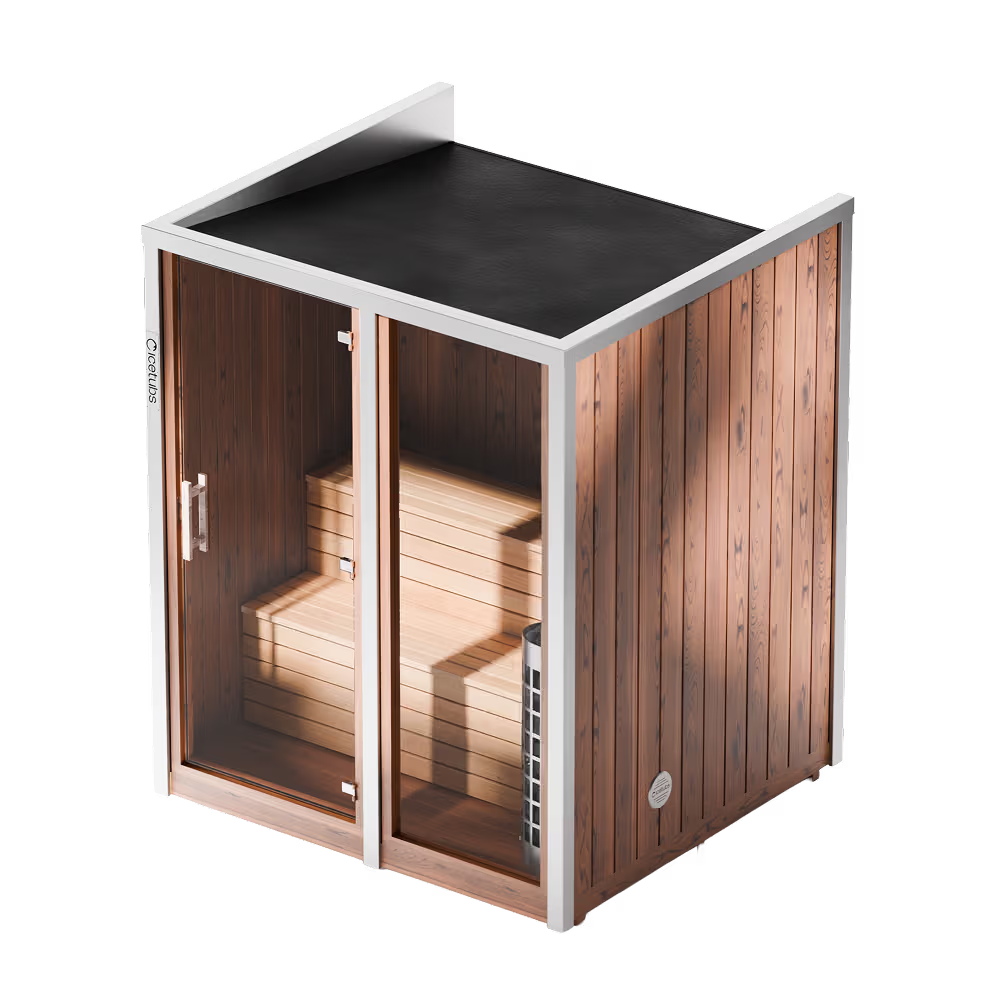
Will you combine cold exposure with sauna?
Will sessions be guided?
Will you offer memberships?
Your answer determines the space, staffing, pricing, and equipment you need.
A focused concept is easier to communicate and easier for customers to understand.
Design the Space Around Flow
Think about the complete customer journey.
Arrival.
Changing.
Showering.
Cold exposure.
Recovery.
Exit.
Every step should feel simple.
You also need practical areas for equipment access, drainage, storage, towels, cleaning supplies, and staff operations.
A beautiful studio that is difficult to clean or service will quickly become frustrating to operate.
Build for Repeat Customers
A recovery studio depends on repeat business.
That means the experience needs to be consistent.
Temperature should be reliable.
Water should be clean.
Bookings should be straightforward.
The space should feel professional every time someone visits.
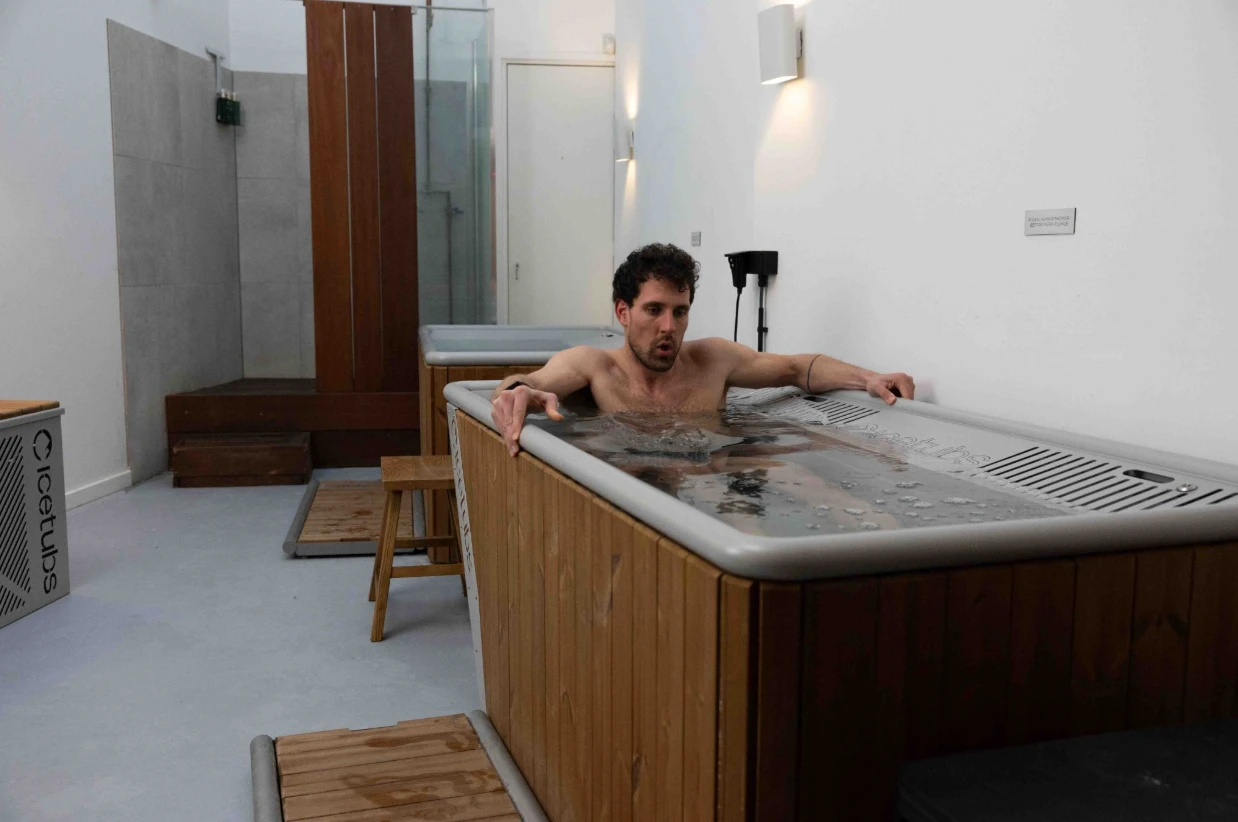
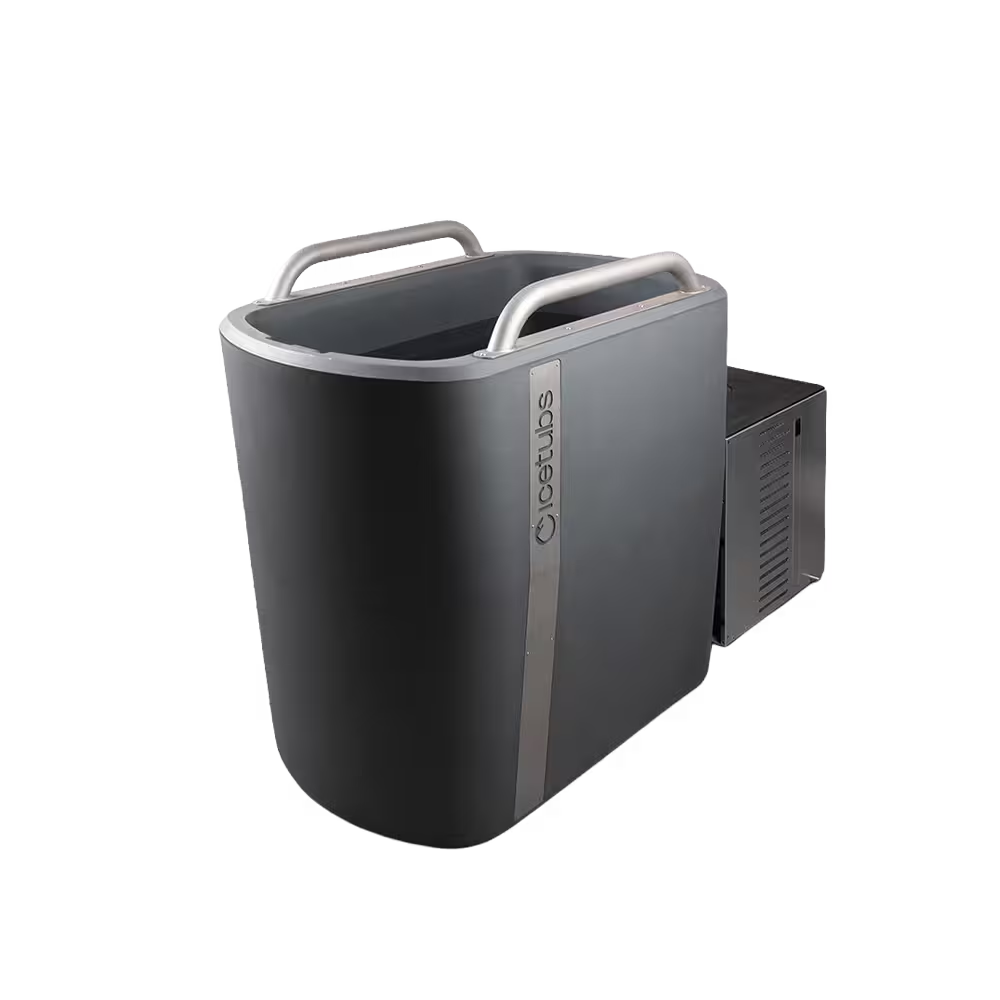
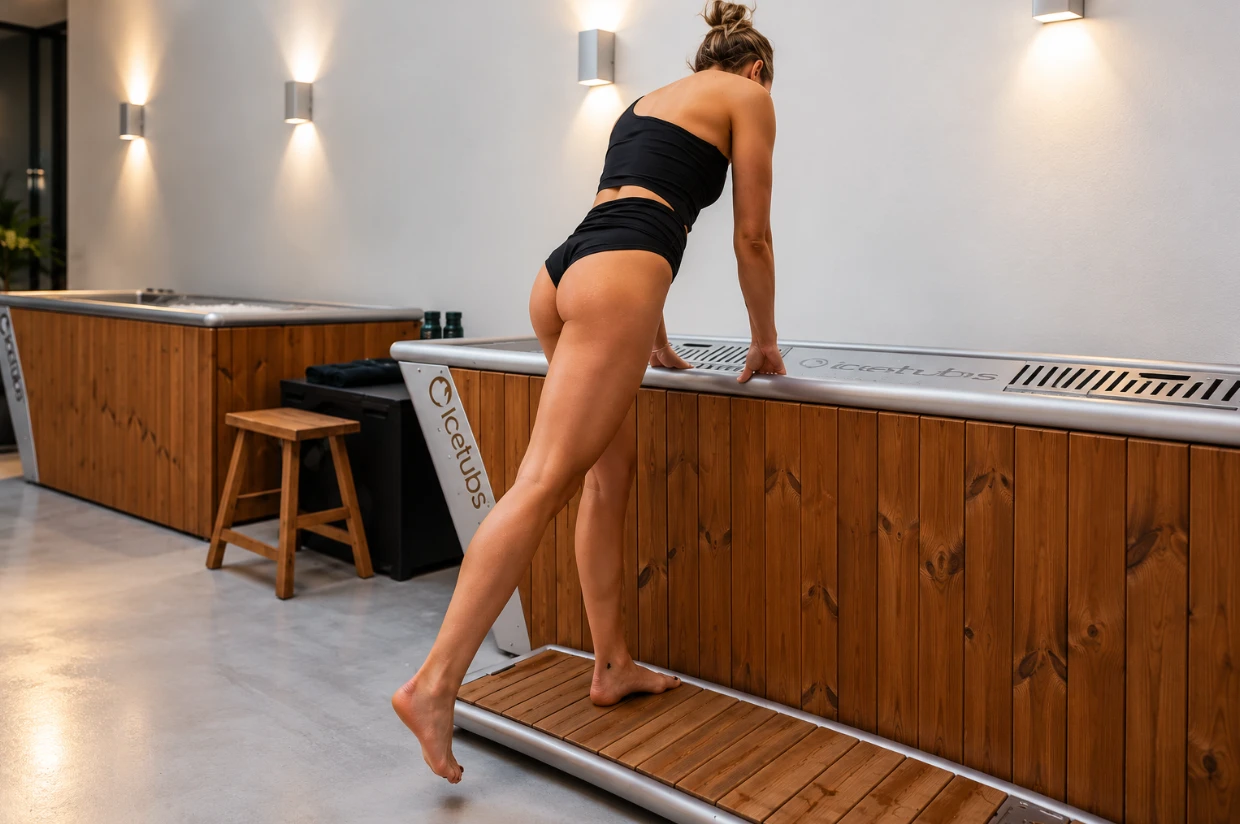
Icetubs' ProBath is designed for commercial use and can handle up to 100 users per day, with automated filtration, sanitation, water refreshing, and water replacement. Icetubs
Its cooling system is designed to maintain water temperatures as low as 3°C, even with heavy use. Icetubs
Consistency also comes from routine, so if you want to see what that looks like day to day, How to Build a Daily Cold Plunge Habit is worth a look.
Turn the Concept Into a Business
Your pricing could include individual sessions, packages, memberships, or combinations with other recovery services.
Then calculate the number of customers you need to cover rent, staff, utilities, maintenance, marketing, and equipment costs.
Think about your local market too.
A recovery studio in a premium fitness district may have a different positioning from one serving a residential community.
The opportunity is not simply to sell cold water.
It is to create a repeatable recovery experience that customers value enough to return to.
For more on equipment, pricing, hygiene, and commercial planning, continue with Cold Plunge for Business: Building a Commercial Wellness Offering.