



In this blogpost:
Sollten Sie vor oder nach dem Training ein Eisbad nehmen?
Sollten Sie vor oder nach dem Training ein Eisbad nehmen? Vergleichen Sie die Auswirkungen von Kälteanwendungen rund um Ihr Workout und finden Sie den Zeitpunkt, der zu Ihren Trainingszielen passt.
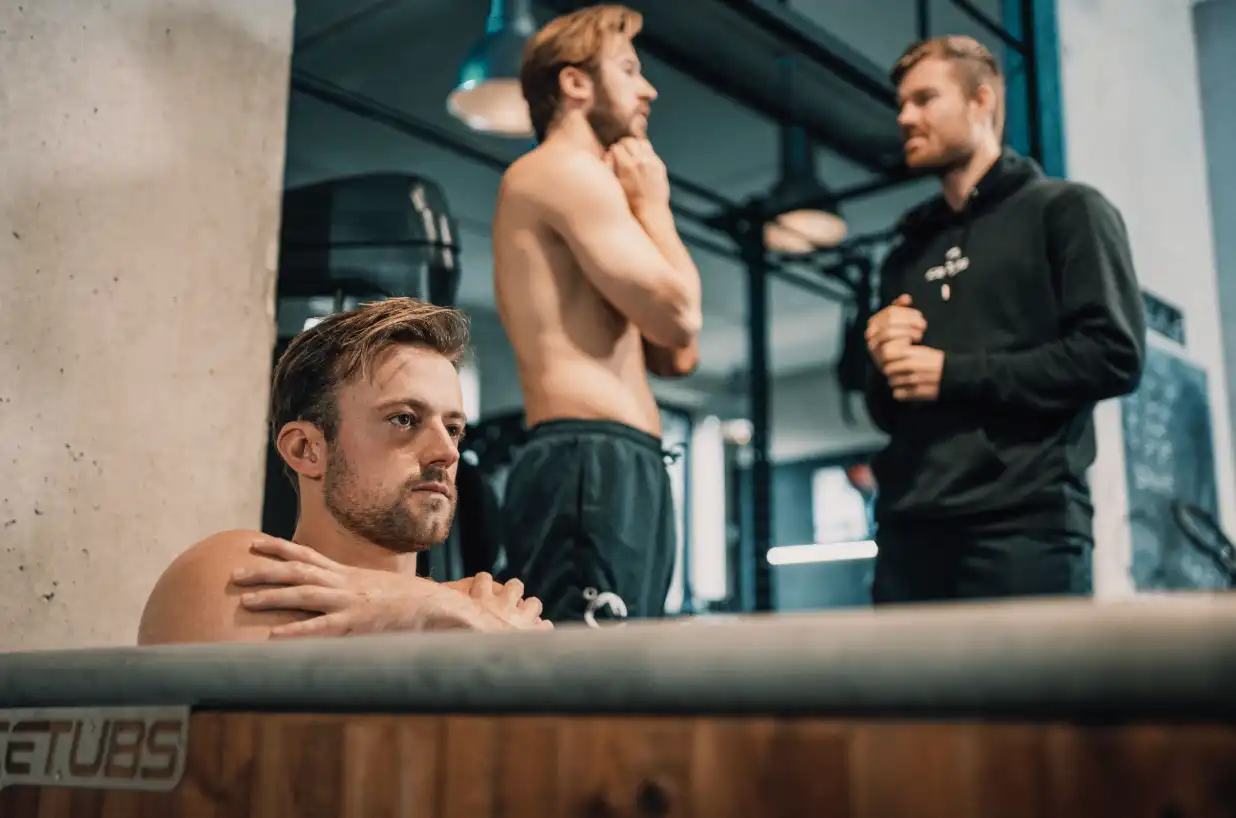
Der Zeitpunkt eines Eisbads kann die Wirkung maßgeblich beeinflussen.
Ein Eisbad vor dem Training ist eine ganz andere Erfahrung als nach einer anstrengenden Einheit. Ihr Körper hat zu jedem Zeitpunkt andere Prioritäten, und auch Ihr Trainingsziel spielt eine wichtige Rolle.
Sollten Sie also vor oder nach dem Training ins kalte Wasser gehen?
Für die meisten regenerationsorientierten Routinen ist die Anwendung nach dem Training sinnvoller. Es gibt jedoch Situationen, in denen die Antwort differenzierter ausfällt.
Kälte vor dem Workout
Der Gang ins kalte Wasser vor dem Sport ersetzt kein Aufwärmen.
Ihr Körper muss die Muskeltemperatur erhöhen und sein Herz-Kreislauf- sowie Nervensystem auf die Belastung vorbereiten. Kälte bewirkt das Gegenteil, indem sie die Gewebetemperatur senkt und einen starken thermischen Reiz setzt.
Das macht ein Eisbad vor dem Training jedoch nicht zwangsläufig nutzlos.
Es bedeutet lediglich, dass Sie genau abwägen sollten, was danach folgt.
Wenn Sie sich auf Kraft-, Schnellkraft-, Sprint- oder Explosivtraining vorbereiten, sollten Ihre Muskeln vor einer hohen Belastung in der Regel gut aufgewärmt sein.
Ein Eisbad ist daher unmittelbar vor einem anspruchsvollen Training meist nicht die beste Wahl.
Warum Sportler Kälte nach dem Training nutzen
Nach dem Training gewinnt die Kälteanwendung an Bedeutung.
Nach einer besonders intensiven Einheit haben Sie es möglicherweise mit Muskelkater, Erschöpfung und dem Bedürfnis nach Regeneration vor der nächsten Belastung zu tun.
Kaltwasseranwendungen können das Schmerzempfinden lindern und einen klaren Übergang zwischen Training und Erholung schaffen.
Das ist besonders dann hilfreich, wenn bald schon die nächste anspruchsvolle Einheit oder ein Wettkampf ansteht.
Das Ziel ist es nicht, die Effekte Ihres Trainings zunichtezumachen.
Es geht darum, die Regenerationsphase gezielt zu unterstützen.
Doch es gibt einen Haken
Wenn Sie gezielt für Muskelaufbau oder Kraft trainieren, ist ein sofortiges Kältebad nach jedem Krafttraining möglicherweise nicht ideal.
Durch das Training werden Signale erzeugt, die Ihre Muskeln zur Anpassung anregen.
Kälteexposition kann einige dieser Prozesse beeinflussen.
Das bedeutet, dass Ihre Regenerationsstrategie davon abhängen sollte, was Sie erreichen möchten.
Wenn die Maximierung des Muskelwachstums Ihre Priorität ist, sollten Sie Kälteanwendungen besser von Ihren Krafttrainingseinheiten trennen, anstatt sie automatisch nach jedem Workout durchzuführen.
Wie sieht es bei Wettkämpfen aus?
Im Wettkampfkontext kann sich die Ausgangslage ändern.
Wenn Leistung und Einsatzbereitschaft für das nächste Event wichtiger sind als die langfristige Anpassung durch ein einzelnes Training, kann Kälteexposition nach dem Wettkampf attraktiver werden.
Sie fragen sich dann nicht mehr nur: „Wie maximiere ich diesen Trainingsreiz?“
Sie fragen sich: „Wie sorge ich dafür, dass ich für die nächste Herausforderung bereit bin?“
Diese Unterscheidung ist für Athleten wichtig, die an mehreren Tagen oder in verschiedenen Disziplinen antreten.
Es gibt keine allgemeingültige Regel für den Zeitpunkt
Es gibt zahlreiche Ratschläge, die besagen, dass man zu einer ganz bestimmten Zeit ins Eisbad gehen sollte.
Echtes Training ist selten so einfach.
Deine Sportart, die Trainingsintensität, die Trainingsphase, der Wettkampfplan und dein Erholungsbedarf beeinflussen diese Entscheidung.
Ein Kraftsportler nutzt Kälte möglicherweise anders als ein Ausdauersportler.
Jemand, der sich auf einen Wettkampf vorbereitet, geht anders damit um als jemand in einer Kraftaufbauphase außerhalb der Saison.
Wie sieht es vor leichtem Training aus?
Ein Eisbad vor einer Einheit mit geringer Intensität ist eine andere Situation.
Wenn du nur spazieren gehst oder sanfte Mobilitätsübungen machst, hast du nicht dieselben Leistungsanforderungen wie bei schwerem Krafttraining oder Sprints.
Dennoch sollte Kälteexposition kein angemessenes Aufwärmtraining ersetzen, wenn Sie anspruchsvolles Training vor sich haben.
Wärmen Sie Ihren Körper für die Aktivität auf, die Sie tatsächlich ausführen werden.
Nutzen Sie das richtige Timing
Der einfachste Ansatz besteht darin, Kälteexposition mit einem bestimmten Ziel zu verknüpfen.
Vor dem Training: Denken Sie an Vorbereitung und Leistungsfähigkeit.
Nach anspruchsvollem Training: Denken Sie an die Regeneration und daran, wie bald Sie wieder Leistung erbringen müssen.
Nach dem Krafttraining: Überlegen Sie, ob eine sofortige Kälteexposition mit Ihren Anpassungszielen übereinstimmt.
Nach einem Wettkampf: Die Regeneration hat möglicherweise Vorrang vor der Maximierung der Anpassung durch diese einzelne Trainingseinheit.
Icetubs macht es einfacher, Kälteexposition in Ihren Zeitplan zu integrieren, da Sie ein kontrolliertes Eisbad bereit haben können, wann immer Ihr Training es erfordert.
Das richtige Timing ist letztendlich das, das Ihr Training unterstützt, anstatt es zu stören.
Für einen umfassenden Überblick zu Temperatur, Dauer, Muskelkater, Anpassung und Regeneration lesen Sie weiter unter Eisbaden zur sportlichen Regeneration: So nutzen Sie es effektiv