



In this blogpost:
Vorteile von Eisbädern: Was die Wissenschaft wirklich sagt
Entdecken Sie die wichtigsten Vorteile von Eisbädern – von der Muskelregeneration bis zur mentalen Wachheit – und erfahren Sie, wie Sie die Kältetherapie sicher anwenden.
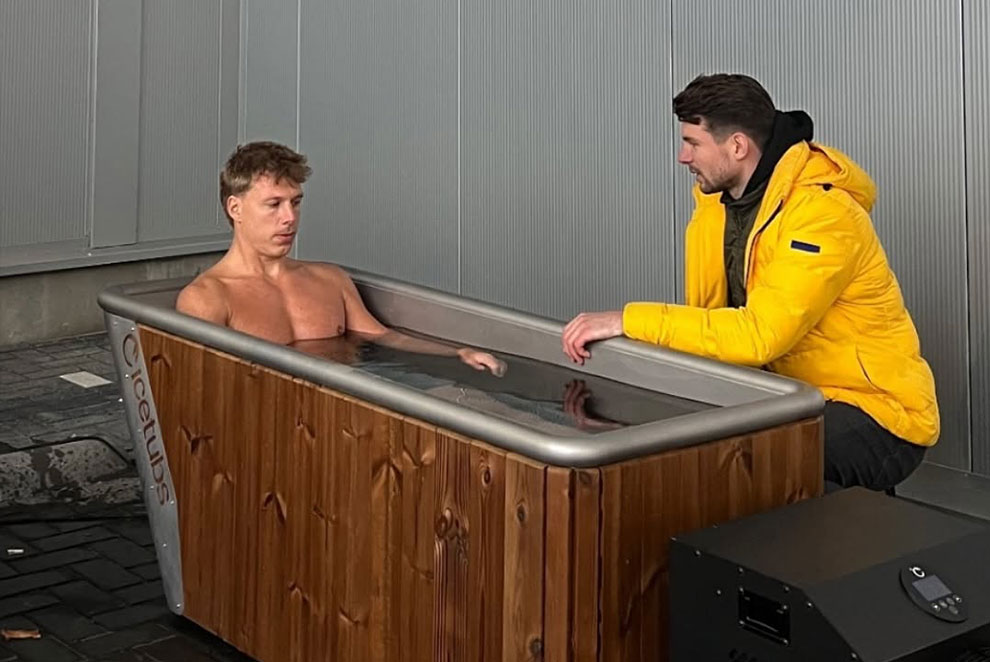
Eisbäder haben sich zu einer beliebten Routine für Regeneration und Wohlbefinden bei Sportlern, Fitnessbegeisterten und allen entwickelt, die sich erfrischt fühlen möchten. Von professionellen Sporteinrichtungen bis hin zum privaten Wellnessbereich wird die Kaltwassertherapie heute breit eingesetzt, um die Muskelregeneration, das Energieniveau und die Widerstandsfähigkeit zu unterstützen.
Doch Eisbäder sind kein Wundermittel. Ihre Wirkung hängt davon ab, wie Sie sie anwenden, wie kalt das Wasser ist, wie lange Sie darin bleiben und wie es um Ihre Gesundheit bestellt ist. Bei sachgemäßer Anwendung können Eisbäder ein hilfreicher Bestandteil einer ausgewogenen Regenerationsroutine sein.
Wie Eisbäder funktionieren
Bei einem Eisbad ist Ihr Körper für kurze Zeit kaltem Wasser ausgesetzt. Wenn Sie in das kalte Wasser steigen, reagiert Ihr Körper unmittelbar. Ihre Atmung verändert sich, Ihr Puls kann steigen, Ihre Blutgefäße ziehen sich zusammen und Ihr Nervensystem wird wacher.
Diese Reaktion wird als Kälteschockreaktion bezeichnet. Sie ist ein Grund dafür, warum Sie sich nach einem Kaltbad wach und erfrischt fühlen können. Kälteexposition kann zudem die Ausschüttung von Hormonen wie Adrenalin und Noradrenalin anregen, die mit Wachheit, Konzentration und der Regulierung des Energiehaushalts in Verbindung stehen.
Die Kälte erzeugt zudem einen starken körperlichen Reiz, der Ihnen helfen kann, Ihre Atmung und die Reaktion Ihres Körpers bewusster wahrzunehmen. Nachdem Sie das Wasser verlassen haben, wärmt sich Ihr Körper allmählich wieder auf. Dieser Übergang kann beruhigend, belebend und erfrischend wirken.
Die wichtigsten Vorteile von Eisbädern
Einer der häufigsten Gründe für Eisbäder ist die Muskelregeneration. Nach intensivem Training kann kaltes Wasser dazu beitragen, Muskelkater und Beschwerden zu lindern, indem Entzündungen vorübergehend gehemmt und Stressreaktionen im Gewebe verlangsamt werden. Deshalb werden Eisbäder oft nach harten Trainingseinheiten, Sportwettkämpfen, langen Läufen oder intensiven Trainingstagen genutzt.
Zu den potenziellen Vorteilen von Eisbädern gehören:
- Verringerter Muskelkater nach intensiver körperlicher Betätigung
- Ein stärkeres Gefühl der Erholung nach dem Training
- Verbesserte Wachheit und Energie
- Bessere Kontrolle der Atmung unter Stress
- Ein beruhigender Effekt nach dem ersten Kälteschock
- Eine beständigere Erholungsroutine
Eisbäder können dir helfen, nach körperlicher oder geistiger Belastung zur Ruhe zu kommen und neue Energie zu tanken. Die Kälte zwingt dich dazu, dich auf den gegenwärtigen Moment zu konzentrieren. Für viele Menschen fördert dies Disziplin, Kontrolle und mentale Widerstandsfähigkeit.
Eisbäder sollten jedoch nicht die Grundlagen der Regeneration ersetzen. Schlaf, Flüssigkeitszufuhr, Ernährung, Bewegung und ausreichende Ruhepausen bleiben weiterhin wichtig.
Eisbäder für Fitness und Wohlbefinden
Eisbäder können sinnvoll sein, wenn du einen aktiven Lebensstil pflegst. Du kannst sie nach Wettkämpfen, aufeinanderfolgenden Trainingseinheiten, anstrengenden Workouts oder als Teil deines morgendlichen oder abendlichen Wellness-Rituals nutzen.
Eisbäder werden häufig eingesetzt nach:
- Langen Lauf- oder Radtrainingseinheiten
- Hochintensivem Training
- Mannschaftssportspielen
- Intensivem Ausdauertraining
- Sport bei heißem Wetter
- Körperlich anstrengenden Arbeitstagen
Entscheidend ist, Eisbäder gezielt einzusetzen. Bei manchen Routinen sind sie nach intensivem Training am nützlichsten. Bei anderen helfen sie dir dabei, dich erfrischt, fokussiert oder widerstandsfähiger zu fühlen.
Die wissenschaftliche Beweislage ist am stärksten in Bezug auf die kurzfristige Regeneration und die Linderung von Muskelkater. Andere Vorteile, wie Auswirkungen auf Stimmung, Stoffwechsel, Immunsystem und langfristige psychische Gesundheit, werden noch erforscht und können von Person zu Person variieren.
Sicherheit und häufige Fehler
Eisbäder sind nicht für jeden geeignet. Kaltes Wasser kann sich intensiv anfühlen, besonders am Anfang. Wenn Sie zu schnell in sehr kaltes Wasser gehen, kann es zu plötzlichem Schnappen nach Luft, schneller Atmung, Schwindel, Taubheitsgefühlen oder Unwohlsein kommen.
So nutzen Sie Eisbäder sicherer:
- Beginnen Sie mit kühlem Wasser, bevor Sie sich an kältere Temperaturen wagen
- Halten Sie die ersten Einheiten kurz
- Konzentrieren Sie sich auf eine langsame und gleichmäßige Atmung
- Bleiben Sie nicht zu lange im Wasser
- Verlassen Sie das Wasser, wenn Sie sich schwindelig, verwirrt oder unwohl fühlen
- Vermeiden Sie es, bei Ihren ersten Versuchen alleine ein Eisbad zu nehmen
Wenn Sie unter Herzerkrankungen, Bluthochdruck, Durchblutungsstörungen, Atemwegserkrankungen oder anderen ernsthaften gesundheitlichen Problemen leiden, schwanger sind oder zu Ohnmachtsanfällen neigen, sprechen Sie bitte vor der Nutzung von Eisbädern mit einem Arzt.
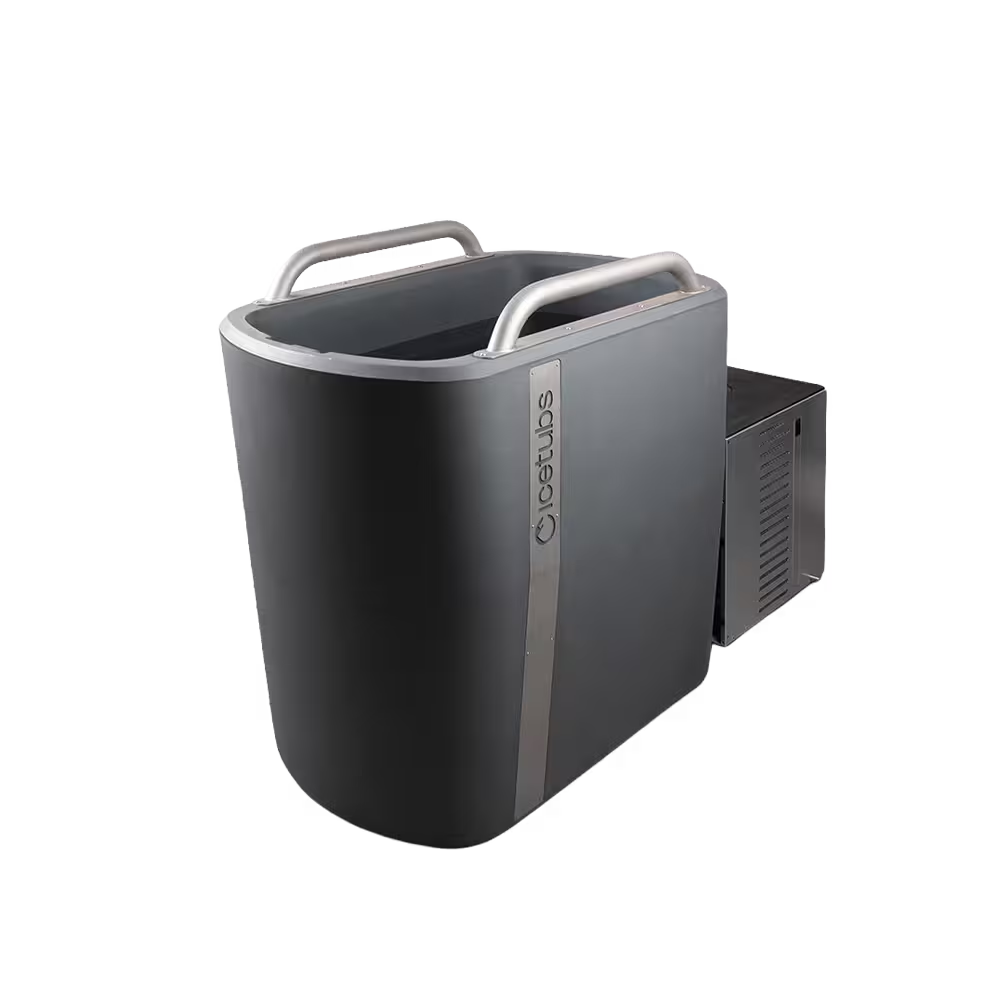
Ein Kaltwasserbecken kann die Routine erleichtern, da es eine bessere Temperaturkontrolle, saubereres Wasser und ein beständigeres Erlebnis bietet als improvisierte Eisbäder. Dies hilft Ihnen dabei, eine sicherere und besser planbare Routine für die Kältetherapie aufzubauen.
Kälteanwendung für eine intelligentere Regeneration
Eisbäder können die Regeneration, Wachheit und Widerstandsfähigkeit fördern, wenn sie richtig angewendet werden. Sie funktionieren am besten als Teil einer ausgewogenen Routine und nicht als schnelle Lösung.
Für ein beständigeres Erlebnis kann ein spezielles Kaltwasserbecken dazu beitragen, die Hürden bei der Kältetherapie zu verringern – von der Temperaturregelung bis hin zu saubererem Wasser und einer einfacheren täglichen Anwendung.
Entdecken Sie die umfassenden Vorteile, die wissenschaftlichen Hintergründe und die Risiken der Kaltwassertherapie in Kaltwassertherapie: Vorteile, Wissenschaft & Risiken.