



In this blogpost:
Kontrasttherapie: Protokoll für Sauna & Eisbad
Erfahren Sie, wie Sie Sauna und Eisbad sicher kombinieren – mit einem einfachen Protokoll für die Kontrasttherapie, Tipps zu Zeitabläufen, Ruhephasen und Routineanleitungen.
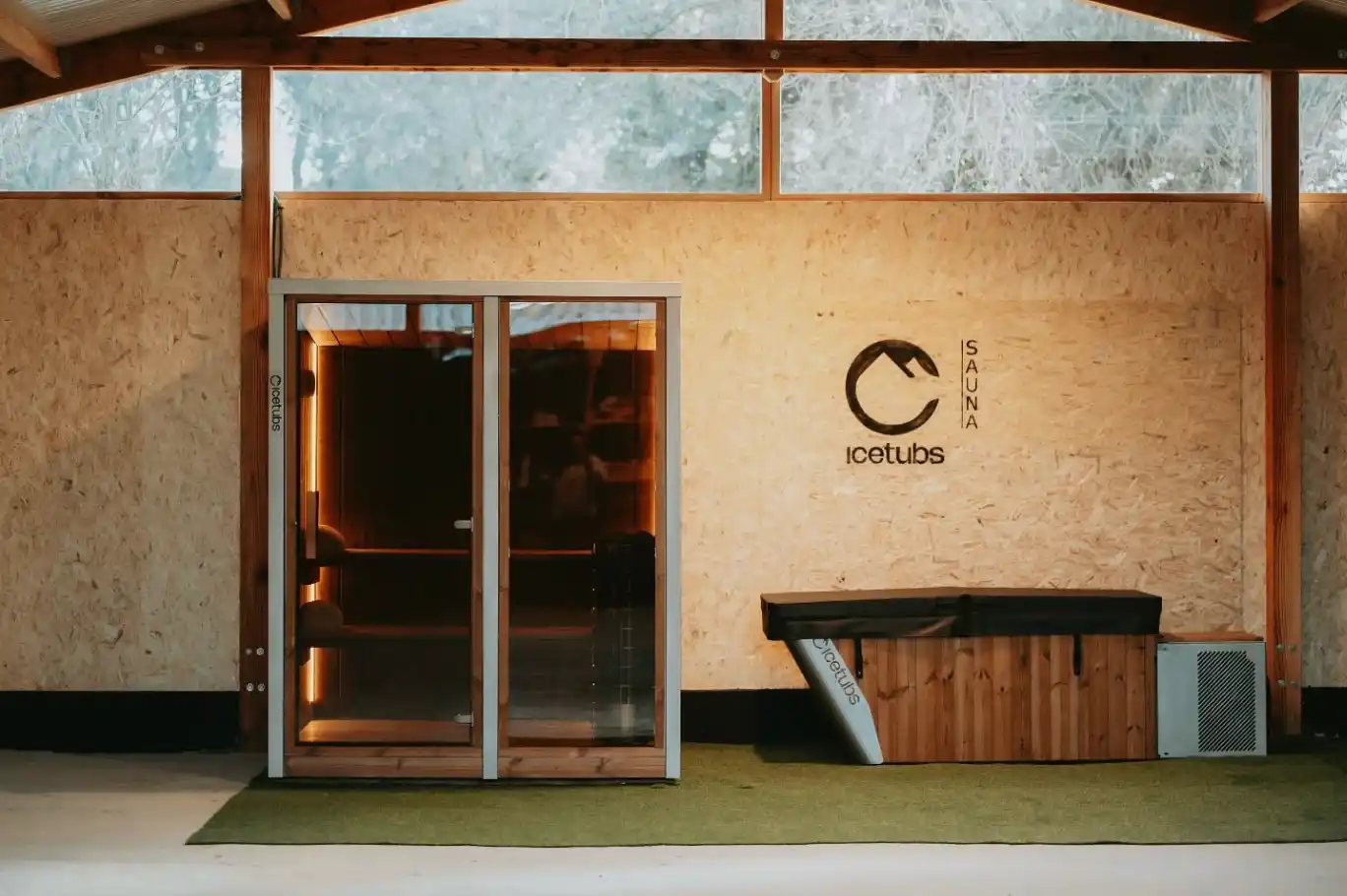
Die Kontrasttherapie basiert auf einem einfachen Rhythmus: Wärme, Kälte, Ruhe.
Die Sauna wärmt den Körper. Das Eisbad sorgt für einen abrupten Reset. Die anschließende Pause lässt alles zur Ruhe kommen.
Zusammen bilden sie eine Praxis, die sowohl körperlich als auch mental wirkt. Wärme lädt zur Entspannung ein. Kälte erfordert Fokus. Ruhe bringt den Körper wieder ins Gleichgewicht.
Die Routine muss nicht extrem sein. Sie muss bewusst gestaltet werden.
Warum Wärme und Kälte zusammenwirken
Sauna und Eisbad erzeugen einen Kontrast. In der Hitze entspannt sich der Körper. Die Muskeln werden locker. Die Atmung kann ruhiger werden. Der Geist beginnt loszulassen.
Dann folgt die Kälte.
Der Wechsel kann sich intensiv anfühlen, aber genau das ist Teil der Praxis. Die Kälte lenkt die Aufmerksamkeit sofort zurück. Sie weckt den Körper und schärft das Bewusstsein.
Anschließend ist Ruhe essenziell. Hier hat der Körper Zeit zu reagieren, sich zu erholen und in einen ruhigeren Zustand zurückzukehren.
Beginnen Sie mit einem einfachen Protokoll
Eine Routine für Kontrasttherapie für Anfänger kann kurz und kontrolliert sein.
Versuchen Sie diese Struktur:
- Saunieren für eine angenehme Dauer
- Kaltes Tauchbad für eine kurze Einheit
- Mehrere Minuten ausruhen
- Wiederholen Sie dies nur, wenn Sie sich stabil fühlen
Die genaue Dauer hängt von Ihrer Erfahrung, Ihrer Hitze- und Kältetoleranz sowie Ihrem allgemeinen Gesundheitszustand ab. Es ist besser, die Sauna zu verlassen, bevor Sie sich erschöpft fühlen, und das Tauchbad zu beenden, bevor Sie sich überfordert fühlen.
Sie sollten sich danach klar fühlen, nicht ausgelaugt.
Wechseln Sie langsam zwischen Hitze und Kälte
Der Übergang ist entscheidend.
Lassen Sie sich nach dem Saunagang Zeit. Gehen Sie vorsichtig. Trinken Sie bei Bedarf Wasser. Beruhigen Sie Ihre Atmung, bevor Sie in das Kältebecken steigen.
Gehen Sie kontrolliert ins Wasser. Die ersten Sekunden können intensiv sein. Konzentrieren Sie sich auf das Ausatmen. Entspannen Sie Gesicht, Hände und Schultern.
Sie müssen nicht lange im Wasser bleiben. Ein kurzer, ruhiger Tauchgang ist oft effektiver, als sich zu einer längeren Sitzung zu zwingen.
Ruhe ist Teil der Methode
Viele konzentrieren sich nur auf die Sauna und das Kältebad, doch die Ruhephase ist genauso wichtig.
Setzen oder stellen Sie sich nach der Kälte ruhig hin. Lassen Sie den Körper auf natürliche Weise warm werden. Achten Sie darauf, wie Sie sich fühlen. Diese Pause macht die Routine zu einer Erholungspraxis statt zu einem Stresstest.
Die Ruhephase hilft Ihnen auch zu entscheiden, ob eine weitere Runde sinnvoll ist. Wenn Sie sich schwindelig, übermüdet oder unwohl fühlen, hören Sie auf.
Kontrasttherapie sollte das Körperbewusstsein stärken, nicht überfordern.
Schaffen Sie einen Raum, der Ihr Ritual unterstützt
Die Umgebung kann das gesamte Erlebnis verändern. Ein ruhiger Ort, kurze Wege zwischen Sauna und Eisbad, griffbereite Handtücher und ein rutschfester Boden machen die Routine deutlich angenehmer.
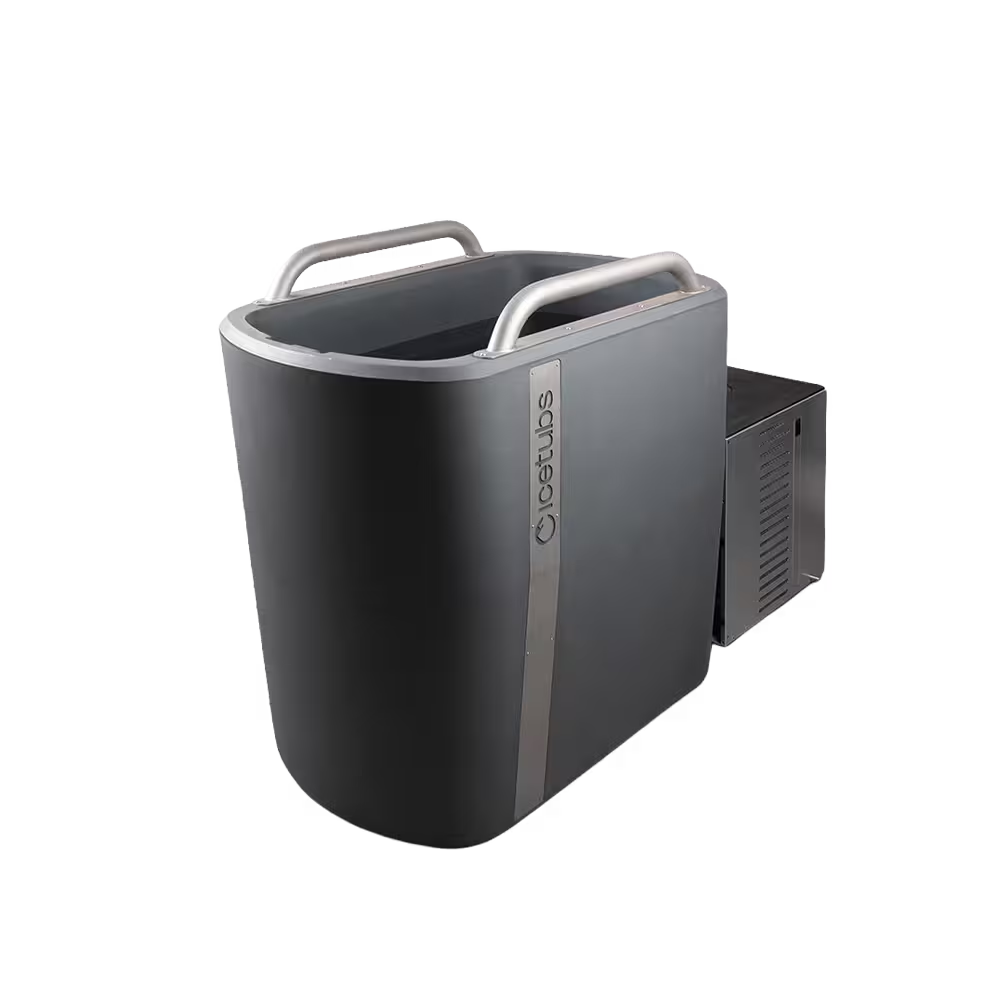
Wenn Kältetherapie Teil eines umfassenderen Wellness-Konzepts ist, fällt es leichter, die Praxis beizubehalten. Icetubs fügt sich nahtlos in ein solches Ritual ein, besonders wenn Sie einen Regenerationsbereich rund um Wärme, Kälte, Atemarbeit und Ruhe gestalten.
Je weniger Hürden es gibt, desto eher wird die Routine zur Gewohnheit.
Wissen, wann es sanfter sein darf
Bei der Kontrasttherapie geht es nicht darum, jedes Mal an die eigenen Grenzen zu gehen. An manchen Tagen reicht ein Durchgang völlig aus. An anderen Tagen fühlt sich der Körper bereit für mehr.
Gehen Sie es sanft an, wenn Sie Anfänger sind, sich müde oder gestresst fühlen oder nach einer Pause wieder einsteigen. Verzichten Sie auf Sauna oder Eisbad, wenn Sie sich unwohl, schwindelig oder dehydriert fühlen.
Das beste Protokoll ist das, das Sie sicher und regelmäßig durchführen können.
Finden Sie Ihren eigenen Rhythmus
Es gibt kein allgemeingültiges, perfektes Protokoll für Sauna und Eisbad. Der richtige Rhythmus hängt von Ihrem Körper, Ihren Zielen und Ihrer verfügbaren Zeit ab.
Fangen Sie klein an. Ruhen Sie sich gut aus. Steigern Sie sich langsam.
Mit der Zeit geht es bei dieser Praxis nicht mehr nur um Hitze oder Kälte. Es wird zu einem Ritual des Wechsels zwischen Intensität und Ruhe.
Für weitere Möglichkeiten, Ihre Praxis zu strukturieren, nutzen Sie Methoden & Routinen für das Eisbad: Der komplette Praxis-Guide als Ihre grundlegende Referenz für Routinen.