






In this blogpost:
Le nerf vague et l'exposition au froid : comprendre le lien
Découvrez comment l'exposition au froid interagit avec le nerf vague et le système nerveux autonome, notamment sur la fréquence cardiaque, la respiration, le refroidissement du visage et la récupération.
Le nerf vague est souvent mentionné lorsqu'il est question d'exposition au froid.
Vous avez peut-être entendu dire que les bains froids « activent le nerf vague » ou aident à apaiser le corps.
Il existe une réalité physiologique derrière ce lien.
Cependant, la relation est plus complexe qu'un simple interrupteur qui activerait le nerf vague.
L'exposition au froid affecte plusieurs parties de votre système nerveux autonome, et votre réaction dépend du type d'exposition, de votre respiration, de l'immersion et même du fait que votre visage soit immergé ou non.
Qu'est-ce que le nerf vague ?
Le nerf vague est l'une des principales voies de communication du corps entre le cerveau et les organes internes.
Il joue un rôle essentiel dans le système nerveux parasympathique, qui intervient dans des fonctions telles que la régulation de la fréquence cardiaque, la digestion et la récupération.
Le système parasympathique est souvent associé au mode « repos et digestion ».
Le système nerveux sympathique, quant à lui, est davantage associé à l'état d'alerte et à la réaction de lutte ou de fuite.
L'exposition au froid peut solliciter ces deux systèmes à différents stades.
La première réaction n'est pas la relaxation
Lorsque vous entrez dans l'eau froide, votre corps devient généralement plus alerte.
Les récepteurs du froid situés sur votre peau envoient des signaux au système nerveux. Les vaisseaux sanguins se contractent, la respiration peut s'accélérer et l'activité sympathique augmente.
C'est ce qu'on appelle la réaction de choc thermique.
Il serait donc trompeur de décrire les premiers instants d'un bain froid comme étant purement apaisants ou parasympathiques.
Votre corps réagit initialement comme s'il était confronté à un défi environnemental majeur.
Qu'est-ce que le réflexe d'immersion ?
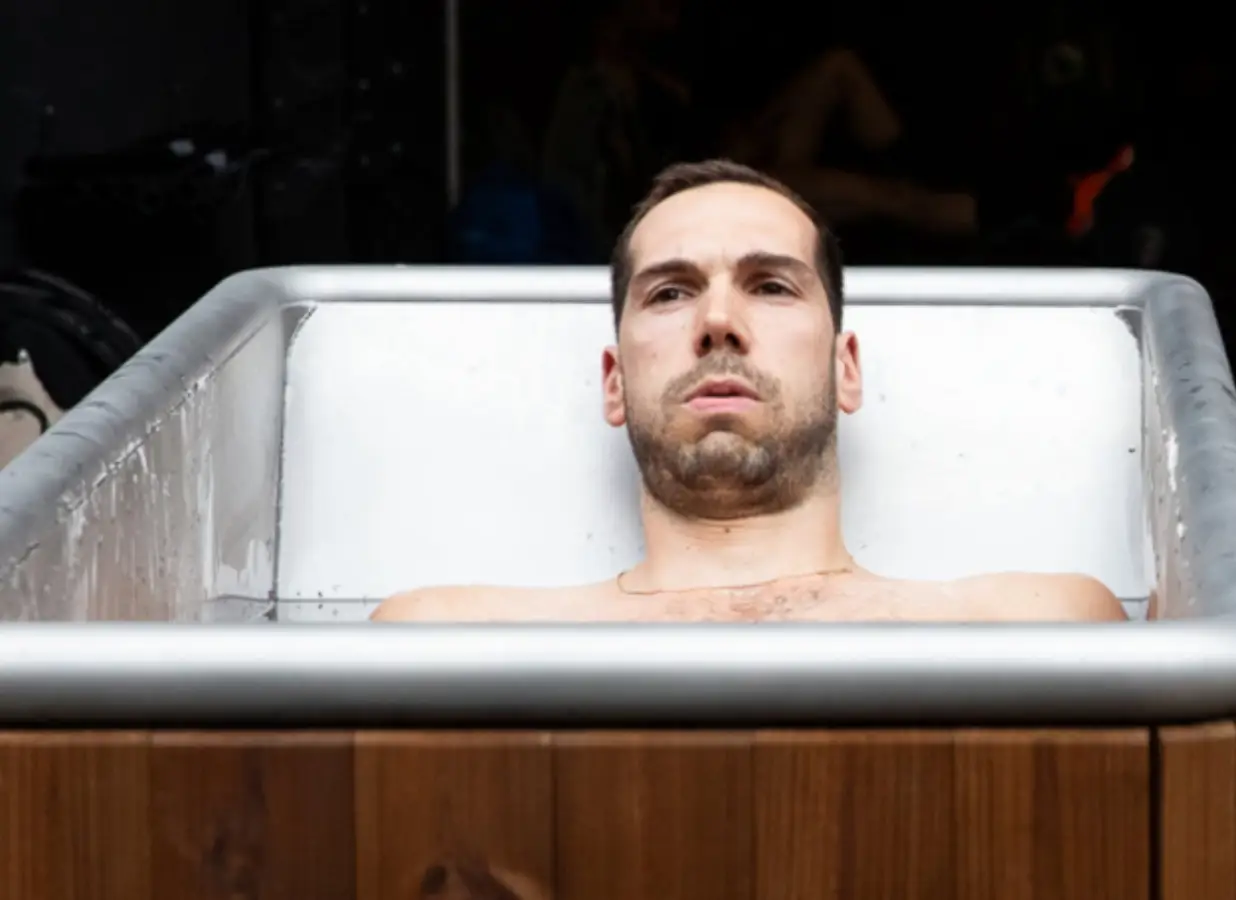
Le contact de l'eau froide sur le visage peut déclencher une partie du réflexe d'immersion humain.
Les voies sensibles au froid situées autour du visage communiquent avec le cerveau par le nerf trijumeau. Cela peut accroître l'activité vagale cardiaque et contribuer au ralentissement du rythme cardiaque.
La réaction est plus marquée lorsque le visage est exposé à l'eau froide que lorsque seules d'autres parties du corps sont exposées au froid.
Cela permet d'expliquer pourquoi le refroidissement du visage est parfois évoqué en lien avec le nerf vague et la régulation autonome.
Que se passe-t-il au niveau du rythme cardiaque ?
L'immersion dans l'eau froide peut produire des effets cardiovasculaires contradictoires.
Dans un premier temps, l'exposition au froid peut augmenter l'activité sympathique, le rythme cardiaque et la tension artérielle.
Parallèlement, le refroidissement et l'immersion du visage peuvent stimuler l'activité parasympathique par le biais du réflexe d'immersion.
L'équilibre entre ces réactions dépend des conditions et de chaque individu.
C'est une raison supplémentaire de ne pas réduire l'exposition au froid à un simple effet physiologique.
Votre système cardiovasculaire réagit de manière dynamique.
La respiration est essentielle
Votre façon de respirer peut radicalement transformer l'expérience.
Le choc thermique initial peut provoquer un halètement ou une respiration rapide. Reprendre le contrôle de votre souffle vous aide à rester calme le temps que cette réaction initiale s'estompe.
C'est l'une des raisons pour lesquelles une respiration contrôlée est souvent associée à l'exposition au froid.
Mais l'apnée est différente.
Retenir sa respiration pendant une immersion dans l'eau froide ajoute un stress physiologique supplémentaire et rien ne prouve que cela rende le bain froid plus bénéfique.
Le froid permet-il de « réinitialiser » le nerf vague ?
Cette expression est populaire, mais elle est trop simpliste.
L'exposition au froid ne réinitialise pas votre nerf vague comme on redémarre un appareil.
Ce que l'on peut affirmer, c'est que l'eau froide, en particulier lorsqu'elle est appliquée sur le visage ou lors d'une immersion, peut influencer l'activité autonome et les réponses vagales cardiaques.
C'est une description plus précise de ce qui se passe.
Quelle est la place du bain froid ?
L'intérêt de comprendre le nerf vague n'est pas de trouver une raison supplémentaire de rechercher le froid extrême.
Il s'agit de comprendre pourquoi l'expérience évolue entre le moment où vous entrez dans l'eau et celui où vous en sortez.
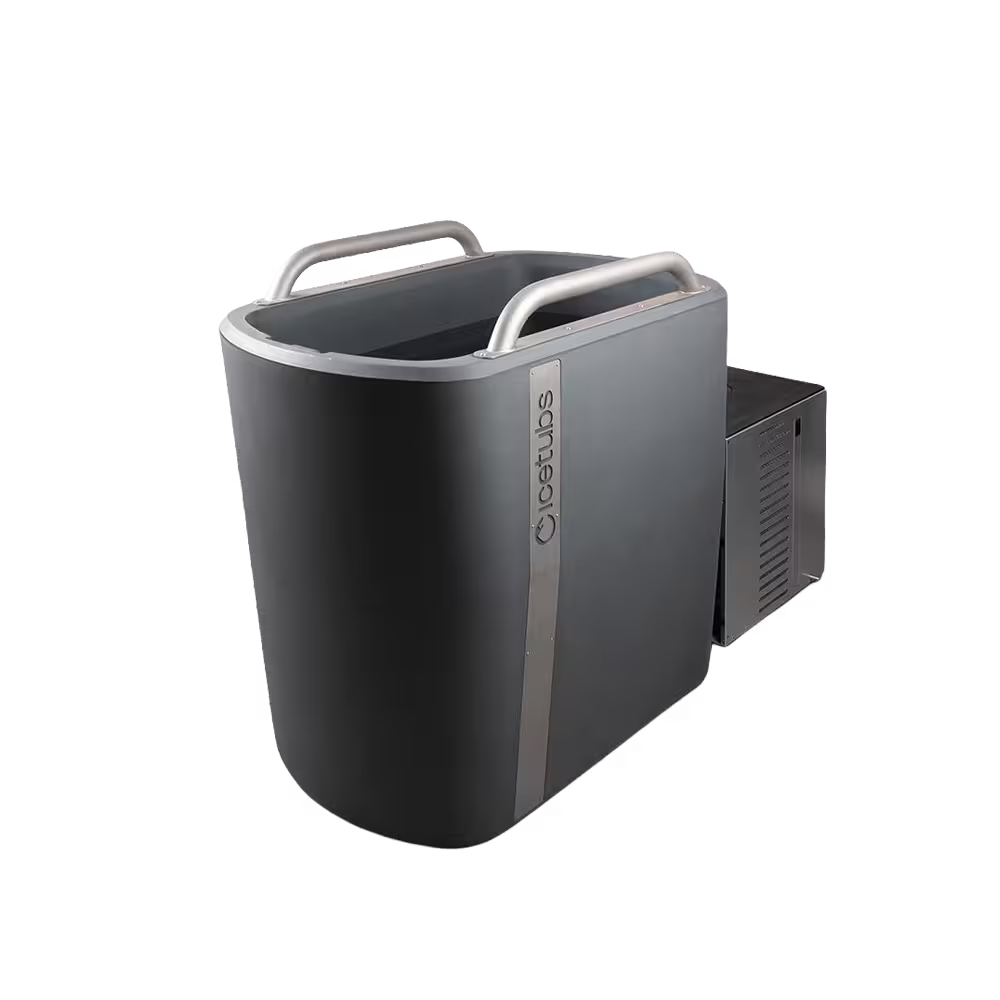
Icetubs vous permet de contrôler la température de l'eau, ce qui vous donne la possibilité de créer un environnement d'exposition constant et d'observer l'évolution de votre respiration et de votre réaction globale au fil du temps.
La vue d'ensemble
Le nerf vague n'est qu'un élément de la réponse au froid.
Votre système nerveux sympathique, votre circulation sanguine, votre respiration, votre thermorégulation et vos systèmes hormonaux sont tous sollicités.
L'exposition au froid crée un défi initial, suivi d'un processus de régulation et de récupération.
C'est ce qui rend la physiologie si fascinante.
Pour une vue d'ensemble sur la manière dont ces systèmes interagissent lors d'une exposition au froid, revenez à La science de l'exposition au froid : comment elle affecte votre corps