





In this blogpost:
L'hormèse expliquée : comment le stress thermique par le froid favorise l'adaptation
Découvrez l'hormèse et l'exposition au froid, notamment comment un stress contrôlé peut déclencher une adaptation, pourquoi le dosage est crucial et comment aborder la thérapie par le froid de manière responsable.
Le stress est généralement perçu comme quelque chose à éviter.
Mais votre corps ne traite pas toutes les formes de stress de la même manière.
L'exercice physique en est un exemple évident.
L'entraînement exerce une pression sur vos muscles et votre système cardiovasculaire, mais un stimulus approprié peut encourager votre corps à s'adapter.
L'exposition au froid repose sur un principe similaire.
Ce concept scientifique est appelé hormèse.
Il décrit comment une dose gérable d'un facteur de stress peut stimuler une réponse adaptative, tandis qu'une dose excessive du même facteur peut devenir nocive.
Qu'est-ce que l'hormèse ?
L'hormèse est avant tout une question de dosage.
Un défi léger ou modéré peut stimuler l'adaptation.
Un défi excessif peut submerger l'organisme.
Ce concept est présent dans toute la biologie et ne se limite pas à l'exposition au froid.
L'exercice, les variations de température, le jeûne et d'autres facteurs de stress environnementaux ont tous été étudiés sous cet angle.
L'essentiel est de comprendre qu'un stress plus intense n'apporte pas automatiquement plus de bénéfices.
Le froid est un facteur de stress physique
Lorsque vous entrez dans l'eau froide, votre corps réagit immédiatement.
Les vaisseaux sanguins se contractent. La respiration se modifie. Le rythme cardiaque peut s'accélérer. Votre système nerveux sympathique s'active et les mécanismes de production de chaleur sont sollicités.
Ces réactions ne signifient pas que quelque chose ne va pas.
Elles témoignent de la manière dont votre corps tente de faire face à ce changement soudain de température.
La valeur adaptative potentielle réside dans ce qui se produit lorsque le défi est répété de manière contrôlée.
L'adaptation est l'aspect le plus intéressant
Grâce à une exposition répétée au froid, votre corps peut s'habituer davantage au stimulus.
Le choc thermique initial peut devenir plus facile à gérer. La respiration peut devenir moins réactive. Votre réponse thermorégulatrice peut également évoluer avec le temps.
L'activité de la graisse brune et d'autres mécanismes impliqués dans la production de chaleur peuvent contribuer à l'adaptation au froid.
Le corps apprend essentiellement grâce à l'exposition répétée.
Mais l'adaptation ne signifie pas que vous devez augmenter continuellement l'intensité.
Plus extrême ne signifie pas automatiquement meilleur
C'est là que l'hormèse devient particulièrement pertinente.
Il peut être tentant de penser qu'une eau plus froide produit nécessairement un effet plus puissant.
Mais le modèle hormétique ne fonctionne pas ainsi.
Il existe un seuil au-delà duquel l'augmentation du facteur de stress ne fait qu'accroître la tension physiologique.
Il est inutile de rechercher la température la plus basse possible.
Une exposition gérable, pratiquée de manière régulière, peut s'avérer plus bénéfique qu'une séance extrême qui vous laisse épuisé.
La récupération fait partie de l'adaptation
Le facteur de stress en lui-même n'est qu'une partie du processus.
La récupération est tout aussi importante.
Votre corps a besoin de temps pour retrouver son état normal après une exposition intense.
C'est précisément pour cette raison que les programmes d'entraînement incluent des jours de repos et qu'une augmentation constante du volume d'exercice peut finir par devenir contre-productive.
L'exposition au froid mérite la même approche.
La qualité de votre sommeil, votre alimentation, votre charge d'entraînement et votre état de santé général déterminent votre capacité à gérer un stress supplémentaire.
L'adaptation au froid a ses limites
S'habituer au froid ne signifie pas devenir immunisé contre lui.
Même les habitués de l'eau froide peuvent subir un stress physiologique important dans des conditions suffisamment froides.
L'adaptation modifie votre réaction.
Elle ne supprime pas le risque sous-jacent.
C'est pourquoi l'exposition au froid doit rester contrôlée, même une fois que vous vous y sentez à l'aise.
Le contrôle rend la pratique plus régulière
La régularité est plus facile à maintenir lorsque vous contrôlez les variables.
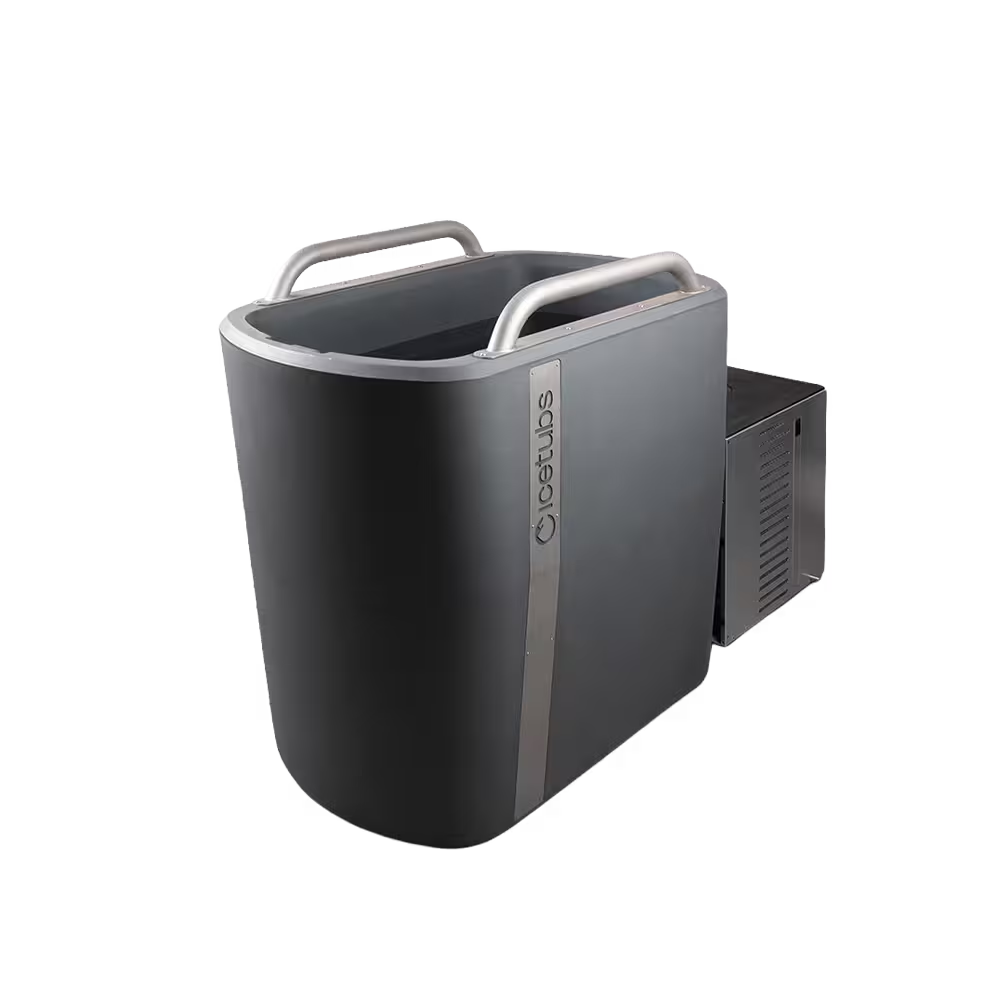
Icetubs vous permet de régler la température de l'eau plutôt que de dépendre des conditions extérieures ou d'ajuster manuellement la quantité de glace.
Cela vous offre un stimulus plus prévisible.
Vous pouvez alors vous concentrer sur la réaction de votre corps au lieu de vous demander si l'eau est nettement plus froide ou plus chaude qu'hier.
Pensez au dosage
L'hormèse n'est pas un argument en faveur du froid extrême.
Au contraire, elle souligne l'importance de la modération.
La température, la durée, la fréquence, la récupération et la tolérance individuelle contribuent toutes au dosage global.
L'objectif n'est pas de maximiser le stress.
Il s'agit d'un défi contrôlé auquel votre corps peut s'adapter.
Pour approfondir la science derrière la thermorégulation, les hormones, le métabolisme et les réponses du système nerveux, explorez La science de l'exposition au froid : comment elle affecte votre corps