





In this blogpost:
Comment utiliser un bain froid en toute sécurité : le guide du débutant
Apprenez à utiliser un bain froid en toute sécurité grâce à nos conseils pour débutants, incluant la préparation, la durée idéale et la récupération.

Le bain froid est devenu une pratique bien-être incontournable pour favoriser la récupération, se sentir revitalisé et renforcer la connexion corps-esprit. Mais pour les débutants, l'essentiel n'est pas la température de l'eau ou la durée de l'immersion, mais bien d'apprendre à utiliser le bain froid en toute sécurité.
L'exposition au froid peut être intense au début. Votre respiration peut se modifier, vos muscles se contracter et votre corps peut vouloir sortir rapidement. C'est tout à fait normal. L'objectif n'est pas de lutter contre le froid, mais de rester calme, d'être à l'écoute de son corps et de développer sa tolérance progressivement.
Adopter le bon état d'esprit pour débuter en toute sécurité
Beaucoup de débutants pensent que le bain froid doit être extrême pour être efficace. Ils visent souvent une eau très froide, de longues séances ou cherchent à « se dépasser ». C'est là que les erreurs surviennent.
Le bain froid n'est pas une épreuve de force. Il s'agit d'aider votre corps à s'adapter au froid de manière contrôlée. Vos premières séances doivent être courtes, simples et faciles à gérer.
Voici l'état d'esprit idéal pour débuter en toute sécurité :
- Privilégiez le confort et le contrôle plutôt qu'un froid extrême
- Concentrez-vous sur votre respiration avant la durée
- Sortez du bain avant que votre corps ne se sente dépassé
- Construisez votre régularité lentement au fil du temps
Cette approche rend la pratique plus facile à maintenir et vous évite d'en faire trop, trop vite.
Se préparer avant d'entrer dans le bain froid
Une bonne préparation rend votre séance plus sûre et plus confortable. Avant d'entrer dans le bain, assurez-vous que votre corps est prêt. Évitez de vous immerger immédiatement après un exercice intense si vous vous sentez étourdi, épuisé ou si vous avez la tête qui tourne. Prenez quelques minutes pour ralentir votre respiration et faire baisser votre rythme cardiaque.
Évitez également les bains froids si vous avez consommé de l'alcool, si vous vous sentez souffrant ou si vous êtes extrêmement fatigué. L'eau froide sollicite l'organisme, il est donc important de rester vigilant pendant la séance.
Avant de commencer, gardez ces éléments à portée de main :
- Une serviette sèche
- Un peignoir ou des vêtements chauds
- Des chaussures antidérapantes
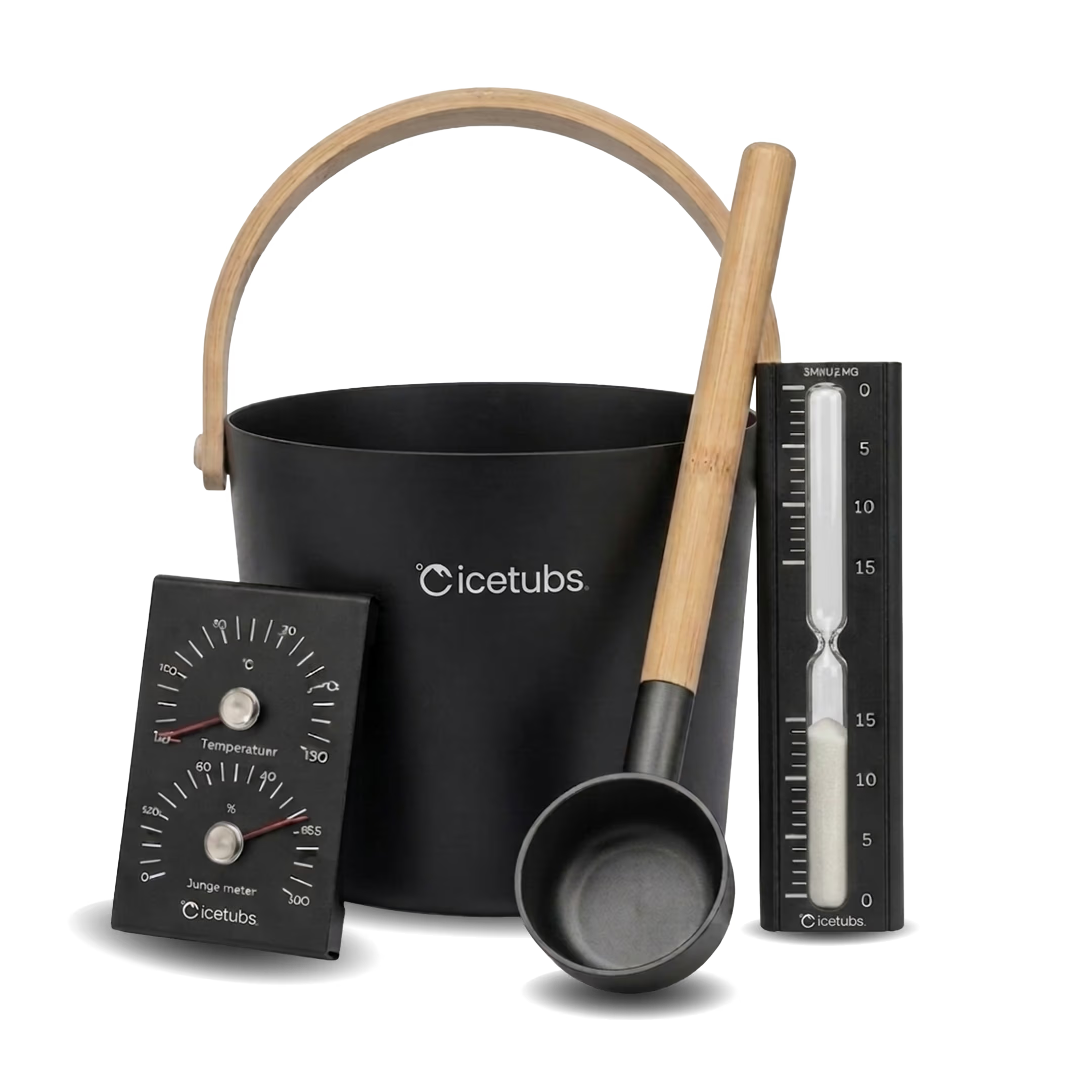
- Un minuteur
- De l'eau pour vous hydrater après la séance
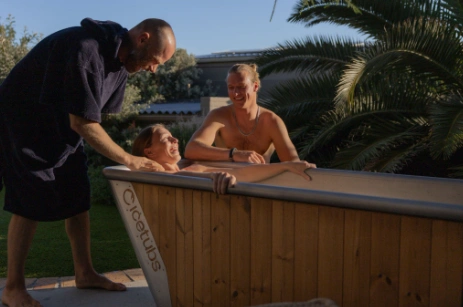
Pour vos premières séances, il peut être utile d'avoir quelqu'un à proximité, surtout si vous débutez dans l'exposition au froid.
Choisir la bonne température et la bonne durée
Une expérience de bain froid réussie commence par une température d'eau adaptée. Les débutants n'ont pas besoin d'une eau glacée immédiatement. Commencer avec une eau trop froide peut rendre l'expérience inconfortable et difficile à intégrer dans une routine.
Une température idéale pour débuter se situe généralement entre 10°C et 15°C. Cette plage est suffisamment froide pour ressentir les bienfaits sans pour autant brusquer votre corps. À mesure que vous vous sentez plus à l'aise, vous pourrez réduire progressivement la température si vous le souhaitez.
En ce qui concerne la durée, privilégiez la brièveté au début. Votre première séance peut durer entre 30 secondes et 1 minute. Une fois que votre corps s'est adapté, vous pourrez augmenter le temps progressivement.
Voici une progression simple pour débuter :
- Premières séances : 30 secondes à 1 minute
- Une fois à l'aise : 1 à 2 minutes
- Avec plus d'expérience : 2 à 3 minutes
Une séance calme et maîtrisée de 2 minutes vaut mieux qu'une séance longue et forcée qui semble dangereuse ou désagréable.
Entrez lentement et contrôlez votre respiration
La manière dont vous entrez dans le bain froid est importante. Évitez de sauter dedans. Une entrée soudaine peut intensifier la réaction au choc thermique et vous faire haleter ou paniquer.
Entrez plutôt lentement en gardant le contrôle :
- Entrez prudemment dans le bain
- Immergez votre corps progressivement
- Gardez les mains près du bord pour vous soutenir
- Détendez vos épaules, votre mâchoire et vos mains
Les 30 premières secondes sont généralement les plus difficiles. Votre corps s'adapte au froid et votre respiration peut s'accélérer. Essayez de la ralentir en douceur.
Une technique de respiration utile consiste à inspirer lentement et à expirer plus longuement que vous n'inspirez. Cela aide votre corps à se détendre et donne à votre esprit un point de concentration stable.
Évitez de retenir votre respiration. Vous devez être capable de respirer tout au long de la séance. Si votre respiration ne se stabilise pas, ou si vous vous sentez étourdi, confus, engourdi ou incapable de rester conscient, sortez immédiatement du bain.
Réchauffez-vous correctement et créez une routine durable
Après votre bain froid, séchez-vous immédiatement et enfilez des vêtements chauds. Laissez votre corps se réchauffer progressivement. Des mouvements doux, comme la marche ou des étirements légers, peuvent aider à rétablir votre circulation.
Évitez de prendre une douche très chaude ou d'aller au sauna immédiatement après vos premières séances. Un changement de température soudain peut être intense pour les débutants. Un peignoir, des vêtements secs, un peu de mouvement et une boisson chaude suffisent généralement après une courte séance.
Il est également important de savoir quand éviter l'immersion en eau froide. Les personnes souffrant de problèmes cardiaques, d'hypertension non contrôlée, de troubles de la circulation ou de problèmes de santé graves doivent consulter un professionnel de santé avant de commencer. Vous devez également éviter l'immersion en eau froide si vous êtes malade, fiévreux, blessé ou inhabituellement fatigué.
Une fois que vous vous sentez à l'aise, commencez à établir une routine simple. Pour beaucoup de débutants, 1 à 2 séances par semaine suffisent. Avec le temps, vous pourrez ajuster la durée, la température ou la fréquence en fonction de votre niveau de confort et de vos objectifs.
Prêt à vous lancer dans l'immersion en eau froide avec plus d'assurance ? Découvrez Icetubs et trouvez des solutions conçues pour aider les débutants à construire une routine d'exposition au froid plus sûre, plus sereine et plus régulière.