





In this blogpost:
Erreurs courantes à éviter lors de l'entretien de votre bain froid
Évitez les erreurs d'entretien courantes grâce à nos conseils pratiques sur le nettoyage, la filtration, le renouvellement de l'eau et un traitement plus sûr.

L'entretien d'un bain froid est généralement simple, mais de petites erreurs peuvent rapidement nuire à la qualité de l'eau. Une eau trouble, des parois glissantes, des odeurs inhabituelles ou des filtres obstrués sont souvent le résultat d'habitudes qui semblent anodines au départ.
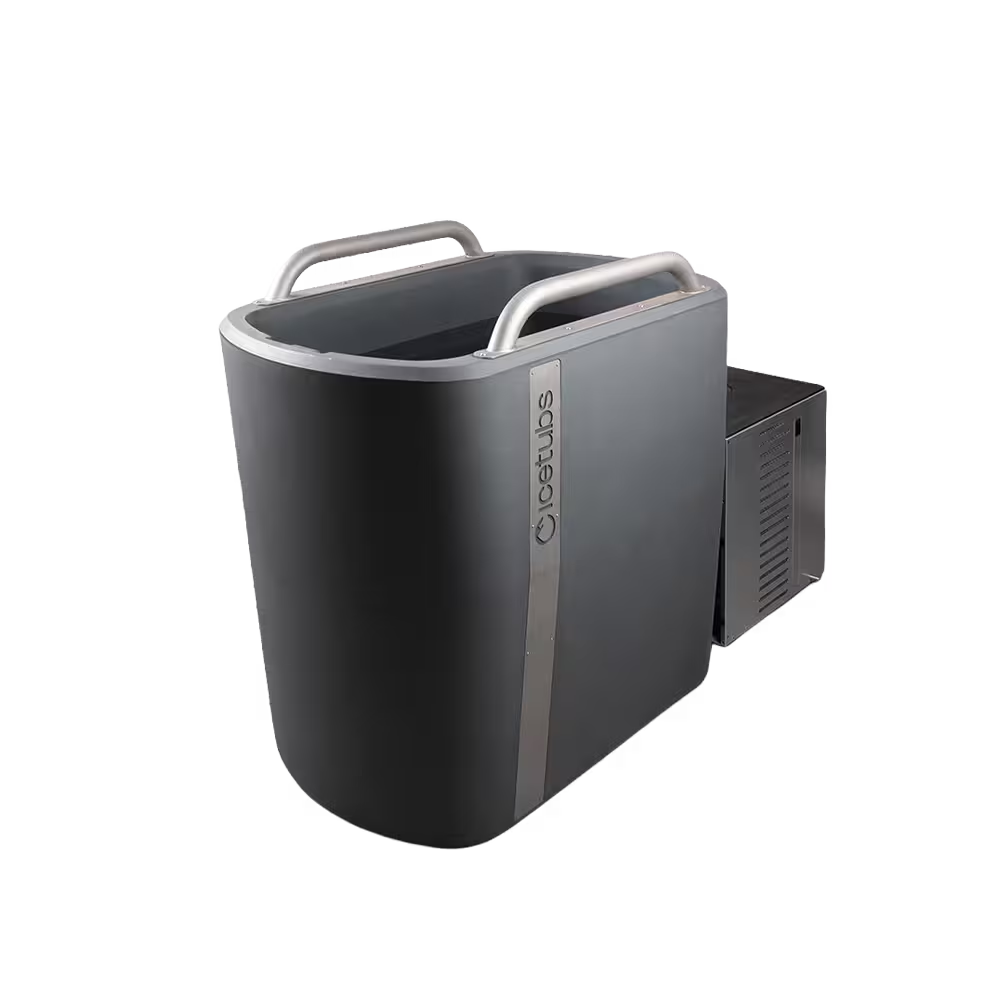
L'objectif n'est pas de compliquer l'entretien, mais d'établir une routine qui maintient votre bain propre pour une utilisation régulière. Les systèmes conçus à cet effet sont une aide précieuse, mais ils nécessitent tout de même un soin de base. Icetubs, par exemple, combine contrôle de la température, filtration, circulation et traitement à l'ozone sur certains modèles, mais ces fonctionnalités ne sont optimales que si vous assurez un nettoyage et un contrôle réguliers des filtres.
Attendre trop longtemps avant de changer l'eau
Une erreur fréquente consiste à attendre que l'eau soit visiblement sale. L'eau d'un bain froid peut accumuler de la sueur, des huiles corporelles, de la saleté et de fines particules bien avant de devenir trouble.
Changez l'eau dès qu'elle dégage une odeur inhabituelle, semble glissante ou perd de sa clarté. Si le bain est utilisé par plusieurs personnes ou s'il est installé en extérieur, un renouvellement plus fréquent peut être nécessaire. Un système de filtration prolonge la durée de vie de l'eau, mais ne dispense pas d'un changement régulier.
Négliger le filtre
Un filtre n'est efficace que s'il est propre et en bon état de marche. S'il est obstrué, la circulation de l'eau diminue et les impuretés stagnent dans le bain.
Les filtres Icetubs sont conçus pour capturer des particules aussi fines que 5 microns, et la marque précise qu'ils peuvent être remplacés sans vider le bain. Cela facilite grandement l'entretien, mais ne signifie pas qu'il doit être ignoré.
Soyez attentif à :
- Une diminution du débit d'eau
- Eau trouble
- Débris réapparaissant après le nettoyage
- Un filtre qui semble sale
- Eau à l'odeur stagnante
Si le filtre est arrivé à échéance, remplacez-le en suivant les instructions du produit.
Utilisation de produits de nettoyage inadaptés
Tous les nettoyants ne conviennent pas à un bain froid. Les produits chimiques agressifs, les brosses abrasives ou les additifs non approuvés peuvent endommager la surface, irriter la peau ou affecter les composants du système.
Ceci est important pour les bains fabriqués avec des matériaux spécifiques. Certains modèles Icetubs utilisent du bois thermotraité et de l'acier inoxydable 304, tandis que certains inserts plus grands utilisent de la fibre de verre. Le nettoyage doit respecter le matériau, et pas seulement la tache que vous essayez d'éliminer.
Utilisez des nettoyants doux et adaptés, rincez abondamment et évitez de mélanger des produits chimiques, sauf si le fabricant le recommande explicitement.
Laisser le bain découvert
Laisser le bain ouvert permet à la poussière, aux feuilles, aux insectes, au pollen et à d'autres débris de pénétrer dans l'eau. Les bains extérieurs y sont particulièrement exposés, mais les bains intérieurs peuvent également accumuler des particules en suspension dans l'air.
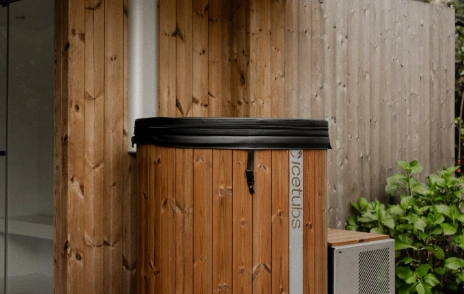
Une couverture aide à protéger l'eau entre les séances. Icetubs propose des couvertures thermiques pour certains modèles, qui aident à réduire les débris et à maintenir l'isolation lors d'une utilisation normale.
Couvrir le bain est l'un des moyens les plus simples de réduire les corvées de nettoyage.
Croire que la technologie fait tout
La filtration, le nettoyage à l'ozone, la circulation, le contrôle via application et les réglages de température facilitent grandement l'entretien. Mais ils ne rendent pas le bain totalement autonome.
Par exemple, un système peut maintenir l'eau en circulation et favoriser une meilleure propreté entre les vidanges, mais les utilisateurs doivent toujours se rincer avant d'entrer, vérifier les filtres, essuyer soigneusement la surface et renouveler l'eau si nécessaire.
Il est également utile d'établir un rythme d'inspection simple. Une fois par semaine, examinez la ligne d'eau, vérifiez le filtre, essuyez les résidus visibles et assurez-vous que la couverture du bain est propre. Si votre système dispose de commandes via application ou écran, vérifiez que les réglages de température correspondent toujours à vos habitudes. Icetubs propose des écrans et un contrôle par application sur certains systèmes, ce qui facilite l'utilisation quotidienne, mais une vérification visuelle de l'eau reste indispensable.
Un bon entretien ne consiste pas seulement à réparer les problèmes. Il s'agit de les prévenir tôt, avant que l'eau ne devienne désagréable ou que le système ne doive travailler plus que nécessaire. Une telle routine rend également l'utilisation moins contraignante. Au lieu d'attendre l'apparition de problèmes visibles, vous vérifiez les petits détails qui permettent de garder chaque bain plus propre, plus sûr et plus agréable sur la durée.
Régler les problèmes avant qu'ils ne prennent de l'ampleur
La plupart des problèmes d'entretien commencent par des détails. Un rinçage oublié, un filtre sale ou un bain laissé découvert peuvent rapidement se transformer en une corvée de nettoyage plus importante.
Prenez l'habitude de renouveler l'eau, de nettoyer les surfaces, d'entretenir régulièrement le filtre et de couvrir le bain après chaque utilisation. Pour intégrer ces habitudes dans une routine complète, utilisez Comment entretenir un bain froid : le guide complet comme point de départ pour votre entretien.