





In this blogpost:
Cómo prevenir algas y bacterias en tu tina de inmersión en frío
Aprenda a prevenir la aparición de algas y bacterias en su tina de inmersión en frío mediante mejores hábitos de limpieza, filtración, cobertura y cuidado del agua.

Las algas y bacterias pueden proliferar si el agua de la tina de inmersión no recibe el mantenimiento adecuado. Esto es más probable cuando la tina se encuentra al aire libre, expuesta a la luz solar, se utiliza con frecuencia o se deja con agua sin tratar durante demasiado tiempo.
La prevención es más sencilla que solucionar el problema más tarde. El objetivo es mantener el agua limpia, en movimiento, filtrada, cubierta y renovada cuando sea necesario. Los sistemas con filtración y cuidado asistido por ozono pueden ayudar, pero los hábitos diarios siguen siendo fundamentales.
Reduzca lo que entra en el agua
El primer paso es evitar la entrada de contaminantes. El sudor, la suciedad, las lociones, el protector solar, el césped y los aceites corporales pueden afectar la calidad del agua.
Antes de usar su tina de inmersión en frío:
- Enjuague su cuerpo
- Lave sus pies si están sucios
- Evite el uso de lociones o aceites
- Use ropa de baño limpia
- Mantenga a las mascotas fuera de la tina
- No se sumerja si está enfermo
Cuanto más limpio esté al entrar, menos tendrá que trabajar el sistema después.
Limite la luz solar y los residuos
Las algas proliferan con mayor facilidad cuando el agua está expuesta a la luz solar y a residuos orgánicos. Las bañeras de inmersión en frío para exteriores deben cubrirse cuando no se utilicen.
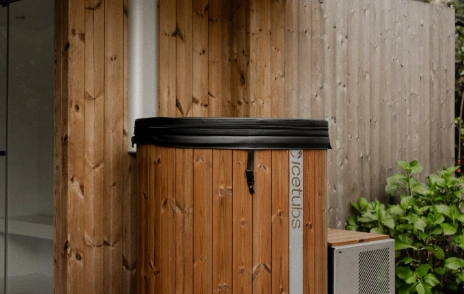
Una cubierta ajustada ayuda a bloquear hojas, polen, insectos y polvo. También puede reducir la exposición a la luz solar y ayudar a que el agua permanezca mejor protegida entre sesiones. Algunos modelos de Icetubs incluyen cubiertas térmicas, que favorecen el aislamiento y ayudan a mantener los residuos no deseados fuera de la bañera.
Si su bañera está en el exterior, colóquela en una zona sombreada o semicubierta siempre que sea posible.
Mantenga el agua en movimiento
El agua estancada puede deteriorarse más rápido que el agua en circulación. La circulación ayuda a mover el agua a través del filtro y del sistema de tratamiento, permitiendo que las partículas y los residuos se gestionen de forma más constante.
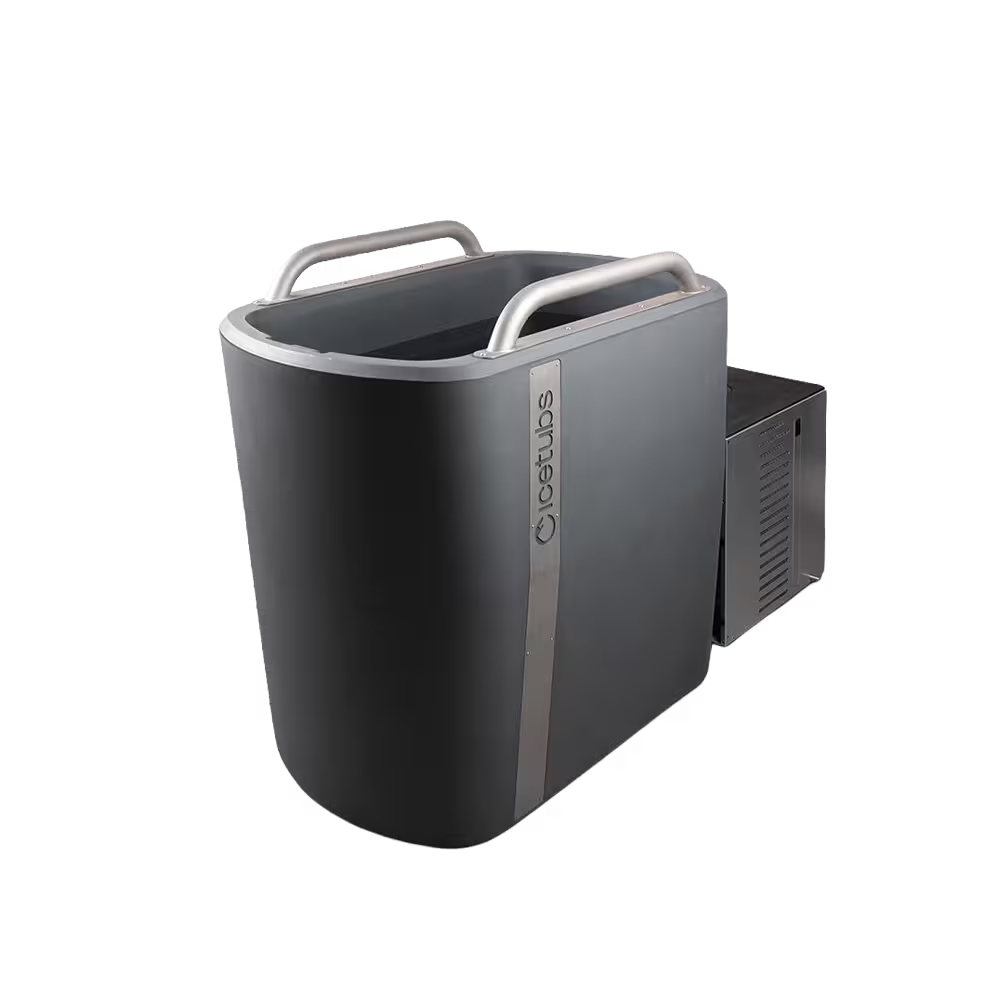
En determinados sistemas Icetubs, la circulación regular mueve el agua a través del filtro y del proceso de limpieza con ozono cada seis minutos, lo que ayuda a mantener el agua más fresca entre cambios.
Si su bañera no dispone de circulación, necesitará realizar limpiezas manuales y cambios de agua con mayor frecuencia.
La temperatura también puede influir en la facilidad con la que se mantiene el agua. El agua estancada más cálida suele deteriorarse más rápido que el agua fría en circulación. El motor Engine™ de Icetubs puede enfriar modelos seleccionados hasta los 3°C y calentarlos hasta los 38°C, controlable mediante aplicación o pantalla. Para el mantenimiento, la ventaja práctica es el control: no depende del hielo derretido ni del clima exterior para determinar el estado del agua.
Esto no sustituye a la limpieza, pero hace que el sistema sea más predecible. La previsibilidad facilita la detección de cambios, como turbidez, olor o una línea de flotación resbaladiza, antes de que se conviertan en problemas mayores.
Mantenga el filtro
Los filtros ayudan a eliminar partículas pequeñas que, con el tiempo, pueden enturbiar el agua y acumularse en las superficies. Sin embargo, deben estar limpios para funcionar correctamente.
Icetubs utiliza filtros reemplazables de 5 micras en productos seleccionados, diseñados para capturar partículas finas antes de que el agua regrese a la tina. Esto ayuda a mantener el agua más limpia, especialmente cuando se combina con la circulación.
Revise el filtro con regularidad. Si el flujo de agua disminuye, el agua se enturbia más rápido o el filtro se ve sucio, es posible que sea hora de enjuagarlo o reemplazarlo.
Utilice el tratamiento correctamente
El tratamiento del agua ayuda a controlar las bacterias y la acumulación de materia orgánica. Dependiendo de su sistema, esto puede incluir cloro, ozono, luz ultravioleta o aditivos aprobados.
Los sistemas domésticos de Icetubs utilizan un cuidado del agua basado en ozono con filtración. El ozono ayuda a descomponer la materia orgánica como parte del proceso de circulación, pero debe considerarse solo una parte de la rutina de mantenimiento.
No añada productos químicos para piscinas ni limpiadores domésticos al azar, a menos que estén aprobados para su tina.
Limpie donde comienza la acumulación
Las algas y las bacterias suelen aparecer alrededor de la línea de flotación, las esquinas, los escalones y las zonas donde el cuerpo entra en contacto con la tina.
Limpia estas áreas regularmente con un paño suave o una esponja limpia. Si la superficie se siente resbaladiza, vacía la tina y límpiala adecuadamente antes de volver a llenarla.
Una limpieza rápida cada pocas sesiones puede ayudar a evitar problemas mayores más adelante.
Anticípate a los problemas del agua
Prevenir la aparición de algas y bacterias es cuestión de constancia. Enjuaga antes de usar, cubre la tina, mantén el agua en movimiento, cuida el filtro y cambia el agua cuando ya no se sienta fresca.
Para una rutina de mantenimiento más amplia que integre la limpieza, la filtración y los cambios de agua, Cómo mantener una tina de inmersión en frío: Guía completa de cuidado te ofrece la estructura completa.