







In this blogpost:
Cómo la exposición al frío influye en la norepinefrina, la concentración y el estado de ánimo
Descubre cómo la exposición al frío afecta a la norepinefrina, el estado de alerta, la concentración y el estado de ánimo, y por qué esta sustancia química de respuesta al estrés desempeña un papel importante en la terapia de frío.

Una de las primeras cosas que notas al entrar en agua fría es que te vuelves muy consciente del presente.
Tu atención se aleja de todo lo demás.
Notas tu respiración. Notas la temperatura. Te concentras en mantener la calma.
La norepinefrina es uno de los actores fisiológicos clave detrás de esta respuesta.
Es tanto un neurotransmisor como una hormona que interviene en el estado de alerta, la atención, la circulación y la respuesta del cuerpo al estrés.
La exposición al frío le da a tu sistema nervioso una razón poderosa para activarla.
¿Qué es la norepinefrina?
La norepinefrina, también llamada noradrenalina, desempeña un papel importante en el sistema nervioso simpático.
Ayuda a regular el estado de alerta, la atención, la presión arterial, la frecuencia cardíaca y la respuesta del cuerpo ante situaciones difíciles.
Tu cuerpo produce noradrenalina de forma natural a lo largo del día.
Cuando tu organismo se enfrenta a un factor estresante repentino, su actividad puede aumentar rápidamente.
El frío es uno de esos factores.
¿Qué sucede al entrar en agua fría?
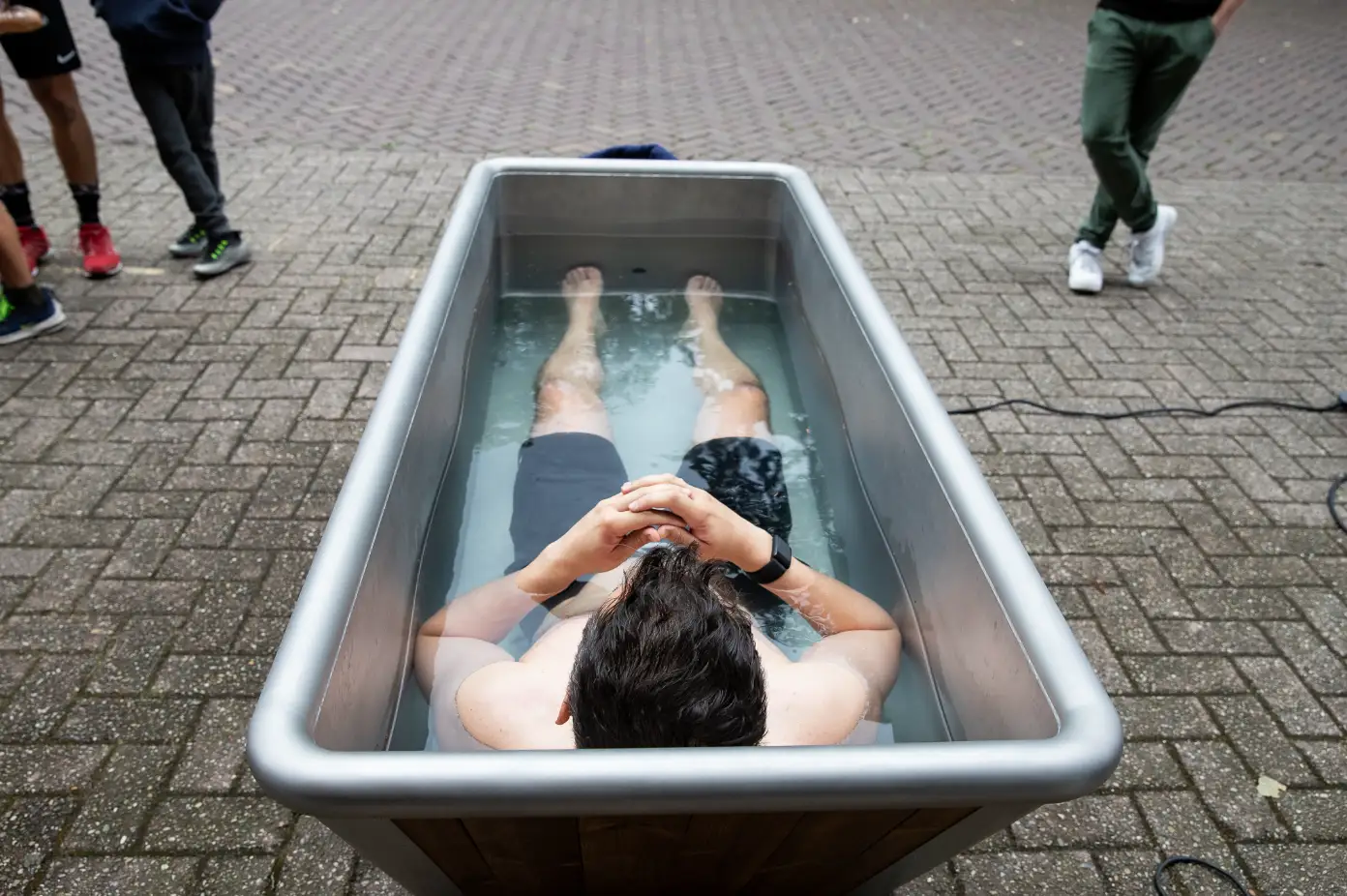
Los primeros instantes de una inmersión en agua fría provocan una intensa respuesta sensorial.
Los receptores de frío de la piel detectan la temperatura y envían señales a través del sistema nervioso.
Tu sistema nervioso simpático se activa con mayor intensidad.
Los vasos sanguíneos se contraen. El ritmo cardíaco puede aumentar. La respiración puede acelerarse.
La noradrenalina se libera como parte de esta respuesta, lo que ayuda a que tu cuerpo esté más alerta y, al mismo tiempo, favorece los mecanismos fisiológicos para conservar el calor.
Esta es una de las razones por las que la exposición al frío resulta estimulante de inmediato.
¿Por qué el frío te hace sentir más despierto?
La respuesta es, en parte, neurológica.
La norepinefrina está estrechamente relacionada con la activación y la atención. Cuando sus niveles aumentan, el cerebro pasa a un estado de mayor alerta.
Eso hace que sea difícil distraerse.
Si te sumerges en agua fría pensando en diez cosas a la vez, la temperatura te impone rápidamente una prioridad: controlar la respiración y mantener la calma.
Ese enfoque forzado es parte de la experiencia.
¿Qué ocurre con el estado de ánimo?
La norepinefrina también está vinculada a la regulación del estado de ánimo.
Sin embargo, sería demasiado simplista afirmar que aumentar la norepinefrina mejora automáticamente el estado de ánimo.
La exposición al frío genera una respuesta más amplia que involucra al sistema nervioso simpático, otros neurotransmisores, hormonas, la circulación y tu propia percepción de la experiencia.
La sensación de bienestar que puede experimentar después puede deberse, por tanto, a varios factores.
¿Cambia la respuesta con la práctica?
Puede hacerlo.
La exposición repetida al frío puede conducir a la habituación.
El choque térmico inicial puede volverse menos pronunciado. Es posible que le resulte más fácil controlar la respiración y que la misma temperatura ya no provoque el mismo nivel de pánico o sorpresa.
Eso no significa que la norepinefrina deje de responder.
Más bien, su cuerpo se familiariza con el estímulo.
El desafío se vuelve más predecible.
El control de la temperatura es importante
La respuesta fisiológica depende en parte de cuán fría sea realmente la exposición.
Por eso la constancia es útil.
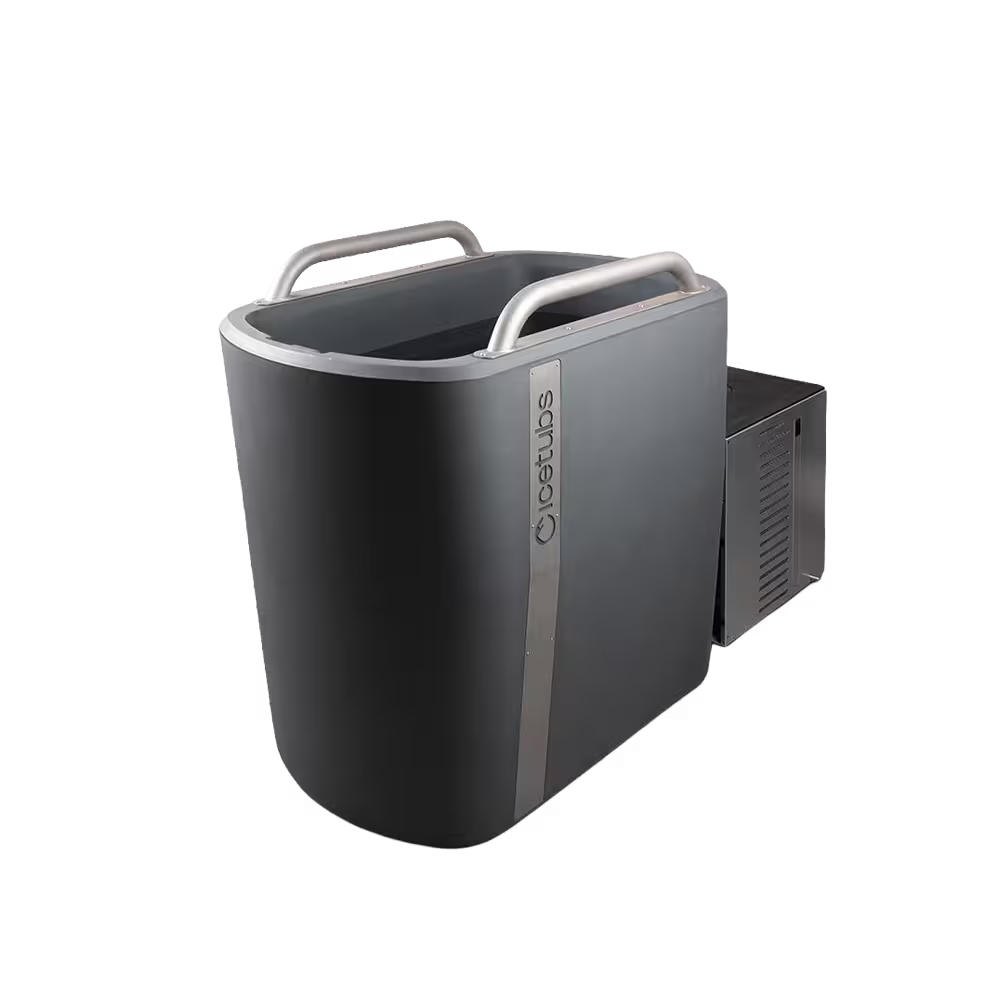
Icetubs te permite controlar la temperatura del agua, lo que te da la posibilidad de repetir la exposición en condiciones similares en lugar de depender de la temperatura que haya disponible en cada momento.
Esto puede ayudarte a entender cómo responde tu cuerpo a medida que te acostumbras gradualmente al frío.
¿Debes buscar siempre la respuesta más intensa?
No necesariamente.
Una respuesta al estrés más fuerte no significa necesariamente un mejor resultado.
La exposición al frío es un estímulo controlado y el objetivo debe ser encontrar una intensidad que puedas gestionar de forma segura y constante.
El objetivo no es abrumar a tu sistema nervioso.
Se trata de crear una experiencia repetible que te suponga un reto sin convertir cada sesión en un evento extremo.
La visión general
La norepinefrina ayuda a explicar por qué la exposición al frío puede resultar tan energizante.
El frío activa tu sistema nervioso, aumenta el estado de alerta, modifica la circulación y exige toda tu atención.
Esa respuesta es parte del intento de tu cuerpo por afrontar el desafío térmico.
Cuanto más lo entiendes, más fácil resulta ver por qué los baños de agua fría son mucho más que simplemente soportar bajas temperaturas.
Para profundizar en cómo el sistema nervioso, las hormonas, el metabolismo y la circulación responden en conjunto, vuelve a La ciencia de la exposición al frío: cómo afecta a tu cuerpo