





In this blogpost:
Inmersiones en agua fría y recuperación de lesiones: dónde pueden encajar
Descubre cómo la inmersión en agua fría puede integrarse en la recuperación de lesiones, incluyendo el dolor muscular, la inflamación, las pausas en el entrenamiento, la rehabilitación y por qué es fundamental contar con supervisión médica.

Cuando te enfrentas a una lesión, la recuperación se vuelve más compleja.
El objetivo ya no es simplemente sentir menos dolor después de entrenar.
Necesitas entender qué causó la lesión, cuál es su gravedad y qué requiere realmente tu rehabilitación.
Esto hace que la exposición al frío sea un tema distinto.
La inmersión en agua fría puede ayudar a controlar las molestias en ciertas situaciones, pero no debe considerarse un tratamiento universal para las lesiones.
El frío puede cambiar cómo te sientes
La exposición al frío puede reducir temporalmente la percepción de dolor y malestar.
También provoca la constricción de los vasos sanguíneos, lo que puede influir en el flujo sanguíneo local y en la inflamación.
Esos efectos son parte de la razón por la que el frío se ha utilizado tradicionalmente en lesiones agudas y en el dolor muscular derivado del ejercicio.
Sin embargo, reducir las molestias no es lo mismo que reparar el tejido dañado.
Puedes sentirte mejor aunque una lesión aún requiera protección y rehabilitación.
Lesión aguda frente a agujetas por entrenamiento
No son lo mismo.
Las agujetas normales tras un entrenamiento intenso son distintas a un desgarro muscular, una lesión de ligamentos, una fractura, un problema de tendones o una lesión articular importante.
Si no sabes distinguir entre las molestias habituales tras el entrenamiento y una lesión real, un baño de agua fría no debería ser tu primera opción.
Es más importante obtener un diagnóstico del problema subyacente.
Cuándo puede ser útil el frío
La exposición al frío puede considerarse como parte del control de los síntomas en determinadas situaciones de recuperación.
Por ejemplo, si sientes molestias después de realizar actividad física, el enfriamiento puede alterar temporalmente la percepción de esas molestias.
Esto puede hacer que el periodo de recuperación sea más llevadero.
Sin embargo, su conveniencia depende de la lesión y de la etapa de rehabilitación.
Un fisioterapeuta, un médico deportivo u otro profesional cualificado puede ayudarle a determinar qué debe incluir su plan de recuperación.
No utilice el frío para ignorar el dolor
Esto es especialmente importante para los deportistas.
Si una inmersión en agua fría hace que una zona lesionada se sienta mejor, eso no significa que esté listo para entrenar con normalidad.
La reducción del dolor a veces puede facilitar que ignore la señal de que su cuerpo aún necesita protección.
No utilice el entumecimiento temporal o la disminución de las molestias como permiso para volver al entrenamiento completo.
Su plan de rehabilitación debe ser el que determine esa progresión.
¿Qué ocurre con la inflamación?
El frío puede provocar vasoconstricción, razón por la cual históricamente se ha utilizado la aplicación de frío cuando existe inflamación.
Sin embargo, la inflamación no siempre es algo que deba eliminarse sin más.
La respuesta adecuada depende del tipo de lesión, el tiempo transcurrido y la etapa de rehabilitación en la que te encuentres.
Esta es otra razón por la que el consejo genérico de que "el frío es bueno para las lesiones" puede resultar engañoso.
Inmersión en agua fría durante la rehabilitación
A medida que avanzas en la rehabilitación, tus objetivos cambian.
Al principio, la prioridad puede ser proteger la zona lesionada.
Más adelante, recuperar la movilidad y la fuerza cobra mayor importancia.
Finalmente, es posible que te estés preparando para volver a practicar deporte.
La exposición al frío puede desempeñar un papel diferente en cada etapa, o no desempeñar ninguno en absoluto.
Tu plan de rehabilitación debe ser la prioridad.
¿Qué pasa con el entrenamiento durante una lesión?
Si sigues entrenando otras partes del cuerpo mientras te recuperas de una lesión, la exposición al frío puede ser relevante para tu rutina de recuperación general.
Sin embargo, debes considerar si el frío podría afectar las adaptaciones que buscas con tu entrenamiento.
Por ejemplo, si realizas entrenamiento de resistencia para grupos musculares no afectados, usar frío de forma rutinaria inmediatamente después podría no ser compatible con un programa enfocado en la hipertrofia.
El frío controlado facilita la rutina
Si la exposición al frío es adecuada para tu plan de recuperación, la constancia puede hacer que la rutina sea más fácil de seguir.
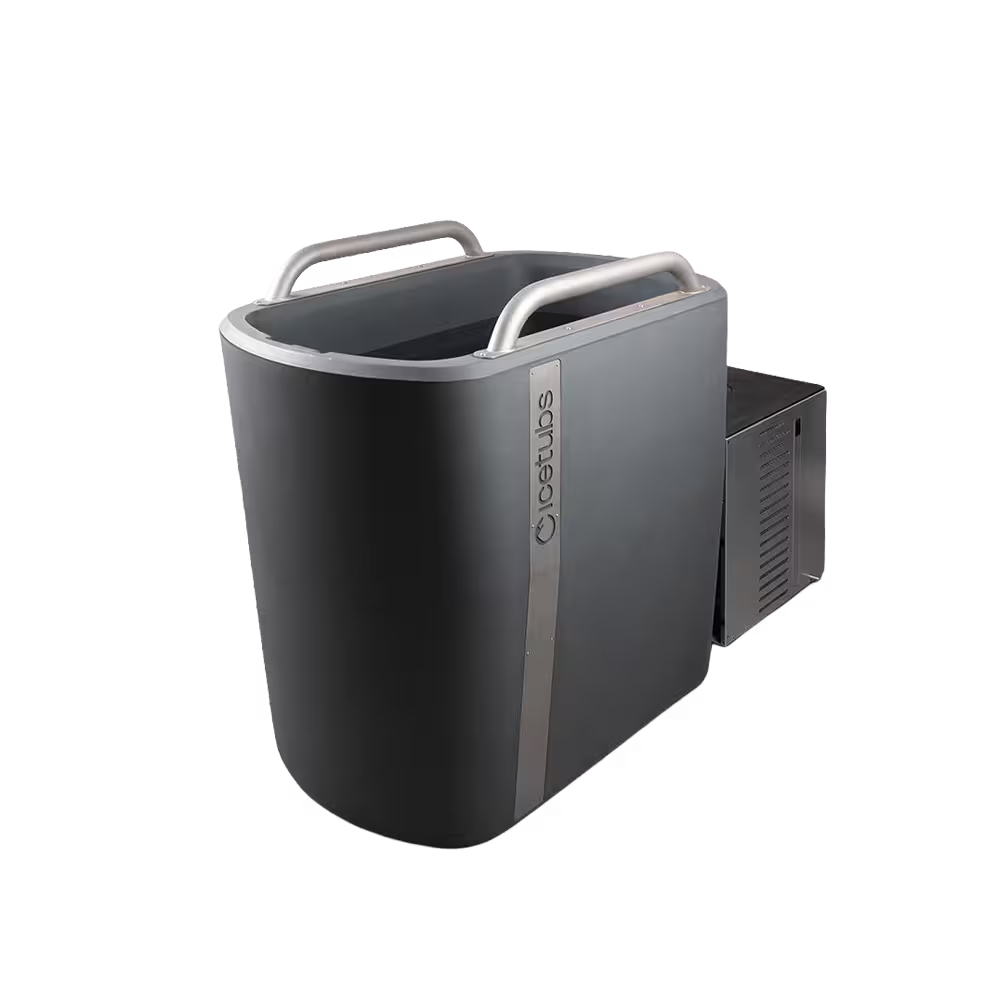
Icetubs te permite controlar la temperatura del agua, por lo que puedes evitar depender de baños de hielo impredecibles y mantener condiciones de exposición constantes.
Esto es útil para una rutina de recuperación, pero el equipo en sí no determina si la exposición al frío es adecuada para tu lesión.
Saber cuándo buscar ayuda profesional
Busque una evaluación profesional si el dolor es intenso, persistente, empeora o si se acompaña de hinchazón significativa, inestabilidad, pérdida de funcionalidad, deformidad u otros síntomas preocupantes.
Una inmersión en agua fría nunca debe retrasar la atención médica adecuada.
La estrategia de recuperación correcta comienza por comprender la lesión.
Use el frío como una herramienta, no como un tratamiento para todo
La exposición al frío puede ser útil para gestionar aspectos de la recuperación tras el ejercicio.
La recuperación de lesiones es diferente.
La prioridad es restaurar la funcionalidad y permitir que el tejido subyacente sane adecuadamente.
Si la exposición al frío forma parte de ese proceso, debe complementar su rehabilitación, no reemplazarla.
Para obtener el marco completo sobre el uso de la exposición al frío en relación con el entrenamiento deportivo, la recuperación, las agujetas y el rendimiento, vuelva a Inmersión en agua fría para la recuperación deportiva: cómo utilizarla eficazmente