





In this blogpost:
Baño de agua fría frente a recuperación activa: ¿cuál deberías elegir?
Compara la inmersión en agua fría con la recuperación activa, incluyendo caminar, movilidad, ejercicio de baja intensidad, dolor muscular, fatiga y cuándo tiene sentido cada enfoque.
Recuperarse no siempre significa quedarse quieto.
A veces, lo mejor que puedes hacer después de un ejercicio exigente es moverte con suavidad.
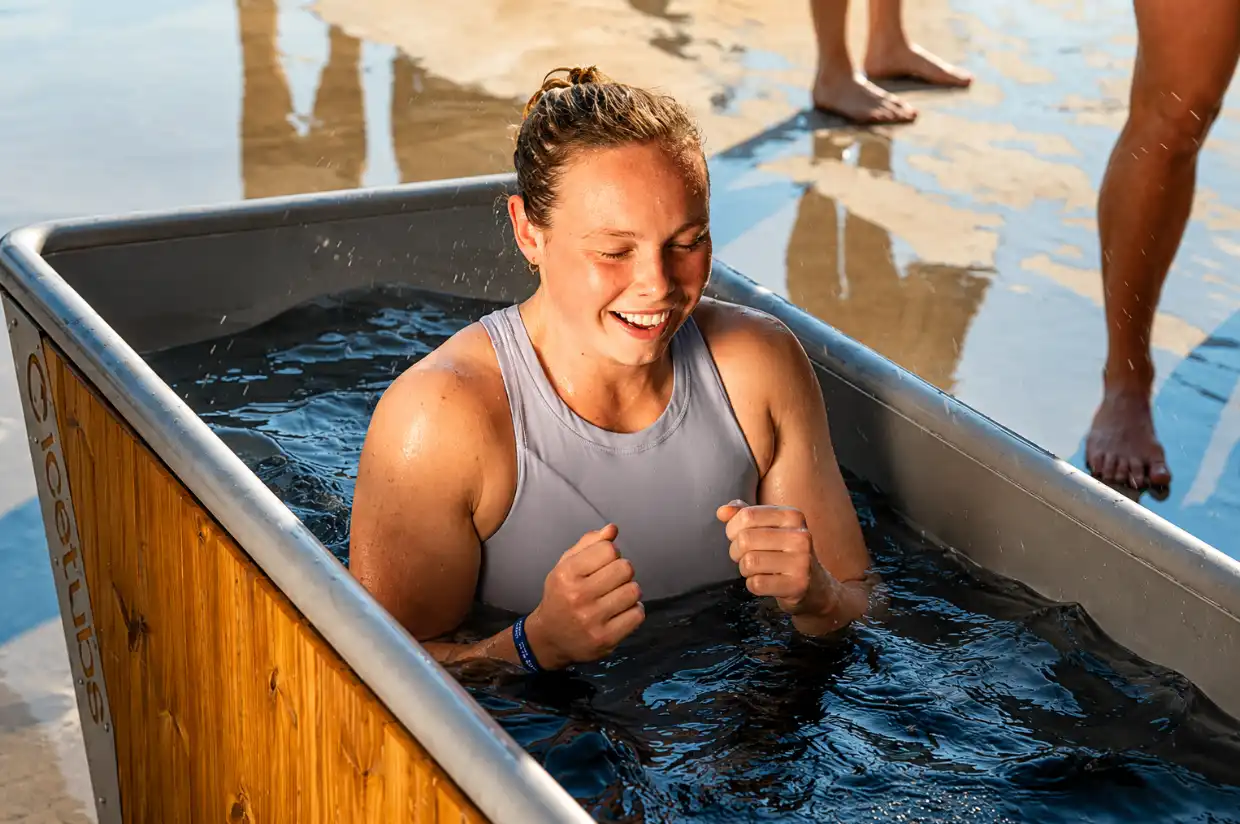
Otras veces, quizás prefieras sumergirte en agua fría y dejar que tu cuerpo experimente un estímulo completamente diferente.
Esto crea una comparación interesante entre la inmersión en agua fría y la recuperación activa.
En realidad, no son métodos que compitan entre sí.
Funcionan de maneras distintas e incluso pueden complementarse.
¿Qué se considera recuperación activa?
La recuperación activa suele consistir en realizar movimientos de baja intensidad después de un ejercicio más intenso o durante un día de descanso.
Algunos ejemplos son:
- Caminar
- Ciclismo suave
- Natación ligera
- Ejercicios de movilidad
- Estiramientos suaves
La intensidad se mantiene lo suficientemente baja como para no crear otra sesión de entrenamiento exigente.
El objetivo es mantenerse en movimiento sin añadir una fatiga significativa.
¿Qué hace diferente a una inmersión en agua fría?
Una inmersión en agua fría no requiere movimiento.
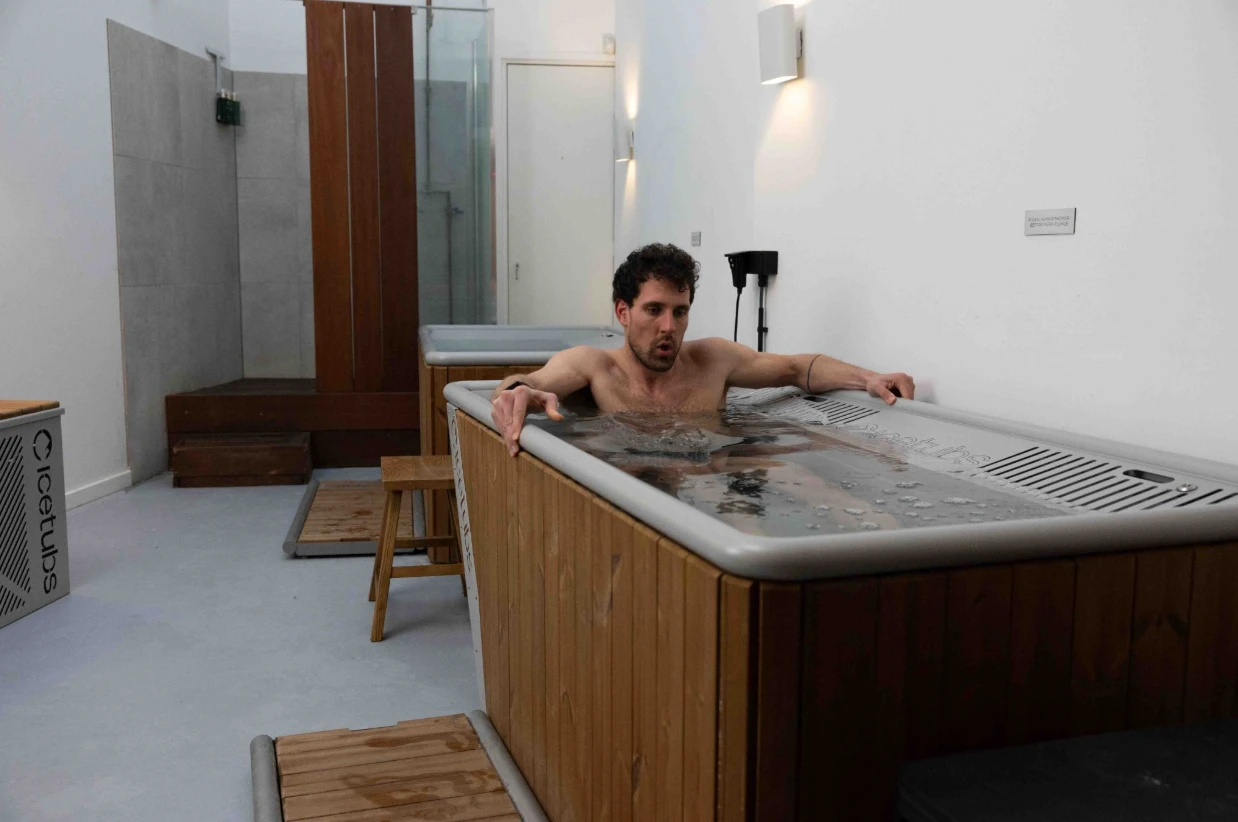
Entras en agua fría y dejas que la propia exposición genere el estímulo.
El frío provoca la constricción de los vasos sanguíneos, altera la temperatura de la piel y los tejidos, y activa el sistema nervioso.
Eso lo hace fundamentalmente diferente a caminar o al ciclismo suave.
La recuperación activa consiste en realizar movimientos suaves.
La exposición al frío consiste en aplicar estrés térmico.
¿Qué es mejor para el dolor muscular?
La exposición al frío puede tener ventaja cuando tu principal preocupación es la sensación de dolor.
El frío puede cambiar temporalmente la forma en que percibes las molestias musculares tras un ejercicio intenso.
La recuperación activa también puede aliviar la rigidez muscular al mantenerte en movimiento sin someter a los músculos a una carga adicional significativa.
La elección depende de lo que te resulte más útil.
Si tienes las piernas muy doloridas, un paseo corto puede ser suficiente.
Si buscas un ritual de recuperación específico tras una sesión especialmente exigente, la exposición al frío puede resultarte más atractiva.
¿Qué hay de la circulación?
El movimiento activo aumenta la circulación de forma natural porque los músculos están trabajando.
La exposición al frío provoca inicialmente una vasoconstricción periférica.
Esto significa que ambos métodos generan respuestas circulatorias muy diferentes.
Esta es otra razón por la que no deben considerarse intercambiables.
Un paseo suave le ayuda a mantenerse en movimiento.
Una inmersión en agua fría crea un estímulo ambiental controlado.
¿Se pueden combinar?
Por supuesto.
Podría terminar un entrenamiento intenso, dedicar un tiempo a enfriar el cuerpo, dar un paseo suave o realizar ejercicios de movilidad, y luego usar una inmersión en agua fría.
La combinación no tiene por qué ser complicada.
Simplemente estás usando herramientas diferentes para propósitos distintos.
La recuperación activa puede ayudar a mantener el movimiento y la movilidad, mientras que la exposición al frío puede formar parte de tu rutina después de entrenar.
¿Qué es mejor en un día de descanso?
En un día de descanso, la recuperación activa puede ser útil cuando te sientes rígido o quieres mantenerte en movimiento sin entrenar intensamente.
La exposición al frío también puede encajar en tu día si disfrutas de la rutina.
Pero ninguna de las dos debería convertirse en otra obligación.
Un verdadero día de descanso puede significar simplemente dormir bien, comer adecuadamente y darle a tu cuerpo un tiempo lejos del ejercicio intenso.
Piensa en tu objetivo de entrenamiento
Si te estás preparando para un evento de resistencia prolongada, la recuperación activa puede ayudarte a mantener la movilidad entre sesiones.
Si tienes muchas agujetas después de hacer ejercicio, el frío puede ayudarte a sentirte más cómodo.
Si tu objetivo es ganar fuerza y masa muscular, quizás te convenga usar el frío de forma más estratégica en lugar de hacerlo automáticamente después de cada sesión de pesas.
Tu objetivo debe determinar la herramienta.
La constancia importa más que la variedad
No necesitas diez técnicas de recuperación.
Necesitas unas pocas que realmente se adapten a tu horario.
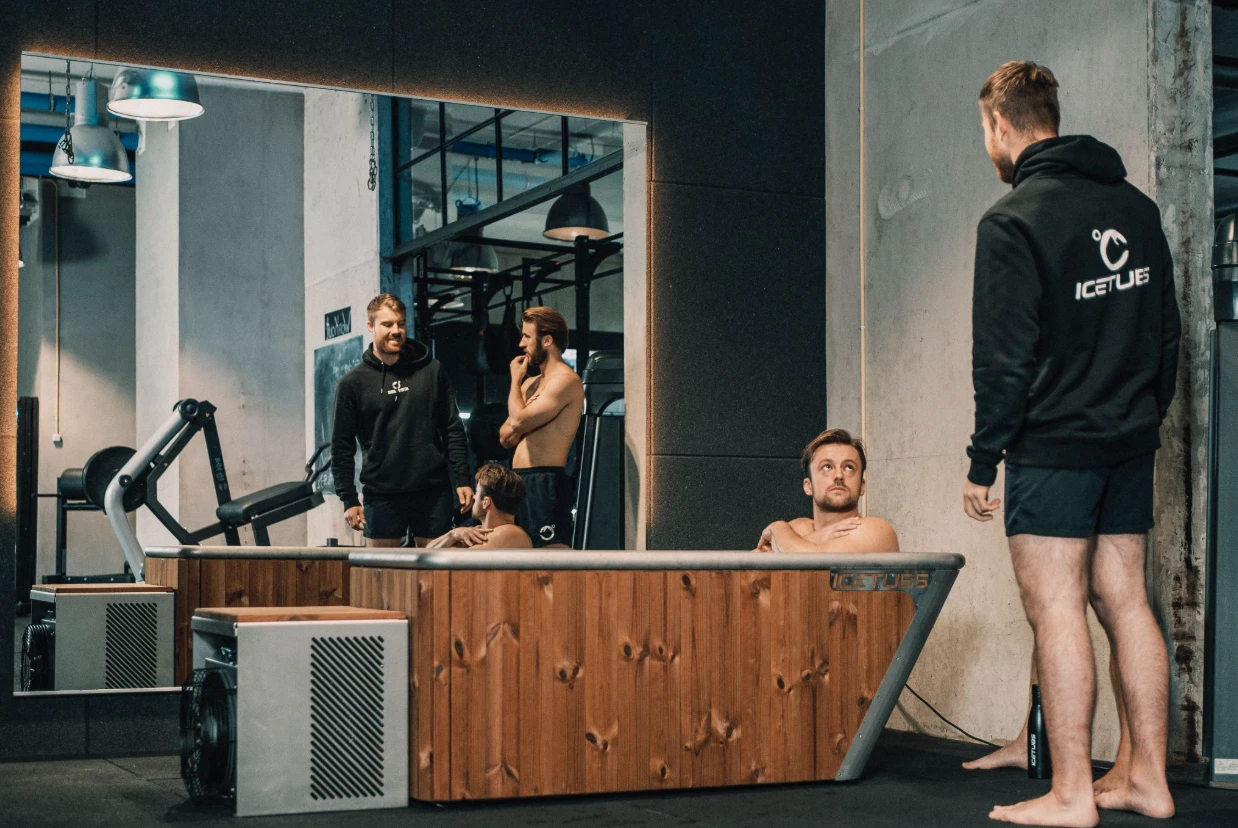
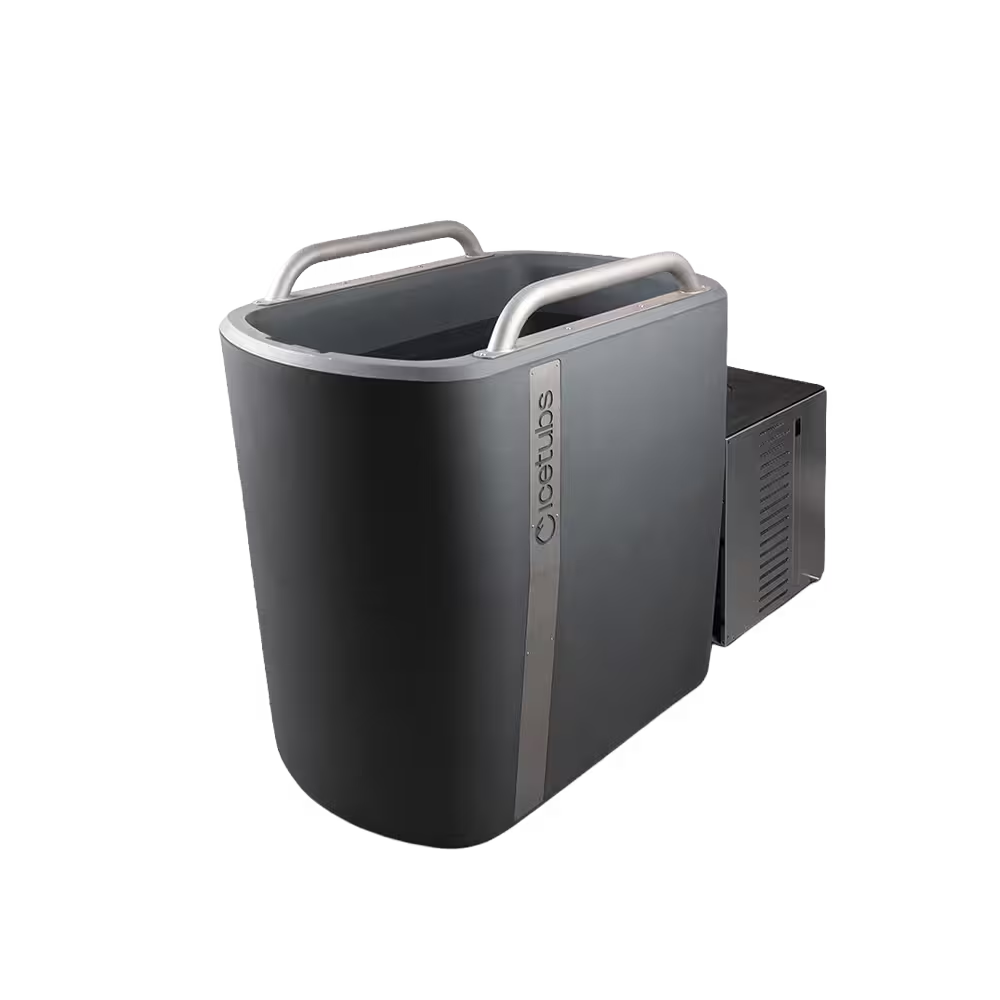
Icetubs te ofrece un entorno dedicado a la exposición al frío, mientras que la recuperación activa apenas requiere espacio para moverse.
Eso hace que sea fácil integrarlas en diferentes momentos de tu semana.
No hay un único ganador
Los baños de hielo y la recuperación activa responden a necesidades distintas.
Uno te expone al frío.
El otro te mantiene en movimiento.
En lugar de preguntar cuál es mejor universalmente, pregúntate qué necesitan hoy tu cuerpo y tu plan de entrenamiento.
A veces, la respuesta es caminar.
A veces, es un baño de agua fría.
A veces, puedes combinar ambos.
Para obtener más orientación sobre cómo elegir el enfoque de recuperación adecuado según tus objetivos de entrenamiento, continúa con Baños de agua fría para la recuperación deportiva: cómo usarlos eficazmente