





In this blogpost:
Enfriador para inmersión en frío frente a hielo: ¿Qué es mejor para tu rutina?
Compara un enfriador para inmersión en frío frente al hielo para uso doméstico, incluyendo costo, conveniencia, control de temperatura, mantenimiento, esfuerzo de instalación y valor de la rutina a largo plazo.

El hielo es la forma más sencilla de enfriar el agua.
Lo compras, lo viertes, esperas, compruebas la temperatura y entras en la bañera. Para muchos principiantes, eso es suficiente. Es algo familiar, flexible y fácil de entender.
Un enfriador cambia la rutina.
En lugar de preparar el agua fría en cada sesión, el sistema enfría el agua y ayuda a mantener la temperatura. Esto puede hacer que la inmersión en frío sea más fácil de repetir, especialmente si la practicas a menudo.
La mejor opción depende de qué tan serio se haya vuelto el hábito.
El hielo es fácil para empezar
El hielo funciona bien cuando estás probando la inmersión en frío.
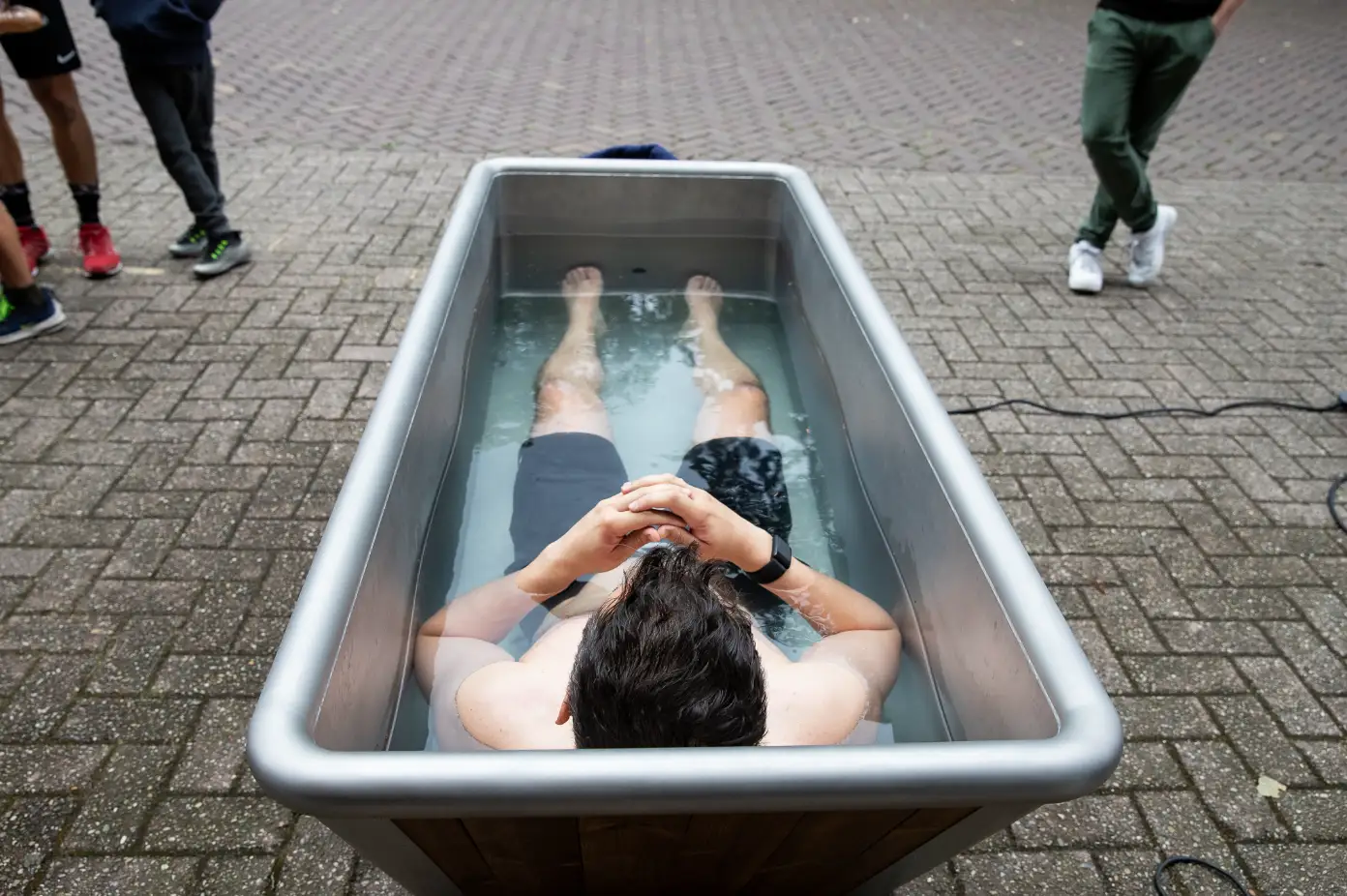
No necesitas mucho equipo. Puedes usar una bañera, un tanque o un recipiente básico. Puedes probar unas cuantas sesiones sin comprometerte a una instalación completa.
Esto hace que el hielo sea útil para los principiantes.
Te ayuda a responder a la primera pregunta: ¿realmente te gusta lo suficiente la inmersión en agua fría como para seguir haciéndolo?
Si la respuesta aún no está clara, el hielo puede ser un punto de partida más práctico.
El hielo requiere más trabajo a largo plazo
El problema del hielo es la repetición.
Tienes que comprarlo, almacenarlo, transportarlo y añadir la cantidad suficiente para alcanzar la temperatura adecuada. Algunos días, el agua puede no enfriarse lo suficiente. Otros días, puede estar más fría de lo esperado.
Eso dificulta la constancia.
Si te sumerges de vez en cuando, esto puede no importarte. Pero si quieres que la inmersión en agua fría forme parte de tu rutina semanal, el proceso con hielo puede empezar a sentirse como un obstáculo.
La preparación se convierte en una tarea antes de empezar la práctica.
Un enfriador ofrece mayor control
Un enfriador ayuda a eliminar las conjeturas.
Puedes ajustar la temperatura y dejar que el sistema enfríe el agua hasta alcanzar ese objetivo. Esto hace que la rutina sea más fácil de medir y repetir.
Esto es importante para los principiantes que buscan un progreso gradual. También lo es para los atletas que desean una rutina de recuperación constante.
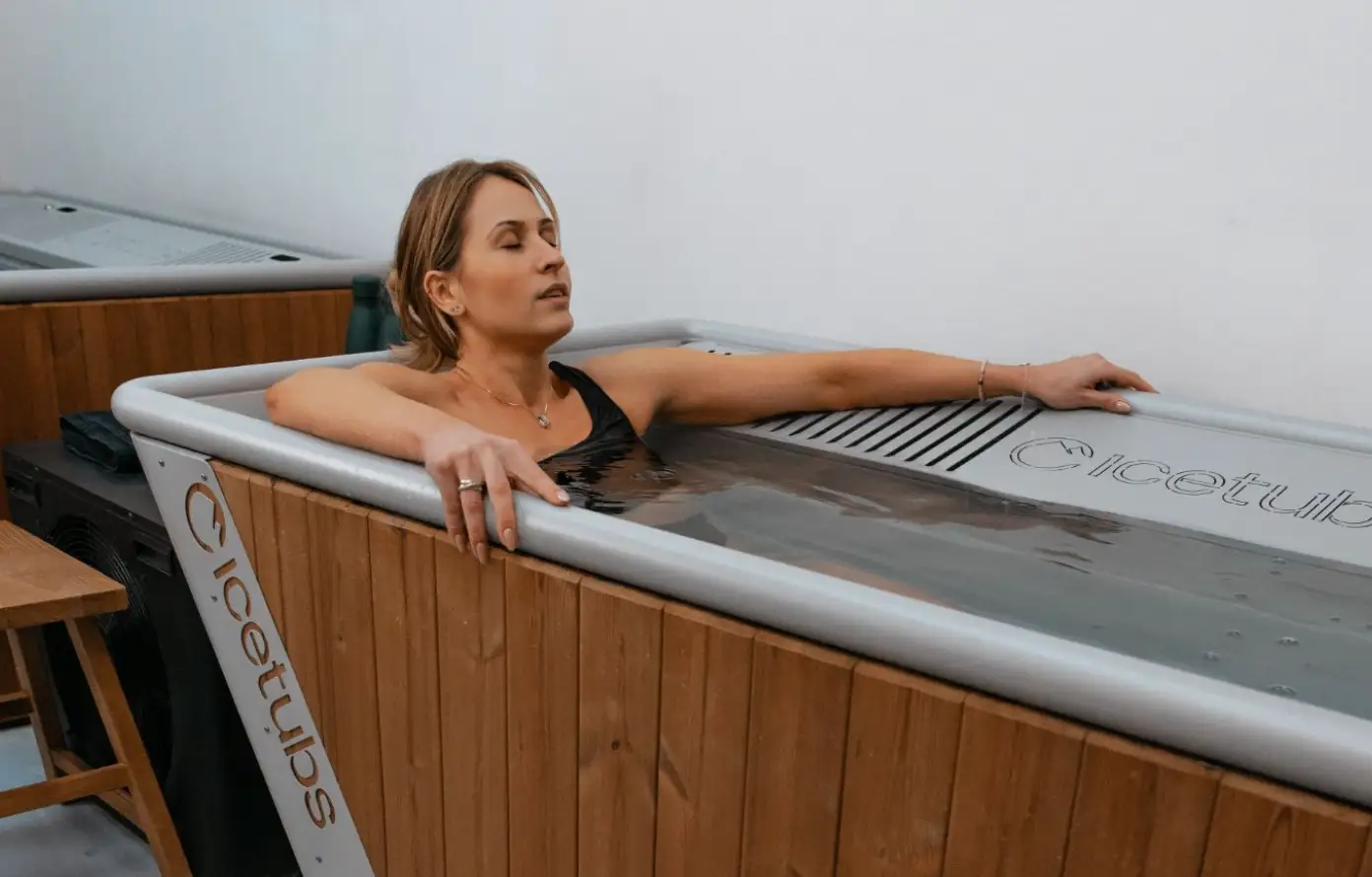
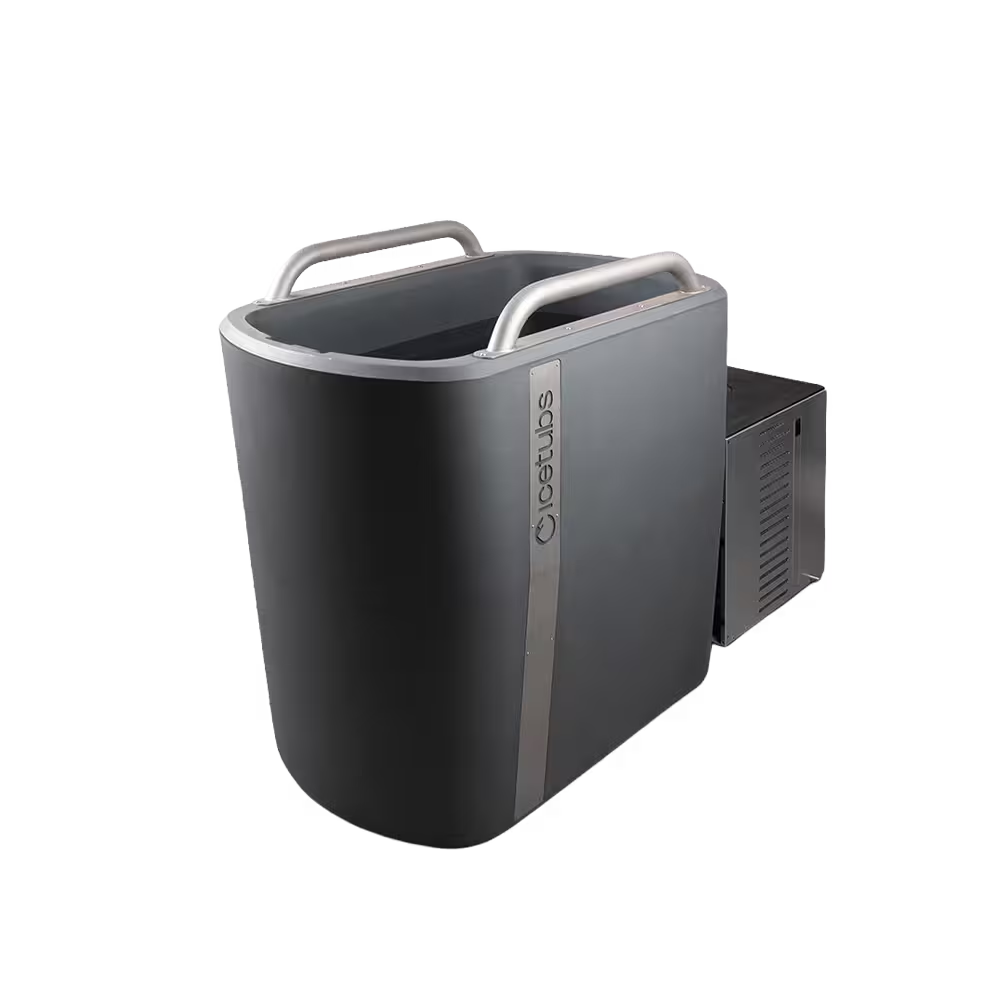
Con Icetubs, el frío se gestiona a través del motor, la aplicación o los controles de la pantalla, por lo que no tendrás que ajustar la sesión según la cantidad de bolsas de hielo que se derritan ese día.
Cambia tu forma de ver los costes
El hielo suele ser más barato al principio.
Un enfriador requiere una mayor inversión inicial, pero puede reducir los costes continuos de hielo y el tiempo de preparación. La verdadera comparación no es solo el precio, sino también el esfuerzo.
¿Con qué frecuencia te sumerges?
¿Cuánto hielo necesitas?
¿Qué distancia recorres para comprarlo?
¿Cuánto tiempo pierdes en la preparación?
Para un uso ocasional, el hielo puede ser suficiente. Para un uso frecuente, un enfriador puede resultar más práctico.
El mantenimiento sigue siendo importante
Ninguna de las dos opciones está libre de mantenimiento.
Con el hielo, sigues necesitando cambiar el agua, limpiar el recipiente y retirar los residuos. Con un enfriador, debes cuidar los filtros, comprobar la calidad del agua y mantener el sistema funcionando correctamente.
La diferencia radica en dónde se invierte el esfuerzo.
El hielo requiere más preparación antes de cada sesión. Un enfriador requiere más planificación de instalación y mantenimiento, pero menos trabajo diario de enfriamiento.
Elige según tus hábitos
El hielo es mejor si estás experimentando, quieres mantener los costes bajos o usas agua fría de forma ocasional.
Un enfriador es mejor si buscas una temperatura constante, menos preparación manual y una rutina más fácil de repetir.
No hay una opción ganadora universal.
La elección correcta depende de si la inmersión en agua fría es todavía un experimento o si ya forma parte de tu estilo de vida.
Para obtener un análisis completo sobre enfriadores, instalación, tamaños y mantenimiento del agua, lee Enfriadores para inmersión en frío: Guía completa de compra e instalación.