





In this blogpost:
How Much Space Does a Cold Plunge Tub Really Need?
Learn how much space a cold plunge tub needs, including room for entry, drainage, access, ventilation, accessories, and indoor or outdoor setup planning.

A cold plunge tub needs more space than the tub itself.
It needs room to enter.
Room to step out.
Room to dry off.
Room to drain, clean, and move around safely.
This is easy to forget when looking at product dimensions. A tub may technically fit in a corner, but that does not always mean the space will work well in daily use.
A good cold plunge area should feel calm, open enough, and easy to return to.
Start with the Tub Footprint
The first measurement is the tub’s footprint.
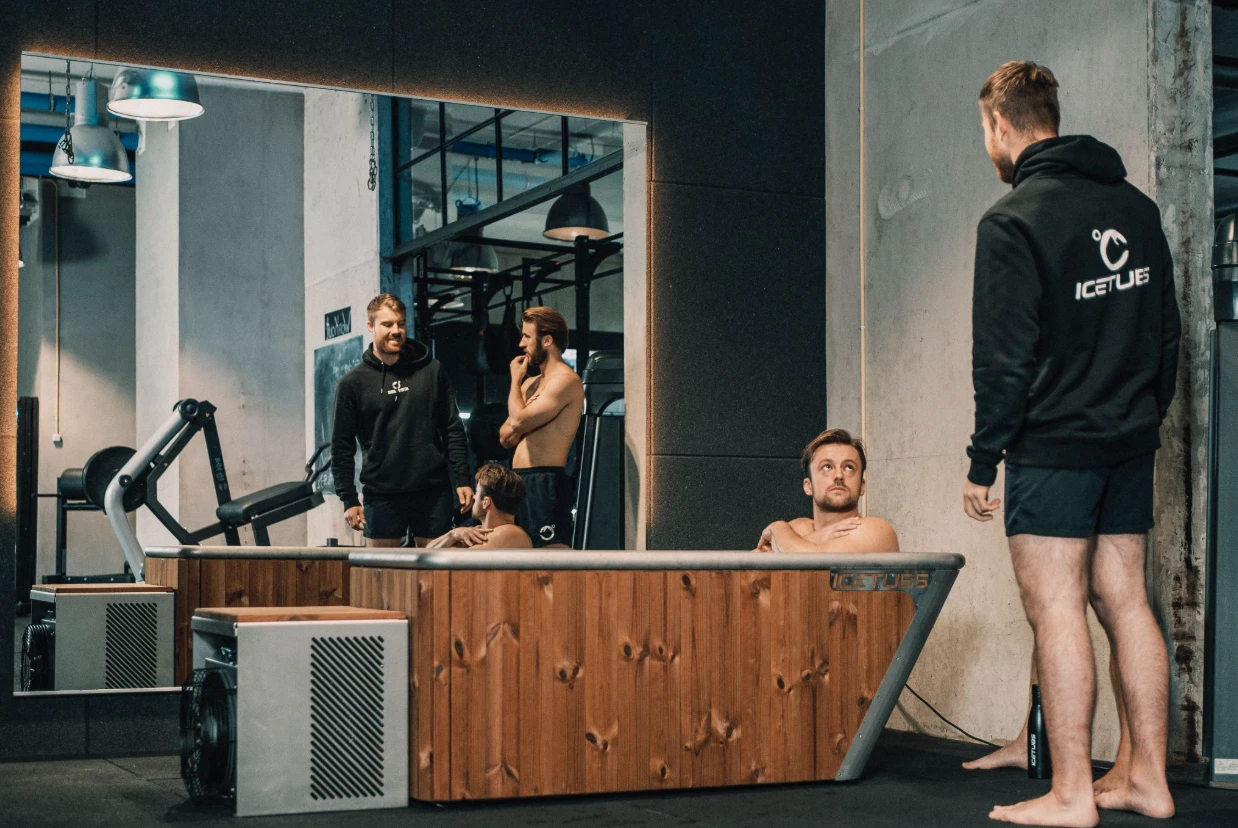
This is the actual floor area the tub takes up. Check the length, width, height, and any extra space needed for the cooling unit, hoses, cover, steps, or accessories.
Do not rely only on photos. Cold plunge tubs can look smaller online than they feel in person. Measure the space properly before choosing a model.
A few extra centimetres can make a big difference when entering, cleaning, or removing the cover.
Leave Space for Entry and Exit
The most important space is often beside the tub.
You need enough room to step in slowly, step out safely, and move without feeling cramped. This matters even more when the floor is wet or when the body feels cold after the plunge.
Leave a clear area near the main entry point. Keep towels, warm clothes, and a mat within easy reach.
If the tub is high or deep, allow room for steps or support.
Think About the Shape of the Routine
Every cold plunge routine has movement.
You walk to the tub. Remove the cover. Place your towel. Enter the water. Step out. Dry off. Warm up. Clean or close the tub.
The space should support that flow.
A narrow or cluttered area can make the practice feel awkward. A slightly wider layout can make the same routine feel smoother and safer.
Before installation, stand in the space and imagine the full sequence from start to finish.
Plan for the Cooling Unit
If your setup has a chiller or engine, it needs its own space.
The unit should not be squeezed into a tight corner or blocked by furniture. It may need airflow, safe cable placement, and enough access for checks or maintenance.
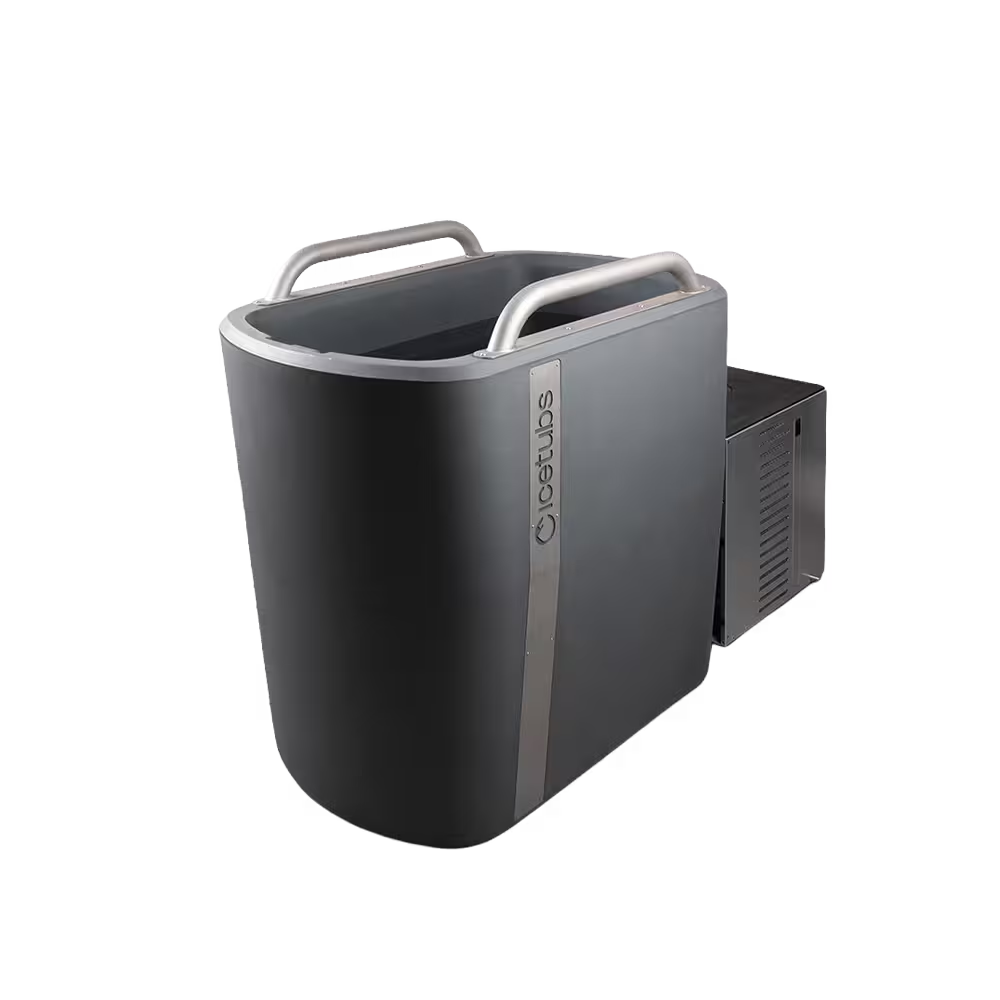
Some compact cold plunge designs can help when space is limited. The IceKube, for example, is designed as an upright, seated format with a compact footprint for people who want a premium cold plunge experience in a smaller area.
The goal is not only to fit the tub. It is to let the system function properly.
Make Room for Drainage and Cleaning
Maintenance also needs space.
You may need to connect a hose, reach a drain valve, remove filters, wipe surfaces, or move around the tub during cleaning. If the tub is placed too tightly against a wall, these simple tasks can become frustrating.
Leave practical access around the parts you will use most.
A space that is easy to maintain is easier to keep clean.
Indoor and Outdoor Space Feel Different
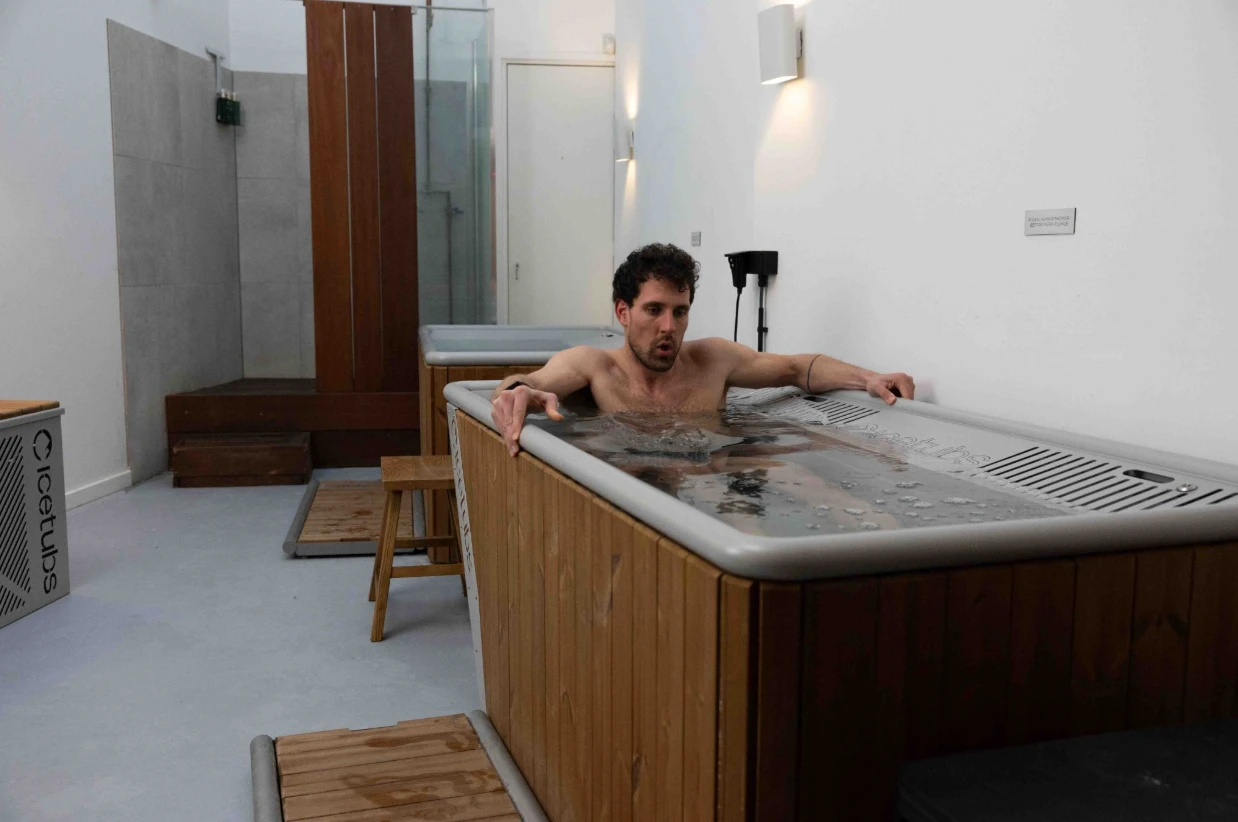
Indoor setups need more attention to floor protection, ventilation, drainage, and humidity. Outdoor setups need more attention to shade, privacy, weather, and the path to the tub.
Both need enough room for safe movement.
A tub placed outdoors may also need extra clearance for a cover, steps, or seasonal protection. Indoors, you may need a nearby area for towels, robes, and dry storage.
The best setup feels natural in the space, not squeezed into it.
Give the Ritual Room to Breathe
Cold plunging should not feel cramped before it even begins.
Measure the tub. Add space for entry, exit, drainage, accessories, and maintenance. Think about how you will move when the floor is wet and the body is cold.
A little extra space can make the routine feel safer, calmer, and easier to repeat.
For the full installation plan, continue with Cold Plunge Tub Setup & Installation: Complete Guide.