






In this blogpost:
How Cold Plunging May Influence Inflammation and Recovery
Learn how cold plunging affects inflammation, blood flow, muscle soreness, and recovery, and what current science says about its potential effects. $ $
Inflammation is a normal part of how your body responds to exercise, stress, and tissue damage.
That makes the relationship between cold exposure and inflammation more complicated than simply saying that cold “reduces inflammation.”
After intense exercise, your body produces a range of inflammatory responses as it begins repairing and adapting.
Cold-water immersion may influence some of these processes, particularly when used around demanding physical activity.
The key is understanding what cold actually does.
Why Does Cold Affect Inflammation?
When you enter cold water, blood vessels near the skin constrict.
This helps your body conserve heat and temporarily changes blood flow around the exposed tissues.
As you leave the water and begin warming up, those vessels gradually open again.
This changing vascular response is one reason cold exposure is often discussed in relation to circulation and recovery.
It is also part of why the experience can feel very different once you step out of the water.
What About Muscle Soreness?
Cold-water immersion is particularly popular among athletes dealing with post-exercise soreness. A Cochrane review of 17 trials involving 366 participants found that cold-water immersion was associated with reduced muscle soreness at 24, 48, 72, and 96 hours compared with passive recovery.
The experience can temporarily reduce the perception of muscle discomfort after demanding training.
For some people, that makes it easier to feel ready for their next session.
That does not mean cold eliminates the underlying effects of training.
Your muscles still need time to recover.
Cold is better viewed as one tool that may influence how you experience recovery rather than a shortcut that instantly repairs tired muscles.
Does Cold Actually Reduce Inflammation?
This is where the science becomes more nuanced.
Cold exposure can influence inflammatory signalling and certain markers associated with the body's immune and stress response.
However, these effects depend on factors such as temperature, exposure time, timing, and the type of exercise involved.
Inflammation itself is not always something you want to eliminate.
Some inflammatory signalling is part of the normal adaptation process following exercise.
So the goal should not necessarily be to suppress every inflammatory response.
Cold and Strength Training
This distinction becomes particularly important if you train for muscle growth or strength.
The inflammatory and cellular responses created by resistance training are part of how your body adapts.
Using cold immediately after every strength session may therefore not always be ideal if maximising training adaptation is your priority.
That does not mean you need to avoid cold plunging altogether.
It simply means timing matters.
Cold may make more sense after particularly demanding sessions, endurance work, competitions, or when recovery between sessions is a bigger priority.
Why Consistency Matters
A controlled cold plunge gives you more consistency than relying on whatever ice or water temperature happens to be available.
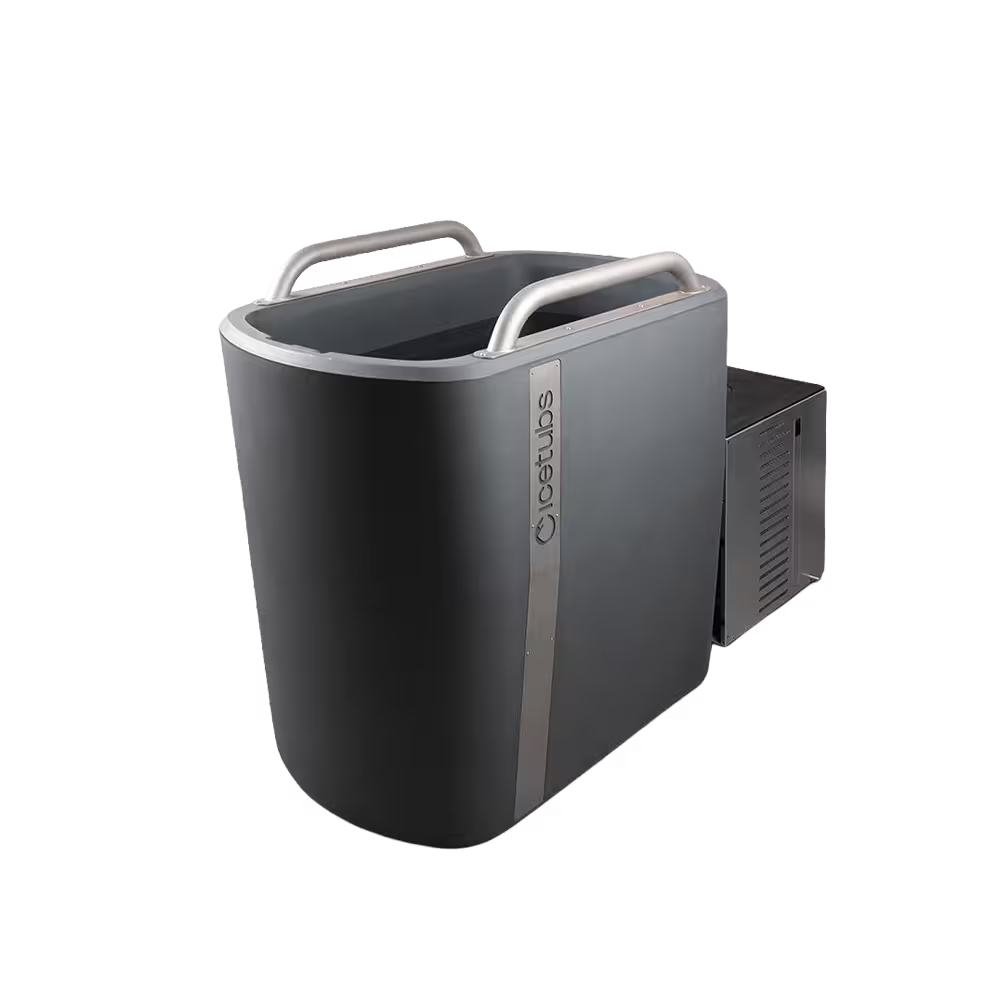
Icetubs allows you to control the water temperature and create a repeatable environment, making it easier to understand how your body responds to different cold exposure routines.
That can be more useful than constantly changing the temperature and duration.
Cold Is Not an Anti-Inflammatory Shortcut
Cold plunging can influence circulation, perceived soreness, and aspects of the body's inflammatory response.
But it does not simply switch inflammation off.
And more cold does not automatically mean better results.
Your training goal should determine how and when you use it.
If recovery between demanding sessions is important, cold may have a place in your routine. If building maximum strength or muscle adaptation is the priority, you may want to think more carefully about when you plunge.
For the wider science behind cold, recovery, metabolism, and the body's stress response, explore The Science of Cold Exposure: How It Affects Your Body