






In this blogpost:
Cold Plunges and Injury Recovery: Where They May Fit
Understand where cold plunges may fit into injury recovery, including soreness, swelling, training breaks, rehabilitation, and why medical guidance matters.

When you are dealing with an injury, recovery becomes more complicated.
The goal is no longer simply to feel less sore after training.
You need to understand what caused the injury, how serious it is, and what your rehabilitation actually requires.
That makes cold exposure a different conversation.
A cold plunge may have a role in managing discomfort in certain situations, but it should not be treated as a universal injury treatment.
Cold Can Change How You Feel
Cold exposure can temporarily reduce the perception of pain and discomfort.
It also causes blood vessels to constrict, which can influence local blood flow and swelling.
Those effects are part of why cold has traditionally been used around acute injuries and exercise-related soreness.
But reducing discomfort is not the same as repairing damaged tissue.
You can feel better while an injury still requires protection and rehabilitation.
Acute Injury vs Training Soreness
These are not the same thing.
Normal muscle soreness after a hard workout is different from a torn muscle, ligament injury, fracture, tendon problem, or significant joint injury.
If you cannot distinguish between ordinary post-training soreness and an actual injury, a cold plunge should not be your first answer.
Getting the underlying problem assessed is more important.
Where Cold May Be Useful
Cold exposure may be considered as part of symptom management in certain recovery situations.
For example, if you experience discomfort after physical activity, cooling can temporarily alter how that discomfort feels.
That can make the recovery period more manageable.
However, whether it is appropriate depends on the injury and stage of rehabilitation.
A physiotherapist, sports physician, or other qualified professional can help determine what belongs in your recovery plan.
Do Not Use Cold to Push Through Pain
This is particularly important for athletes.
If a cold plunge makes an injured area feel better, that does not mean you are ready to train normally.
Reduced pain can sometimes make it easier to ignore a signal that your body still needs protection.
Do not use temporary numbness or reduced discomfort as permission to return to full training.
Your rehabilitation plan should determine that progression.
What About Swelling?
Cold can cause vasoconstriction, which is one reason cooling has historically been used when swelling is a concern.
But swelling is not always something that should simply be eliminated.
The appropriate response depends on the type of injury, its timing, and your rehabilitation stage.
This is another reason generic “cold is good for injuries” advice can be misleading.
Cold Plunging During Rehabilitation
As you move through rehabilitation, your goals change.
Early on, protecting the injured area may be the priority.
Later, restoring mobility and strength becomes more important.
Eventually, you may be preparing to return to sport.
Cold exposure may have a different role at each stage, or no role at all.
Your rehabilitation plan should come first.
What About Training Around an Injury?
If you are still training other parts of your body while recovering from an injury, cold exposure may be relevant to your broader recovery routine.
But you should still consider whether the cold could affect the adaptations you want from your training.
For example, if you are doing resistance training for unaffected muscle groups, routinely using cold immediately afterwards may not align with a hypertrophy-focused programme.
Controlled Cold Makes Routine Easier
If cold exposure is appropriate for your recovery plan, consistency can make the routine easier to manage.
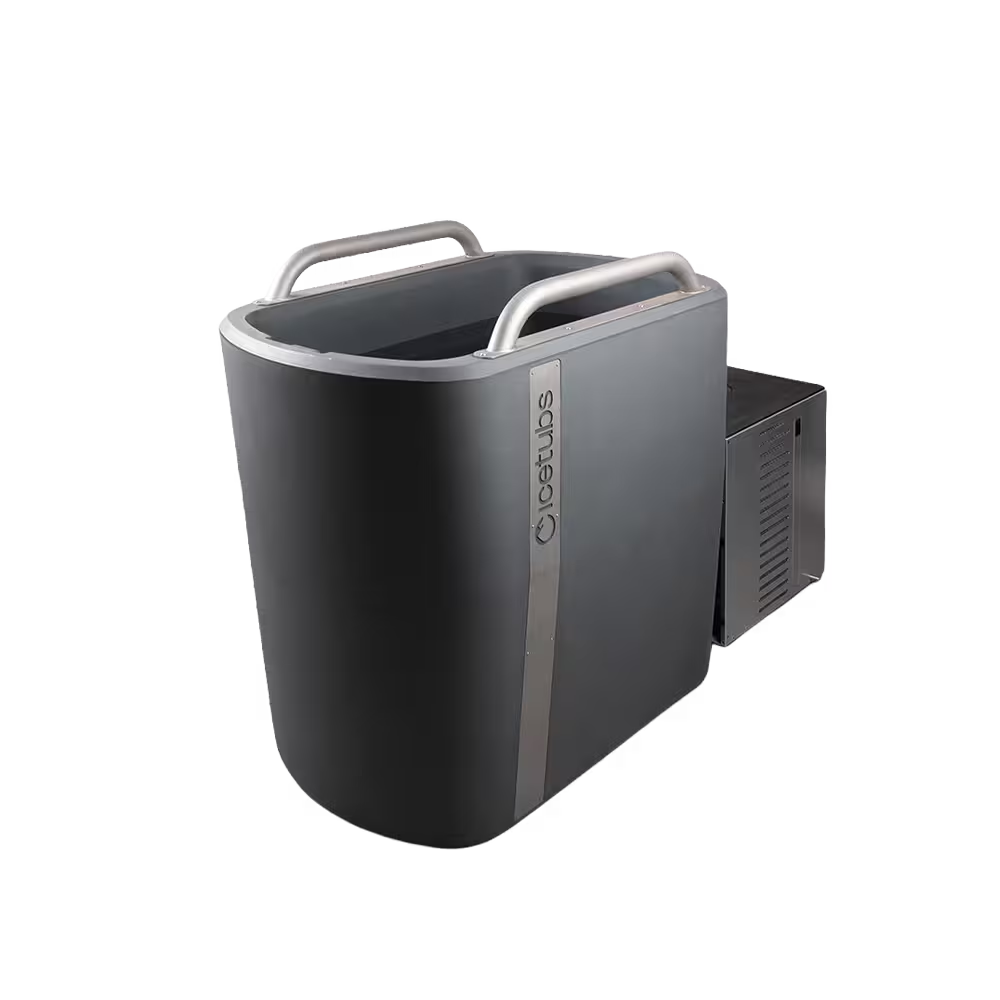
Icetubs allows you to control water temperature, so you can avoid relying on unpredictable ice baths and keep your exposure conditions consistent.
That is useful for a recovery routine, but the equipment itself does not determine whether cold exposure is appropriate for your injury.
Know When to Get Professional Help
Seek professional assessment when pain is severe, persistent, worsening, or associated with significant swelling, instability, loss of function, deformity, or other concerning symptoms.
A cold plunge should never delay appropriate medical care.
The right recovery strategy starts with understanding the injury.
Use Cold as a Tool, Not a Treatment for Everything
Cold exposure can be useful for managing aspects of exercise recovery.
Injury recovery is different.
The priority is restoring function and allowing the underlying tissue to heal appropriately.
If cold exposure forms part of that process, it should support your rehabilitation rather than replace it.
For the complete framework on using cold exposure around athletic training, recovery, soreness, and performance, return to Cold Plunge for Athletic Recovery: How to Use It Effectively