






In this blogpost:
Can Cold Plunging Help You Feel More Focused?
Learn why cold plunging can create a strong sense of focus and alertness, and how you can use the experience as part of a more intentional daily routine.
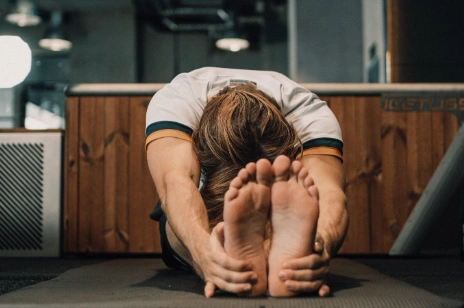
Some mornings, your mind feels scattered before the day has even started.
You check your phone.
Open a few tabs.
Think about work.
Then you step into cold water — and suddenly there is only one thing to think about.
Your breath.
That intense narrowing of attention is one of the most noticeable mental effects of cold exposure.
Why Cold Demands Your Attention
Your body reacts immediately to cold water.
Breathing changes.
Your nervous system becomes more alert.
The sensation demands your attention.
That makes it difficult to stay mentally elsewhere. You cannot easily worry about an email while controlling your breathing in cold water. For a few minutes, the present moment becomes unavoidable.
Norepinephrine plays an important role here. It is involved in alertness, attention, and the body's response to stress, and cold exposure increases sympathetic nervous system activity, contributing to that highly awake feeling.
This does not mean a cold plunge automatically makes you more productive.
It simply explains why you may step out feeling more switched on than when you entered.
For a deeper look at the chemistry behind that alertness, see How Cold Exposure Influences Norepinephrine, Focus and Mood.
Mental Clarity Is Not the Same as Productivity
It is tempting to turn the feeling into a promise: cold plunge, then become more productive. Real life is not that simple.
The clarity you experience may be temporary.
What you do with it afterwards is what matters. A moment to reset before starting your workday — useful. Scrolling for the next hour — the cold itself has not created productivity.
Making the Transition Deliberate
You can make the mental side of the practice more intentional.
Instead of stepping out and immediately reaching for your phone, give yourself a few minutes. Dry off.
Get dressed.
Drink some water.
Think about what you want to accomplish next.
The cold becomes a transition, not simply another activity.
Morning is a natural fit for this kind of routine: you wake up, experience the cold, your attention sharpens, then you begin the day.
That does not make morning universally best. Some people prefer cold exposure after exercise, or later in the day. The most useful timing is the one that fits your life.
Making It a Consistent Ritual
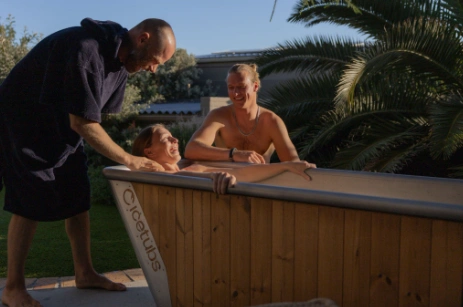
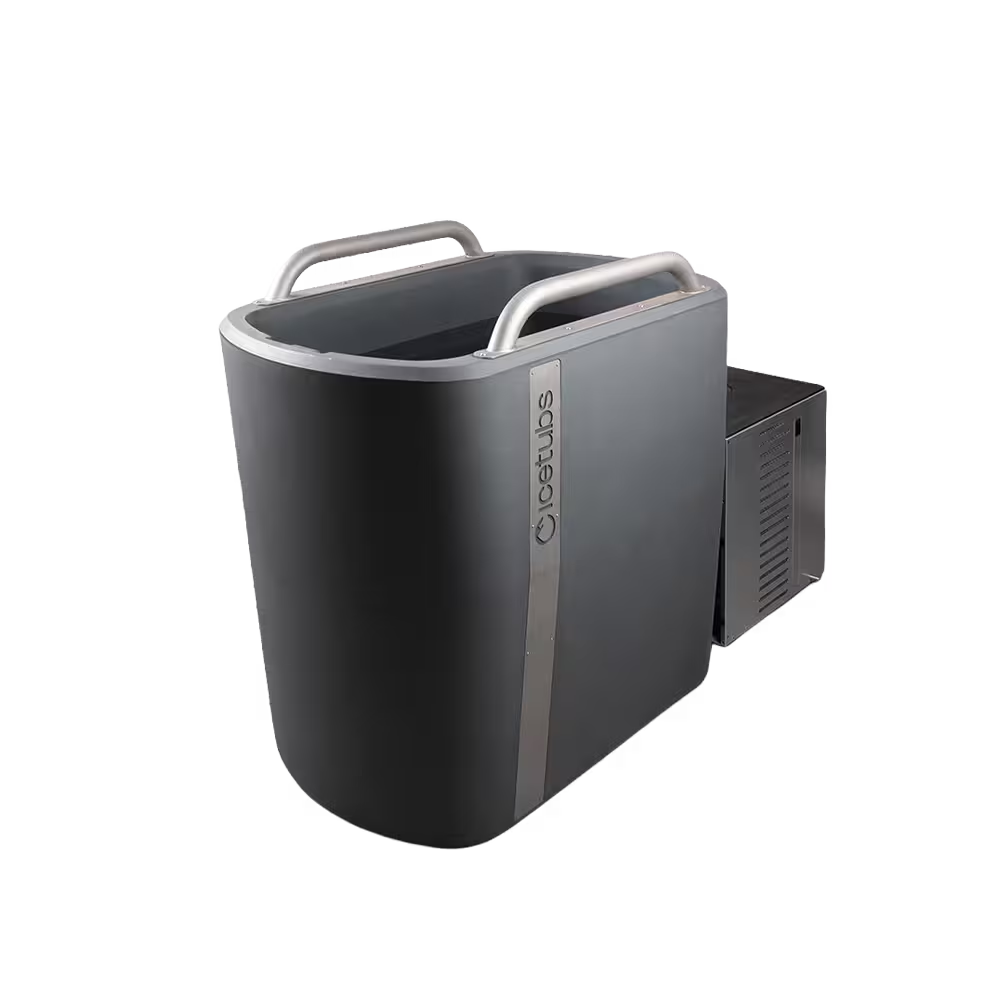
If you want cold exposure to become part of your mental routine, reducing friction matters. Icetubs gives you a ready-to-use cold-water setup with controlled temperature and smart controls, making it easier to build a consistent ritual rather than preparing an ice bath whenever you want to plunge.
The easier the routine is to repeat, the less mental energy you spend deciding whether to do it.
A cold plunge can sharpen your attention temporarily. It cannot decide what deserves your attention — that still comes down to you.
The most useful cold routines have a purpose: marking the beginning of your workday, following your morning exercise, giving yourself a clean break after a demanding morning.
Whatever you choose, let the cold be the transition.
For more on how cold exposure can support stress management, mood, resilience, and everyday wellbeing, continue with Cold Plunge for Mental Wellbeing: How Cold Therapy May Help