





In this blogpost:
Cold Exposure and Emotional Regulation: Can It Help?
Explore how cold exposure may help you practise emotional regulation through breathing, focus, discomfort tolerance, and a more intentional response to stress.
Emotional regulation does not mean staying calm all the time.
It means noticing what you are feeling, and having enough space to decide how you respond.
That is one reason cold exposure is interesting from a mental wellness perspective.
A cold plunge creates an immediate physical reaction — and gives you a chance to practise responding with awareness, rather than reacting automatically.
The Body Reacts Before You Think
Cold water produces a fast physiological response.
Your breathing suddenly becomes shallow or rapid.
Your muscles tense.
Your nervous system becomes more alert.
There is no need to consciously create this response. Your body does it for you.
The interesting part is what happens next. You can focus on your breathing, and give yourself a moment before deciding what to do.
This response connects closely to your vagus nerve. Explore that link further in The Vagus Nerve and Cold Exposure: Understanding the Connection.
Breathing as an Anchor
When everything feels intense, breathing gives you something simple to control.
You cannot immediately change the water temperature.
You cannot make the sensation disappear.
But you can pay attention to your breath.
Slow, deliberate breathing helps you remain present while the initial response settles — a practical exercise in staying with discomfort without automatically reacting to it.
Cold exposure also teaches you something useful about discomfort itself: a strong sensation does not necessarily mean you need to panic. You can experience something intense without acting on the impulse to escape. That does not mean ignoring warning signs, it means learning the difference between ordinary discomfort and a moment where you genuinely need to stop.
Building Awareness Through the Practice
An email frustrates you. You do not have to respond immediately.
A conversation turns tense. You can pause.
Your workload suddenly increases. You can take a breath before deciding what to do.
The cold plunge does not create those skills by itself. It gives you a simple environment to practise them.
Try paying attention to what happens before, during, and after your session. How you feel before entering.
What changes in the first few moments.
When your breathing settles.
How you feel stepping out.
This turns the plunge into more than a test of tolerance. You are learning about your own responses.
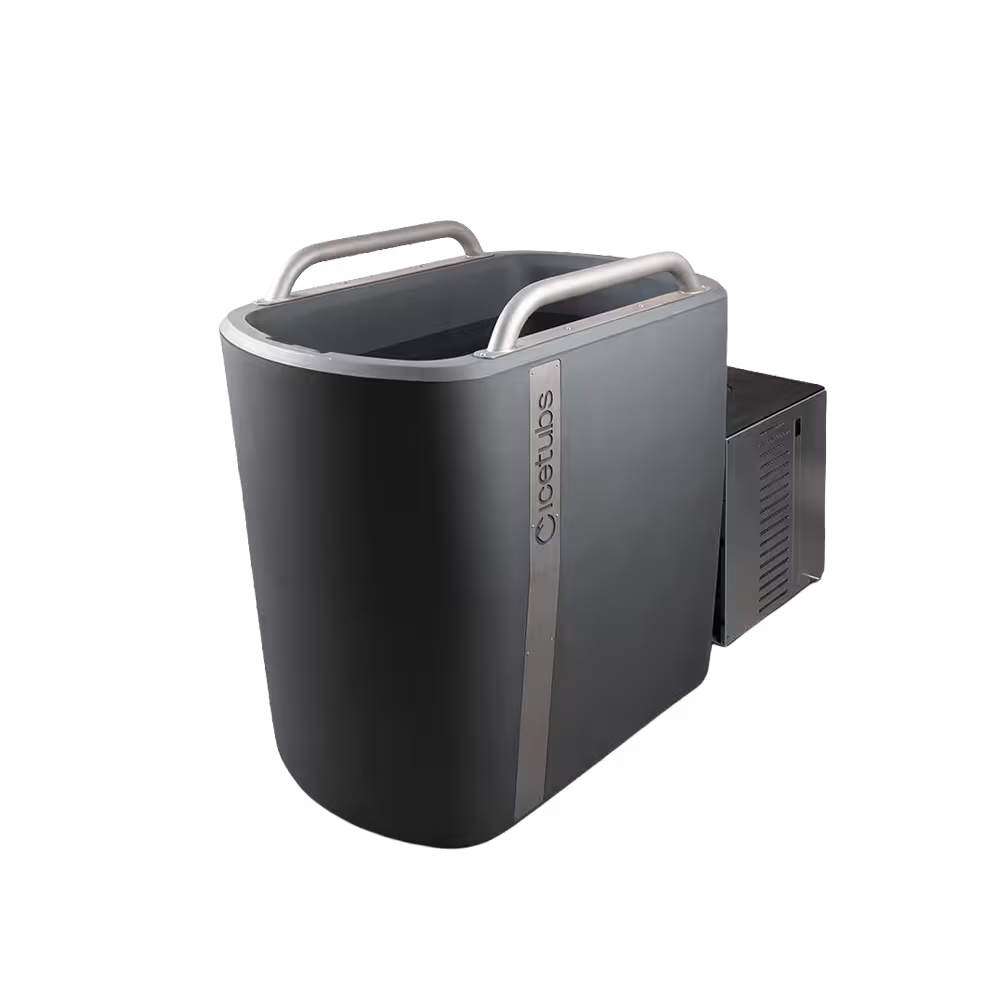
A consistent environment makes that comparison easier. The Icetubs Engine keeps that consistency built in, combining temperature control with integrated filtration and ozone-supported water care, so the exposure you compare from session to session is not just about temperature, but about a genuinely repeatable environment.
Keep It Flexible
Sleep, movement, relationships, stress management, therapy, healthy routines — all contribute to emotional wellbeing.
Cold exposure is not a replacement for any of them. It is simply another opportunity to practise awareness, and that may be its most useful role.
There will be days when cold exposure feels refreshing, and days when it feels like too much. You do not need to prove anything by forcing yourself through a session when your body or mind is telling you to stop.
The most valuable part may happen before you step into the water.
You make a decision.
You commit to a few minutes.
Then you practise staying present.
That pause between sensation and reaction is exactly what makes cold exposure interesting as a mental wellness practice.
For the complete mental wellness perspective on cold exposure, explore Cold Plunge for Mental Wellbeing: How Cold Therapy May Help